



How Much Does a Label Printer Cost in Australia?
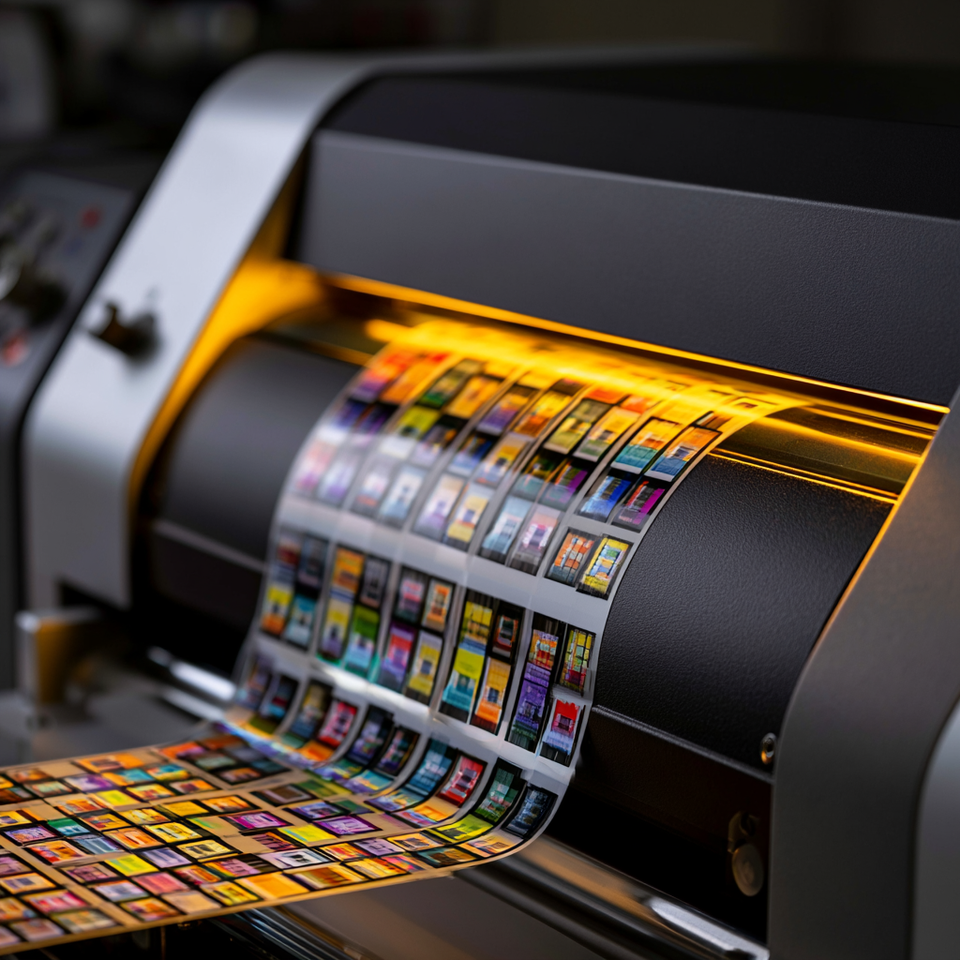
Label printers in Australia range from around :
- $500–$2,000 for desktop and office units through to
- $5,000–$15,000 for entry-level digital colour systems,
- $15,000–$40,000 for mid-range production label printers,
- $40,000–$100,000 or more for industrial label presses.
Those figures cover hardware only. Once you account for ink or toner, label substrates, maintenance, software and finishing equipment, the total cost of ownership over three to five years can exceed the machine price by 50% or more — which means the sticker price is rarely the right number to optimise on.
This guide breaks down each tier, models the real cost per label at different monthly volumes, and explains when in-house digital label printing becomes cheaper than continuing to outsource.

Prefer to talk it through? Call (03) 9318 7177 or fill out the form on the page below. Gulmen Digital's team is in Ravenhall, VIC.
Label Printer Price Tiers in Australia
Tier 1 : Desktop and Office Label Printers: $500–$2,000
What you get
Desktop label printers at this price point are almost exclusively thermal: either direct thermal (heat-sensitive media, no ink required) or thermal transfer (wax or resin ribbon transferred onto the substrate).
Print widths typically top out at four to six inches. Resolution runs from 203 dpi on the most basic units to 300 dpi on better-specified models enough for sharp barcodes and legible text, but not for photographic product imagery. Connectivity covers USB as standard, with Ethernet and Wi-Fi available on mid-range desktop units. Duty cycles are designed for hundreds to a few thousand labels per day.
Example system type
Compact four-inch thermal label printers from established brands — the kind of unit you'd find at the dispatch bench of a small fulfilment operation.
Gulmen Digital's focus sits above this tier, but many customers begin here before graduating to colour production systems as their SKU count and branding requirements grow.
Tier 2 : Entry-Level Digital Colour Label Printers: $5,000–$15,000
What you get
This is where label printing shifts from functional to strategic.
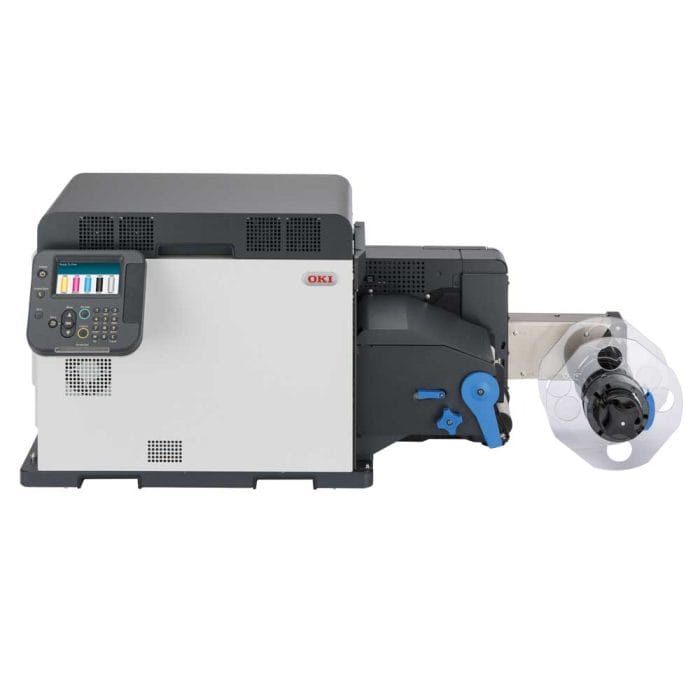
Entry-level digital colour systems , typically built on
- OKI LED/toner engines or compact inkjet platforms
- print roll-to-roll in full CMYK at resolutions up to 1,200 dpi.
That resolution renders fine-detail logos, ingredient lists and regulatory text accurately enough for retail shelf placement. Print widths range from around five to eight and a half inches.
Media handling covers gloss and matte paper and a range of synthetic label stocks including polypropylene.
Production speed is modest compared with higher tiers, suited to hundreds to a few thousand colour labels per shift rather than continuous-run production. Most systems ship with basic label design software and straightforward colour management.
Example system type
An OKI-based entry-level colour label printer configured for roll-to-roll output, paired with a simple offline rewinder. Gulmen Digital supplies systems in this class as a practical first step into in-house digital colour label production.
Tier 3 : Mid-Range Production Label Printers: $15,000–$40,000
What you get
Mid-range production systems are engineered for sustained, daily colour label output. Memjet inkjet technology , a high-speed, single-pass inkjet architecture.
It is common at this tier, delivering print speeds significantly faster than entry-level toner systems while maintaining the colour quality demanded by retail-grade FMCG labels.
Web widths widen, duty cycles increase substantially, and media handling improves meaningfully: better tension control, wider roll diameters, support for a broader range of synthetics including polyester and PE films.
Colour management and RIP capability step up at this tier, enabling more accurate spot colour simulation and better consistency across long runs. Integration with finishing lines , laminators, digital die-cutters, slitters ; becomes practical and economically justified.
Who it's for
Example system type
A Memjet-powered mid-range colour label printer with integrated unwind and rewind, paired with a compatible digital finisher for lamination and die-cutting. This configuration forms the backbone of many Australian SME label rooms.
Tier 4 : Industrial Label Printers: $40,000–$100,000+
What you get
Industrial label presses are capital equipment, evaluated on duty cycle, uptime, running cost at volume and integration with broader production workflows. Print speeds are high, web widths are wider, and the mechanical construction , servo-driven web transport, heavy-gauge chassis, industrial-grade ink systems ; is designed for multi-shift operation. Variable data printing, serialisation and compliance-grade barcode output are standard capabilities. Inline finishing options, including lamination, varnish, rotary die-cutting and matrix removal, can be integrated into a single pass.
Example system type
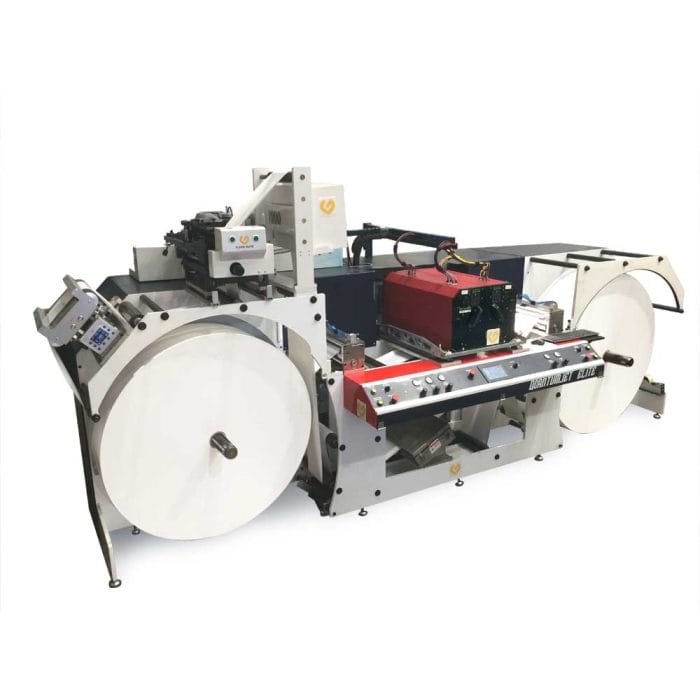
The QuantumJet Elite , Gulmen Digital's industrial-class production label press is designed for continuous, high-volume colour label production with industrial-grade web handling and support for a wide range of substrate types and inline finishing configurations.
Total Cost of Ownership: What You Pay Over Five Years
The machine price is the number quoted in the brochure. The total cost of ownership is the number that determines whether the investment makes sense.
Consumables typically account for 50–70% of lifetime operating cost on digital colour label systems. Ink or toner consumption scales directly with label coverage — a full-bleed, highly saturated label design costs more per unit to produce than a label with predominantly white space. Label substrate rolls add a further significant cost: standard gloss paper is the most economical, while polyethylene, polypropylene and specialty films carry a premium. At high monthly volumes, negotiating substrate pricing directly with local distributors makes a material difference.
Maintenance and service on professional label systems is typically managed through annual service contracts or time-and-materials agreements. Expect annual service costs in the range of 5–12% of initial hardware cost, depending on duty cycle and usage intensity. Industrial and production-tier systems operating across multiple shifts will sit toward the higher end of that range.
Software is an often-underestimated cost. Entry-level systems may include basic drivers and label design tools. Production and industrial systems frequently require professional RIP software, colour management suites and, for variable data or serialisation applications, workflow integration tools. These can be licensed upfront or on subscription factor them into year-one and recurring cost modelling.
Finishing equipment completes the system. A label that comes off the printer as a continuous roll still needs laminating, die-cutting and rewinding before it reaches the applicator or the shelf. Offline finishers suitable for entry-level colour systems start from a few thousand dollars; full inline finishing configurations for industrial presses can add tens of thousands to the total investment.
Outsourced vs In-House: Cost Per Label at Different Volumes
The economics of in-house digital label printing depend almost entirely on monthly volume and SKU complexity. The table below uses indicative per-label ranges based on typical Australian market conditions; actual figures will vary with label size, artwork coverage, substrate type and supplier terms.
The per-label numbers tell only part of the story. Businesses that outsource labels also absorb artwork change fees, minimum order quantities, write-offs on obsolete pre-printed stock and lead times that can stretch days or weeks. When those soft costs are factored in, the crossover point where in-house printing becomes economically compelling typically sits lower than the raw per-label comparison suggests.
Research on digital label adoption consistently finds that SKU complexity and artwork change frequency are stronger predictors of in-house ROI than monthly label volume alone.
Finance and Lease Options in Australia
Most professional label printer suppliers in Australia, including Gulmen Digital, can assist in structuring equipment finance for qualifying businesses. Common instruments include:
- Chattel mortgages — the business owns the asset from day one; the loan is secured against the equipment.
- Finance leases — structured rental with an option to purchase at end of term.
- Operating leases — suitable for businesses that want to refresh technology at the end of a defined period without residual ownership obligations.
Finance terms of three to five years are typical for label printing equipment in the mid-range and industrial tiers. Structuring the finance package to include hardware, software, installation, training and finishing equipment under a single monthly repayment simplifies budgeting and aligns the cost of ownership with the label production revenue or savings the system generates.
For many Australian SMEs, equipment finance is not a workaround for insufficient capital. It is a deliberate cash-flow management decision that allows them to deploy a higher-tier, more productive system earlier than a lump-sum purchase would permit.
Australian Context: GST, Import Duties and the Cost of Remote Support
- GST
- Applies to most label printer purchases in Australia at 10%. B2B pricing from Australian suppliers is typically quoted excluding GST, with the tax added at invoice.
- Businesses registered for GST can generally claim the GST component as an input tax credit through their BAS, reducing the effective net cost — but the cash outflow still applies at the point of purchase or first finance payment.
- Import duties and landed cost
- Apply to machines purchased directly from overseas. Depending on the HS code classification of the equipment, customs duties, import processing charges, international freight and cargo insurance can add several percent to the ex-factory price.
- The gap between "offshore list price" and "total landed cost in Melbourne" narrows considerably once those items are included.
- Local support
- Has a cost that only becomes visible when something goes wrong. A label printer operating in a production environment is not an office peripheral — it is a production asset.
- Downtime means delayed shipments, missed production targets and emergency outsourcing at short notice. Buying from a locally-based supplier with Australian-based technicians, stocked spare parts and direct service responsibility is not merely a convenience premium; it is a downtime-risk management decision.
- For businesses running labels through multiple shifts or tight production schedules, the value of a four-hour service response versus a two-week international shipping wait for a replacement part is not difficult to quantify.
Talk to Gulmen Digital
If you are evaluating label printer options for your business — whether you are printing a few thousand labels a month or running continuous production —
Gulmen Digital can provide a detailed cost-per-label analysis based on your actual volumes, artwork and substrate requirements, alongside a comparison of outsourced versus in-house economics in Australian dollars.
Prefer to talk it through? Call (03) 9318 7177 or fill out the form on the page below. Gulmen Digital is at 42 Orbis Drive, Ravenhall VIC 3023 to discuss machine selection, configuration, and equipment finance options.
Frequently Asked Questions
How much does a label printer cost in Australia?
Label printers in Australia range from approximately $500–$2,000 for desktop and office thermal units, $5,000–$15,000 for entry-level digital colour label printers, $15,000–$40,000 for mid-range production systems, and $40,000–$100,000 or more for industrial label presses. Prices are typically quoted excluding GST.
What is the cheapest professional label printer in Australia?
The cheapest professional-grade label printers suitable for business use , meaning reliable, locally supported and designed for daily operation ; are compact desktop thermal units starting from around $500. Below that price point, devices generally fall into the hobbyist or light-office category with duty cycles, media compatibility and support arrangements unsuitable for commercial label production.
How much does it cost per label to print in-house?
In-house cost per label depends on label size, artwork coverage, substrate type and monthly volume. For monochrome thermal shipping labels, costs of a few cents per label are achievable. For full-colour product labels on synthetic stock using a mid-range digital system, a realistic range is approximately $0.07–$0.16 per label at volumes of 5,000 or more per month, inclusive of ink and substrate but excluding hardware amortisation.
Can I finance a label printer in Australia?
Yes. Most Australian suppliers of professional label printing equipment, including Gulmen Digital, can assist with equipment finance arrangements. Common structures include chattel mortgages, finance leases and operating leases, typically over three to five year terms. Finance packages can generally include hardware, software, installation and finishing equipment under a single monthly repayment.
What ongoing costs are there for a label printer?
The main ongoing costs are ink or toner (for colour systems), label substrate rolls, ribbons (for thermal transfer systems), periodic printhead or drum replacement, routine maintenance and servicing, and where applicable, software licence renewals. For production and industrial systems, consumables typically represent the largest share of lifetime operating cost, often exceeding the original hardware cost over the life of the machine.
Is it cheaper to buy or lease a label printer in Australia?
Buying outright generally produces the lowest total cost over the full life of the machine, provided capital is available and the machine remains in service for its expected lifespan. Leasing or financing spreads cost over time, preserves working capital, can simplify budgeting and may facilitate earlier access to a higher-tier, more productive system. The optimal structure depends on your label volumes, growth trajectory, tax position and risk appetite — factors worth modelling with both your accountant and your equipment supplier before committing.



Comments ()