



Digital Label Printing vs Traditional: The Practical Guide for Australian Businesses
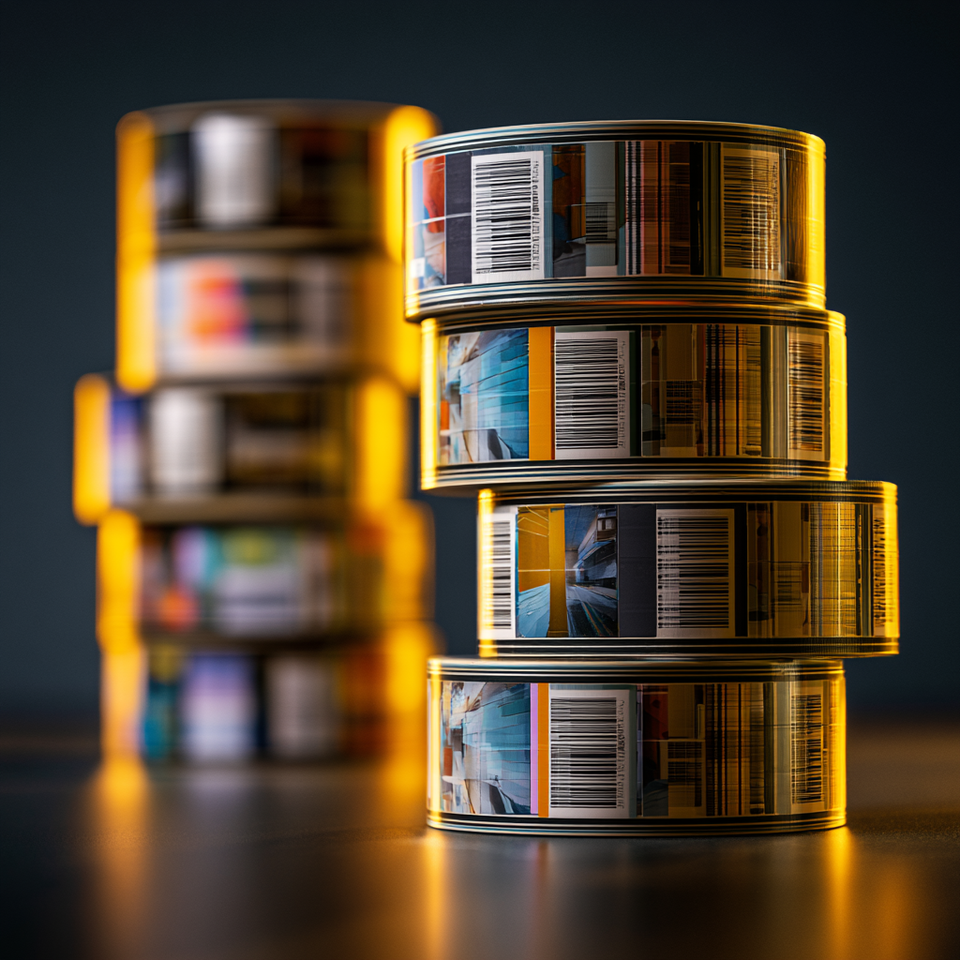
It is the label order sitting in a warehouse, already obsolete because the ingredients changed. It is the two-week lead time that delayed a product launch. It is the plate charge that made a small seasonal run uneconomical.
For most Australian SMEs, this is not a hypothetical—it is the standing cost of printing labels the traditional way, and most businesses absorb it without realising they are optimising for the wrong number.
Most Australian SMEs spend more on labels than they need to—not because they chose the wrong printer, but because they chose the wrong printing method.
The difference between digital label printing and traditional label printing comes down to setup economics:
- Traditional methods (flexographic, offset, and screen printing) use physical plates or screens that make large runs efficient and small runs expensive,
- Digital label printing uses a digital file to drive the press directly—no plates, no screens, full colour from the very first label, and no penalty for small quantities or frequent design changes.
The shift is not niche.
The global digital label printing market is valued at around USD 12.3 billion in 2025 and is projected to exceed USD 20 billion by 2035—and in Australia specifically, the print label market is forecast to grow from USD 1.4 billion toward USD 1.9 billion by 2033.
The direction of travel is clear; the only question is when each business makes the move.
In practical terms, digital label printing is almost always the better choice for short runs, multiple SKUs, and jobs where artwork changes regularly. Traditional methods—particularly flexographic printing—remain competitive for very high volumes of a single, stable design, where the cost of plates and setup can be spread across tens of thousands of labels.
For most Australian SMEs running 500 to 2,000 labels per design, digital is not just more convenient. It is structurally cheaper.

Contact Gulmen Digital at 42 Orbis Drive, Ravenhall VIC 3023 to discuss your label volume, SKU mix, and production requirements— Call (03) 9318 7177 and find out how an on-demand digital label workflow compares to what you are spending today.
How Traditional Label Printing Works—And Where It Breaks Down
Flexographic Printing
Flexography is the dominant traditional process for pressure-sensitive labels. It uses flexible photopolymer plates—one per colour—wrapped around cylinders. Ink transfers from an anilox roller onto the raised areas of the plate, then onto the label stock in a continuous rotary motion. At high volumes and press speeds, the unit economics are exceptional.
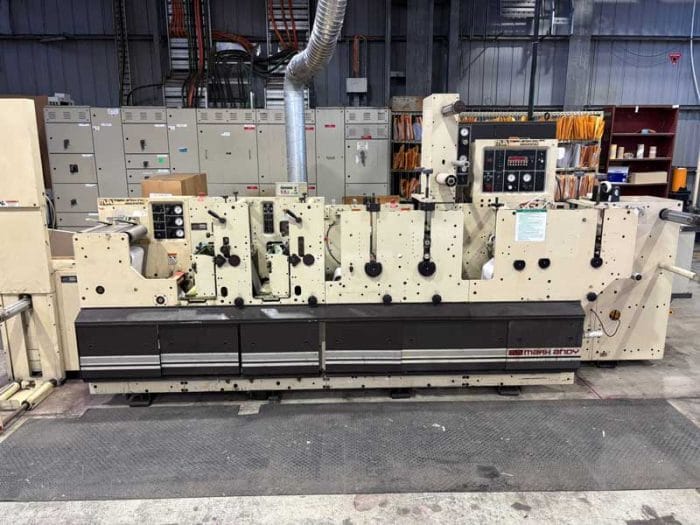
The strengths of flexo are real. Once plates are made and the press is set up, it runs fast—typically 200 to 300 metres per minute for quality colour work—and the per-label cost on long, stable runs is very low.
Pantone and spot colours are straightforward: load the correct ink into the relevant station and the output is precise and consistent.
Inline finishing—varnishing, cold foil, die-cutting, laminating—is well-established in flexo workflows, meaning complex labels can be completed in a single pass.
The problem for Australian SMEs is everything that happens before the press starts running:
- Plates must be made for each colour and each design—typically one to two days of lead time per set, plus cost. Press setup involves mounting plates, mixing inks, registering each colour station, and running substrate through until colour and impression are stable.
- This make-ready process often wastes hundreds of metres of label stock before the first acceptable label comes off the press.
- Any change to the artwork—a new ingredient, a regulatory update, a seasonal design—means new plates and the entire setup cycle repeats.
- The result is that flexo imposes minimum order quantities (MOQs) of several thousand labels per SKU simply to justify setup.
A business with ten flavours or product variants must either absorb ten separate setup charges or consolidate into long runs it may not need. For brands where SKU counts are growing and designs are still evolving, this model creates predictable waste.
Offset (Lithographic) Printing
Offset lithography uses flat aluminium plates to transfer the image via a rubber blanket cylinder onto the substrate. It is the standard of commercial print quality, with exceptional halftone reproduction and colour control, and it remains competitive for medium to high volumes on paper-based label stocks.
Its weaknesses mirror those of flexo: plates are required per colour and per design, setup time is significant, and the economics only make sense once the cost of prepress is spread across a meaningful run. Variable data—unique barcodes, batch codes, sequential numbering—is not native to the process and requires either a separate digital step or hybrid integration.
Screen Printing
Screen printing forces ink through a mesh stencil onto the substrate, depositing a heavy, highly opaque ink layer. It is not a general-purpose label process. Its value lies in specific applications: pure white on clear film, intense spot colours beyond the CMYK gamut, tactile varnishes, raised effects, and industrial labels that require durable, thick ink films.
Screen printing is slow compared to flexo, requires screens to be made per design, and is almost never viable for short runs or variable content. In modern label production it most often appears as a hybrid element—one station in an otherwise flexographic or digital workflow, adding a specialty effect that neither CMYK process can replicate.
How Digital Label Printing Works—And Why It Changes the Economics
A digital label press—whether inkjet or electrophotographic (toner)—prints directly from a digital file. There are no plates. There are no screens. The artwork is processed through a RIP, sent to the press, and printed. Full CMYK colour is available from the first label. The second label can be identical to the first, or entirely different.
This architecture removes the cost structure that makes traditional printing expensive at low volumes. Without plates or setup charges, the economics of a 200-label run and a 2,000-label run are not radically different.
FESPA, the global print industry association, notes that short runs are now driving growth in the label market, with digital making market entry feasible—allowing businesses to produce customised, short-run labels without the plate charges or setup fees of traditional presses. That makes it viable for new products, test batches, and businesses that cannot commit to large MOQs.
Variable data printing is native to digital. Serial numbers, barcodes, QR codes, batch codes, and personalised text or images can all change label-by-label within the same run, without stopping the press or incurring additional setup costs.
This capability—impossible with flexo or offset without a separate digital process bolted on—is increasingly important for traceability, compliance, and serialisation across food, pharmaceutical, and industrial sectors.
Turnaround times compress significantly. Press manufacturer Xeikon positions modern digital as on-demand label capacity that eliminates setup time and minimum order requirements. For businesses responding to regulatory changes, retailer requests, or seasonal promotions, that speed difference is a material competitive advantage.
The acknowledged limitation of digital is per-unit cost at very high volumes. Ink and toner cost more per square metre than flexo ink at scale, and digital press speeds—typically 15 to 50 metres per minute for quality work—are lower than high-end flexo lines.
For a single, stable SKU ordered in quantities of 50,000 or more, flexo may still deliver a lower per-label cost. The question is whether that per-label saving justifies the MOQ, the inventory risk, and the lead time.
The practical trade-off: At genuinely high volumes of a single, unchanging design, per-label ink cost and lower line speed mean flexo can still win on sticker price alone.
The honest comparison is total programme cost, not the per-label figure in isolation.
Digital vs Flexo vs Offset vs Screen comparison
The Tipping Point: When Does Digital Beat Traditional?
The crossover between digital and traditional label printing is a function of two cost curves. Digital has low setup and higher per-impression cost. Traditional has high setup and lower per-impression cost. They intersect at a run length—the "tipping point"—above which traditional becomes cheaper per label.
Xeikon observes that digital presses are faster than flexographic presses for smaller runs, and that price breaks for digital come at much lower quantities than traditional printers.
For Australian SMEs, the practical tipping point falls at approximately 2,000 labels per design per run for typical commercial label work—though the actual number shifts based on label size, number of colours, substrate, and finishing requirements. Below that threshold, digital almost always delivers a lower total job cost, faster turnaround, and less inventory risk.
The more instructive calculation is not per-label price but total programme cost. A business with twelve SKUs, each needing 1,500 labels per quarter, has two options:
- Traditional: Order 5,000 labels per SKU to satisfy MOQs, carry excess inventory, and risk write-offs when a recipe or regulatory requirement changes.
- Digital: Order 1,500 labels per SKU per quarter, aligned to actual consumption, with the ability to update artwork at no plate charge.
The per-label price may be marginally higher on digital. The total cost—including waste, write-offs, working capital tied up in inventory, and storage—is almost certainly lower.
This is the structural over-spend that defines the Australian SME label market. Many businesses continue to accept traditional MOQs believing they are getting a better deal. They are optimising for the wrong number.

Prefer to talk it through? Call (03) 9318 7177 or fill out the form on the page below. Gulmen Digital's team is in Ravenhall, VIC.
Gulmen Digital's Quantumjet Elite: Industrial Digital Label Production in Australia
For Australian label converters, print service providers, and manufacturers bringing label production in-house, Gulmen Digital's Quantumjet Elite represents a purpose-built answer to the short-run, multi-SKU production challenge.
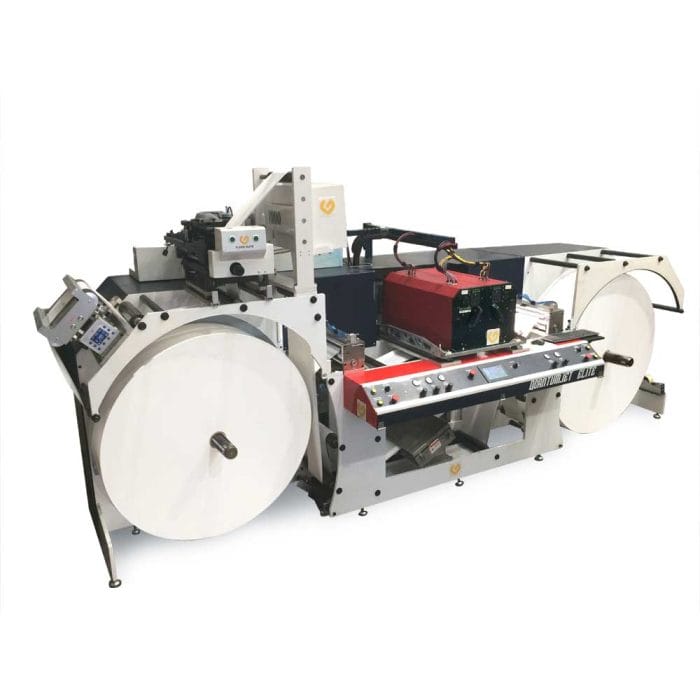
Key specifications:
- Resolution: up to 1600 × 1280 DPI—sufficient for fine text, complex graphics, and high-density barcodes at retail quality
- Colour: full CMYK from label one—no ramp-up, no make-ready waste, no per-SKU colour setup
- Print width: up to 330 mm—accommodating the majority of standard label formats and multi-up layouts
- Speed: up to 45 m/min—production-grade throughput that narrows the speed gap with flexo for short and medium runs
At 45 metres per minute and 1600 × 1280 DPI, the Quantumjet Elite is not an office label printer scaled up. It is an industrial digital printing machine capable of running commercial volumes across multiple SKUs in a single shift—without plates, without setup charges, and without minimum order commitments.
In practice, this means a converter using the Quantumjet Elite can take a customer from approved artwork to finished, die-cut labels in a fraction of the time a flexo workflow requires. For an in-house operation—a food manufacturer, a cosmetics brand, a contract packager—it means on-demand label production aligned to actual production schedules rather than pre-printed inventory buffers.
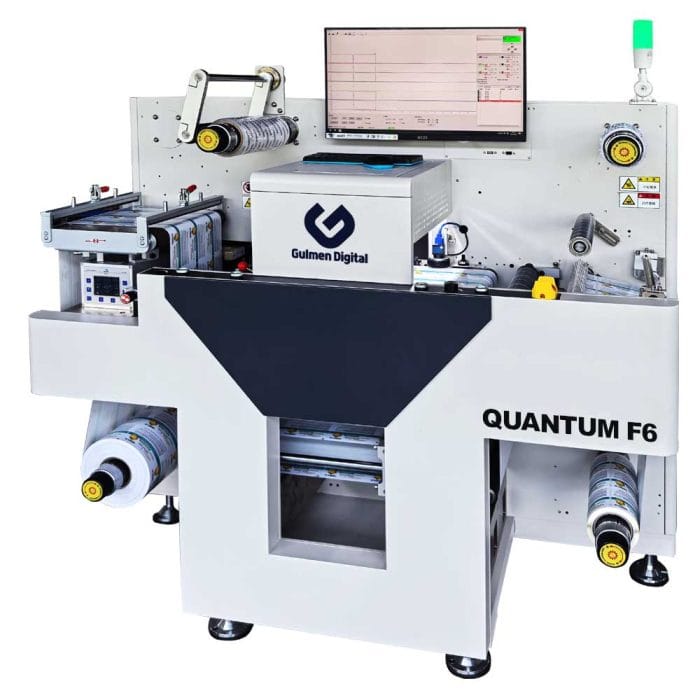
Gulmen Digital also supplies the GD QuantumFlex industrial die-cutting finisher to complete the workflow, providing a printing-and-cutting-on-demand solution for label and tag production.
Australian Market Context: The MOQ Problem
The global digital label printing market is growing steadily—USD 20 billion by 2035, driven by demand for traceability, customisation, and hybrid platforms. Variable data printing labels specifically are projected to grow at 13.6% CAGR to 2030, reflecting how central serialisation and personalisation have become to modern supply chains.
In Australia, this global shift runs up against a local market where many SMEs have historically relied on a handful of flexo trade printers, accepted standard MOQs, and absorbed the associated waste as a cost of doing business. The industries most affected are the same ones driving digital adoption globally: food and beverage, cosmetics and personal care, nutraceuticals, household products, and industrial manufacturing.
For these businesses, the argument for digital is not abstract. It is the label order sitting in a warehouse, already obsolete because the ingredients changed. It is the two-week lead time that delayed a product launch. It is the plate charge that made a small seasonal run uneconomical. Digital label printing in Australia is not a trend to watch. For most SMEs, it is a decision that is already overdue.
Ready to Produce Labels on Demand?
The argument for digital label printing in Australia is not about technology for its own sake. It is about aligning your label production to the way your business operates—on-demand, multi-SKU, responsive to change—rather than forcing your business to plan around your printer's minimum order requirements.
Gulmen Digital's Quantumjet Elite and GD QuantumFlex systems are designed for exactly this environment: industrial-grade digital printing and finishing for label and tag production press, with the precision, speed, and flexibility that modern Australian manufacturers and brand owners require.
Prefer to talk it through? Call (03) 9318 7177 or fill out the form on the page below. Gulmen Digital's team is in Ravenhall, VIC.
Frequently Asked Questions
What is the difference between digital and traditional label printing?
Digital label printing uses inkjet or toner technology to print directly from a digital file with no plates or screens, minimal setup, and full colour from the first label. Traditional label printing methods—flexographic, offset, and screen printing—rely on physical plates or screens that require significant setup time and cost, making them economical only at higher volumes. Digital is best for short runs, multiple SKUs, and variable data; traditional is best for very large, stable runs where setup costs can be spread across many labels.
Is digital label printing cheaper than flexo?
For short to medium runs—typically below 2,000 labels per design in the Australian context—digital label printing is usually cheaper overall because it eliminates plate-making and press setup costs. Flexographic printing delivers a lower per-label cost on very long, stable runs where those upfront costs are spread across large volumes. When total programme cost is considered (including obsolete stock, inventory carrying costs, and write-offs), digital often remains cost-competitive well above the nominal per-label crossover point.
What is the minimum run for digital label printing?
There is no technical minimum. Digital label printing is economical from a few dozen labels upwards. In practice, commercial providers set their own minimums based on handling and finishing economics, but these are typically a few hundred labels—far below the 2,000 to 10,000-label MOQs that characterise flexographic printing.
Can digital label printing match Pantone colours?
Modern digital label presses with advanced colour management can simulate most Pantone colours accurately using CMYK or extended-gamut ink sets. For the majority of commercial label applications, the match is visually indistinguishable from spot-colour flexo output. For highly critical corporate brand colours, particularly metallics and fluorescents that sit outside the CMYK gamut, a spot-colour flexo or hybrid process may still be preferred.
Is digital label printing good quality?
Yes. Contemporary digital label presses deliver resolutions of 1200 DPI and above—sufficient for fine text, photographic imagery, and high-density barcodes at retail quality. Gulmen Digital's Quantumjet Elite prints at up to 1600 × 1280 DPI, producing output comparable to high-end flexographic work across a wide range of label applications.
What industries use digital label printing in Australia?
Digital label printing is widely used across food and beverage (including craft beer, wine, and specialty foods), cosmetics and personal care, nutraceuticals and health products, household and cleaning products, industrial and chemical labelling, and logistics and warehousing. It is particularly valuable in industries where multiple SKUs, frequent artwork changes, regulatory compliance updates, and variable data requirements make traditional high-MOQ printing inefficient.


Comments ()