
How to Bring Label Printing In-House: Step-by-Step Guide for Manufacturers

Every week you wait on a label supplier, you're paying for their schedule, their minimums, and their margin. When a regulation changes or a formulation gets updated, you're back in the queue — reprinting, discarding obsolete stock, and absorbing rush fees that were never in your budget. For Australian manufacturers, this is the quiet cost of outsourcing that rarely appears on a single invoice but compounds across every production year.
Modern digital label printers have changed the economics fundamentally. Compact, high-quality systems now make in-house label printing accessible and cost-effective for manufacturers of almost any size — not just the large converters and contract packagers that once justified the capital.
This guide walks through exactly how to make the transition: how to assess whether your business is ready, which equipment you actually need, what the process looks like from audit to first production run, and how to calculate whether the investment stacks up for your operation in Australia.

Prefer to talk it through? Call (03) 9318 7177. Gulmen Digital's team is in Ravenhall, VIC.
Why Manufacturers Are Moving Label Printing In-House
The case for in-house label production is not primarily about technology. It's about who controls your production schedule.
The Rising Cost of Outsourced Label Runs
Commercial label converters build their pricing around batch economics. Setup charges, plate fees, and per-run mark-ups are structured to favour high-volume, infrequent orders — not the reality of most Australian SME manufacturers, who run multiple SKUs, adjust formulations seasonally, and face regulatory changes that can render an entire label stock obsolete overnight.
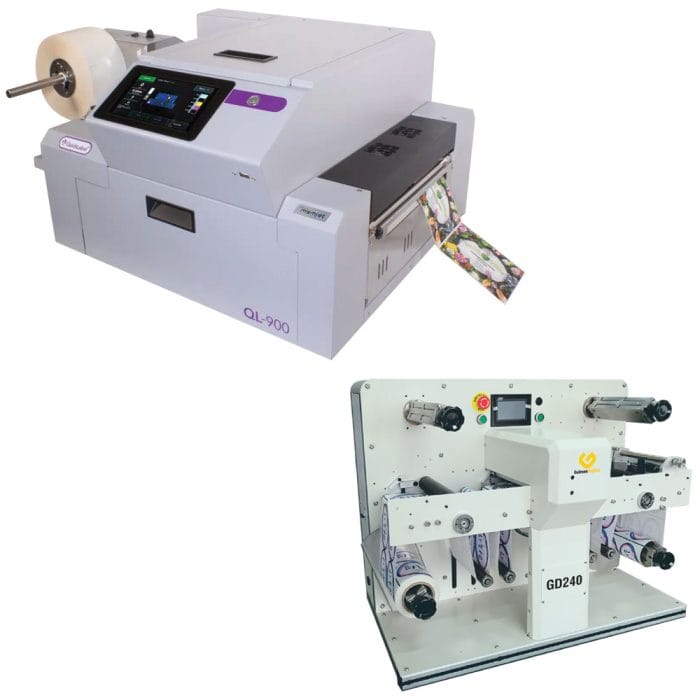
The consequence is predictable: you either over-order to hit a price break and then write off outdated stock, or you pay short-run premiums that push your cost per label well above what in-house production would cost at similar volumes. Neither outcome serves your business.
Australia's printed labels market is projected to grow from USD 1.44 billion in 2025 to USD 1.94 billion by 2034, reflecting steady expansion in food, beverage, health, and industrial sectors. That volume growth means label costs are not going away — and the manufacturers who capture control of those costs internally will have a structural advantage over those who remain dependent on external converters.
Lead Times That Break Production Flow
Typical outsourced lead times range from several days to several weeks, depending on the converter's schedule, whether artwork changes are involved, and freight time to your facility. In a regulated category like food and beverage, where an allergen declaration or country-of-origin statement may need updating on short notice, that lead time is not an inconvenience — it's a compliance risk.
When labels are delayed, you face a choice between holding finished goods in the warehouse or running partial production. Both tie up working capital.
Is Your Business Ready to Bring Label Printing in-House?
Before investing in equipment, assess readiness across four areas:
- Volume: Businesses printing 500 or more labels per week typically see a strong return on in-house investment. Below that threshold, outsourcing may still be the more cost-effective option — though the flexibility benefits remain regardless of volume.
- Label types: Identify every label type your business uses — colour labels, compliance labels, barcode labels, or a combination. Each has different print requirements, and your equipment choice should accommodate your full range, not just your most common label.
- Substrates: Consider what surfaces your labels must adhere to — glass, plastic, metal, flexible packaging, or frozen goods. Substrate compatibility is a primary factor in printer selection, particularly for food and beverage manufacturers.
- Space and skills: Modern digital label printers are compact and designed for ease of use. A standard commercial system requires no more floor space than a large office printer and typically takes one to two hours to learn. No specialist printing knowledge is required.
What Equipment Do You Need?
A complete in-house label printing setup has three components.
1. A Digital Label Printer
The core of your setup. Digital label printers divide into two main technologies:
Inkjet printers use liquid ink applied directly to the label substrate. They excel at producing vivid colour, handle a wide range of substrates, and suit businesses that need high print quality across diverse label types. Water-resistant and oil-resistant outputs are achievable with the right ink and substrate combination.
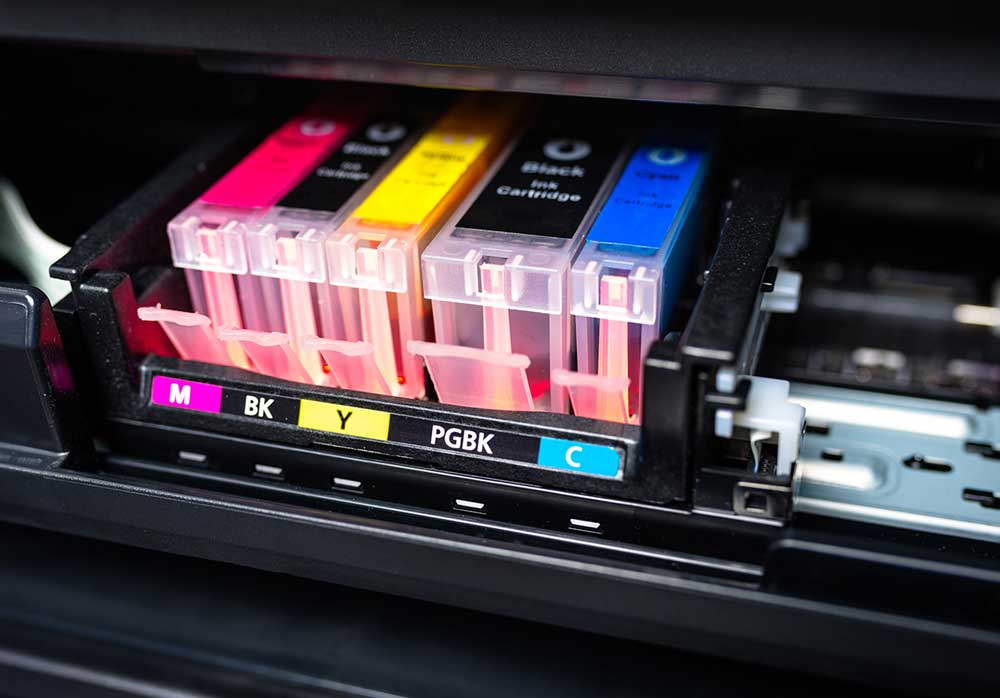
Toner-based (laser) printers use dry toner fused to the substrate under heat. They are typically faster per label at high volumes, produce sharp text and barcodes, and suit businesses with consistent, high-volume runs.
Key specifications to evaluate: print width, print speed (labels per minute), resolution (dpi), and confirmed substrate compatibility for your specific label materials.
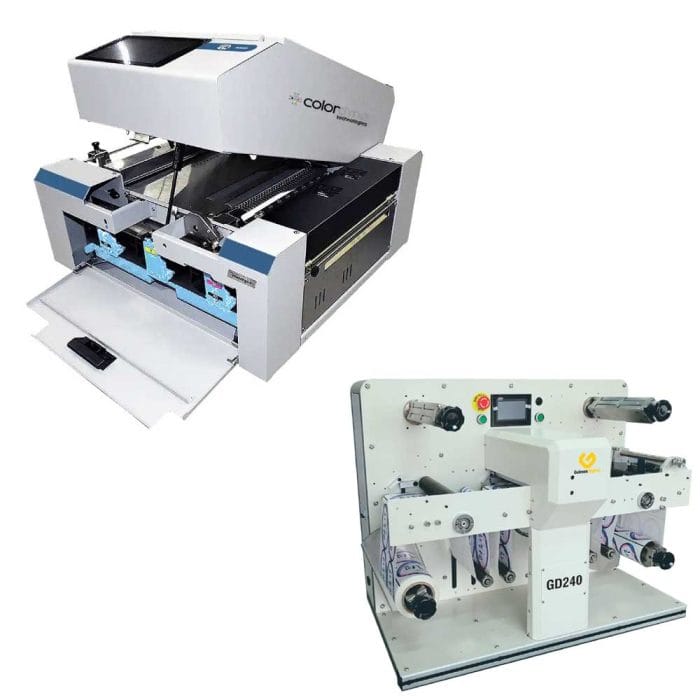
Gulmen Digital supplies a range of commercial and industrial label printers for Australian manufacturers, with equipment suited to food and beverage, industrial, and general commercial applications. Their team can advise on the right system for your specific substrate and volume requirements.
2. Label Finishing Equipment
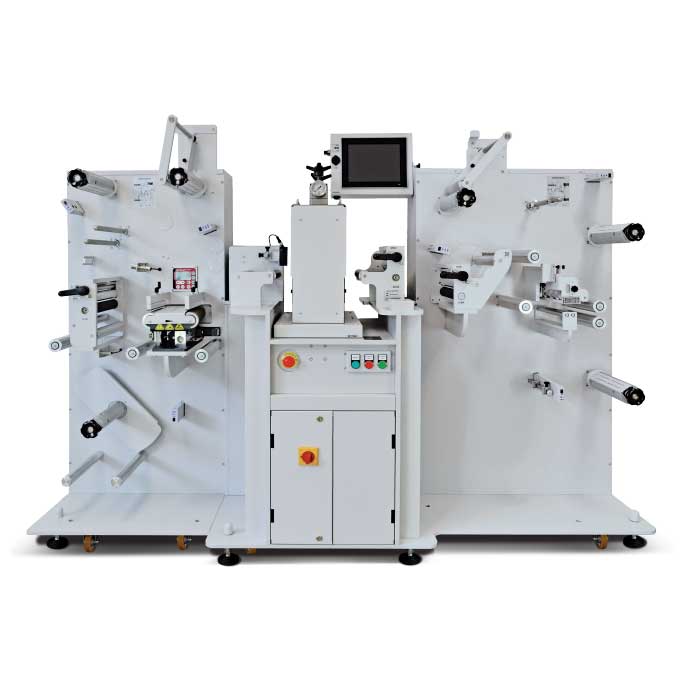
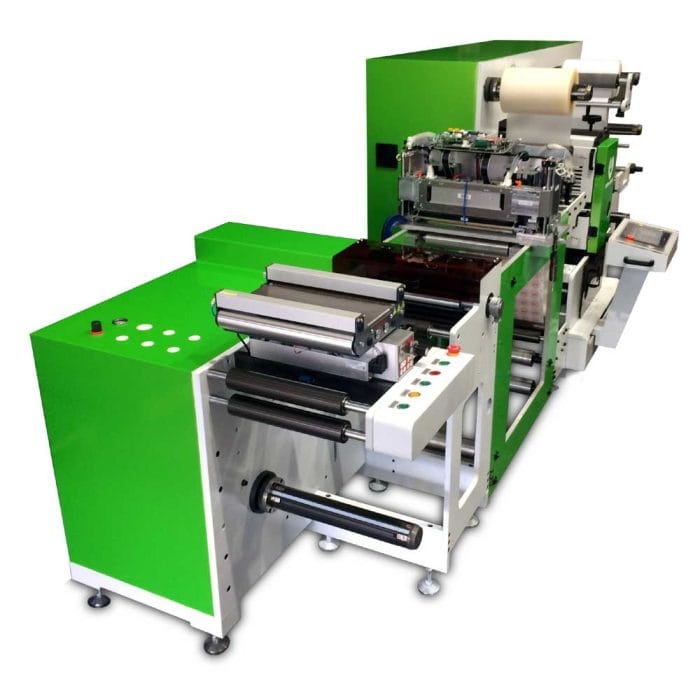
Finishing is the step that turns printed label stock into production-ready labels. It includes die-cutting to shape, laminating for durability, and slitting to size.
Label finishing equipment is available in inline configurations (integrated with your printer for a single-pass workflow) or offline (a separate unit you feed printed stock through). Inline finishing suits higher-volume, consistent production. Offline finishing offers more flexibility and is often the right starting point for businesses new to in-house production.
Skipping finishing equipment is one of the most common mistakes businesses make when setting up in-house. Printed labels without proper finishing are not production-ready.
3. Label Stock and Consumables
Selecting compatible label stock — the material your printer applies ink or toner to — is as important as the equipment itself. Your printer supplier should be able to recommend tested stocks for your application and substrates.
Calculate your cost per label across three inputs: ink or toner consumable cost, label stock cost, and amortised equipment cost per label. At 500+ labels per week, this calculation typically comes out well below outsourced label pricing.
Step-by-Step: How to Make the Transition
Step 1: Audit Your Current Label Spend
Compile 12 months of outsourced label invoices. Calculate your total spend, cost per label, and average lead time. Identify the specific pain points — rush orders, obsolete stock write-offs, compliance reprints — that are costing you beyond the base invoice.
Step 2: Define Your Label Requirements
List every label type, size, and substrate your business uses. Note any regulatory requirements — Food Standards Australia New Zealand (FSANZ) labelling requirements, ACCC country-of-origin rules, or industry-specific compliance obligations. Identify which labels are candidates for in-house production from day one.
Step 3: Choose the Right Printer and Finishing Setup
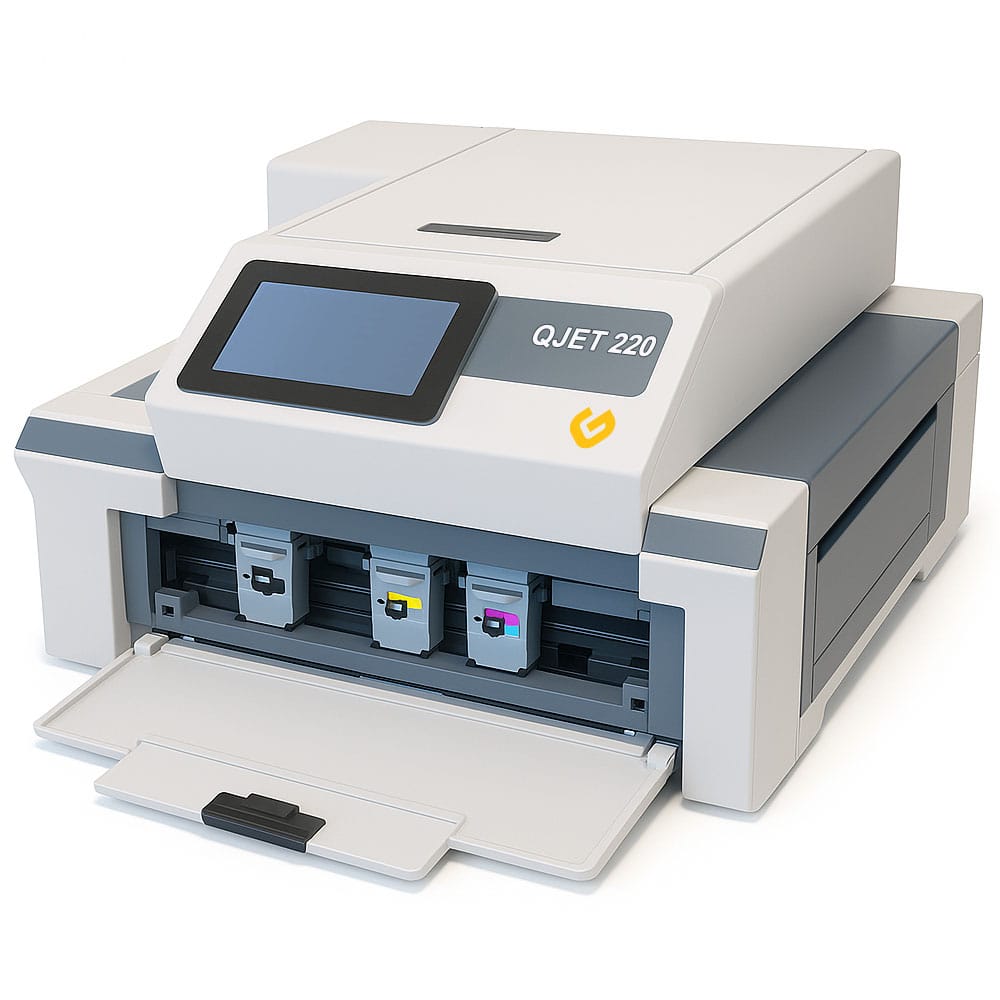
Use your requirements from Step 2 to shortlist equipment. Request print samples on your actual substrates from prospective suppliers. Evaluate total cost of ownership — equipment, consumables, and maintenance — not just the upfront purchase price.
Step 4: Set Up Your Production Workflow
Most commercial digital label printers connect to label design and print management software such as NiceLabel or BarTender. Your production flow will typically run: design → internal approval → print → finish → apply. Establish a proofing process before committing to full production runs.
Step 5: Run a Pilot Before Full Transition
Print one label type in-house while continuing to use your external supplier as backup. Validate print quality, substrate adhesion, barcode scannability, and throughput. Adjust your setup before cutting over fully.
Step 6: Train Your Team and Document Your Process
Train the relevant operators — typically one to two hours per person on a modern commercial label printer. Document your print profiles, approved substrates, and standard operating procedure so output remains consistent regardless of who is operating the equipment.
What Does In-House Label Printing Cost in Australia?
Entry-level commercial digital label printers suitable for SME manufacturers start from the low to mid five-figure range (AUD). Industrial and high-speed systems for higher volumes sit higher. Finishing equipment adds to the initial investment, with offline finishers available from the mid four-figure range upward.
Consumable costs — ink or toner plus label stock — vary by label type and print coverage. Your supplier should be able to provide a cost-per-label calculation based on your specific requirements.
For businesses printing 500 or more labels per week, payback periods of 12 to 18 months are common when the full cost of outsourcing (including rush fees, minimum order wastage, and compliance reprints) is factored into the comparison.
Common Mistakes to Avoid
- Buying underpowered equipment: Underestimating your volume or range of label types leads to a system that can't keep up with production demands.
- Skipping finishing equipment: Printing without die-cutting and laminating severely limits what you can produce and deliver as a finished label.
- Ignoring substrate compatibility: Not all printers handle all substrates. Confirm compatibility with your specific materials before purchasing.
- Evaluating on purchase price alone: Total cost of ownership — consumables, maintenance, and throughput efficiency — is the correct basis for comparison.
- No pilot phase: Cutting over entirely from outsourcing without a parallel pilot run removes your fallback if issues arise in the transition.
How Gulmen Digital Helps Australian Manufacturers Go In-House
Gulmen Digital is a specialist supplier of commercial and industrial label printing and finishing equipment for Australian manufacturers. Their range covers digital label printers, finishing machines, and auxiliary equipment — supporting a complete in-house label production workflow.
As an Australian-based business, Gulmen Digital provides local support, advice on Australian regulatory requirements, and access to equipment suited to the conditions and substrates common in Australian manufacturing.
To discuss your production requirements and find the right in-house label printing setup for your business, visit gulmendigital.com.au or contact the Gulmen Digital team directly.
Conclusion
Bringing label printing in-house gives Australian manufacturers control over their production schedule, compliance, and label costs. The process is straightforward: audit your current spend, define your requirements, choose the right equipment, run a pilot, and transition with confidence.
For businesses printing at sufficient volume, the investment typically pays back within 12 to 18 months — and the operational benefits begin from the first day you print in-house.

Prefer to talk it through? Call (03) 9318 7177. Gulmen Digital's team is in Ravenhall, VIC.
Frequently asked questions
What size of business benefits most from in-house label printing?
Manufacturers printing 500 or more labels per week typically see the strongest financial return. At that volume, savings on converter margins, minimum order quantities, and rush fees compound quickly. Below that threshold, the main benefit is flexibility and control rather than pure cost reduction.
How do I choose between inkjet and toner?
Inkjet suits businesses that need vivid colour, diverse substrates, and high visual impact across multiple SKUs. Toner suits higher, consistent volumes where speed, sharp text, and barcode clarity are the priority. Base your decision on your SKU mix, print coverage, and substrate requirements — not brand preference.
Do I need finishing equipment, or can I just print?
You need finishing equipment if you want production-ready, die-cut labels. Printing alone produces rolls or sheets of uncut stock. Finishing provides die-cutting, laminating, and slitting so labels can be applied efficiently on the line. Skipping this step is one of the most common — and costly — mistakes manufacturers make.
How do I calculate my real cost per label?
Use three inputs: ink or toner cost per label, label stock cost per label, and amortised equipment cost per label. Compare this against your outsourced cost per label — including minimum order wastage, rush fees, and compliance reprints — not just the base invoice.
What payback period can I expect? For manufacturers printing 500 or more labels per week, 12 to 18 months is a common payback window once the full cost of outsourcing is included.
How does in-house printing help with regulatory changes?
When FSANZ, ACCC, or category-specific rules change, you can update artwork and print new labels immediately — rather than waiting days or weeks for a converter. This reduces compliance risk, avoids scrapping obsolete stock, and keeps production moving.
Can in-house printed labels meet Australian food and beverage standards?
Yes. Regulation applies to label content, not who prints it. Provided your labels reflect FSANZ requirements — allergen declarations, nutrition panels, country-of-origin rules — and your printer and substrates deliver legible, durable output, in-house printed labels are fully compliant.
Can Gulmen Digital help with equipment selection and ROI calculations?
Yes. Gulmen Digital specialises in commercial and industrial label printers and finishing systems for Australian manufacturers. Their team can review your volumes, substrates, regulatory needs, and budget to recommend appropriate equipment and provide cost-per-label and payback estimates tailored to your operation.




Comments ()