
Wine Label Printer Australia: The Best Systems for Boutique and Commercial Wineries
Every new vintage triggers the same operational problem for Australian wineries: new artwork, updated alcohol content declarations, revised standard drinks counts, and often a refresh to branding or awards copy. If you outsource label printing, each of those changes means new setup charges, minimum order quantities that exceed your batch size, and lead times that compress your bottling schedule. For a boutique winery releasing five SKUs across a season, that cost compounds quickly.
Digital label printers designed specifically for beverage production have changed that equation. Modern systems now handle wine bottle labels with the resolution, substrate flexibility, and finishing quality that premium wine branding demands — at a cost structure that works for both boutique and commercial producers.
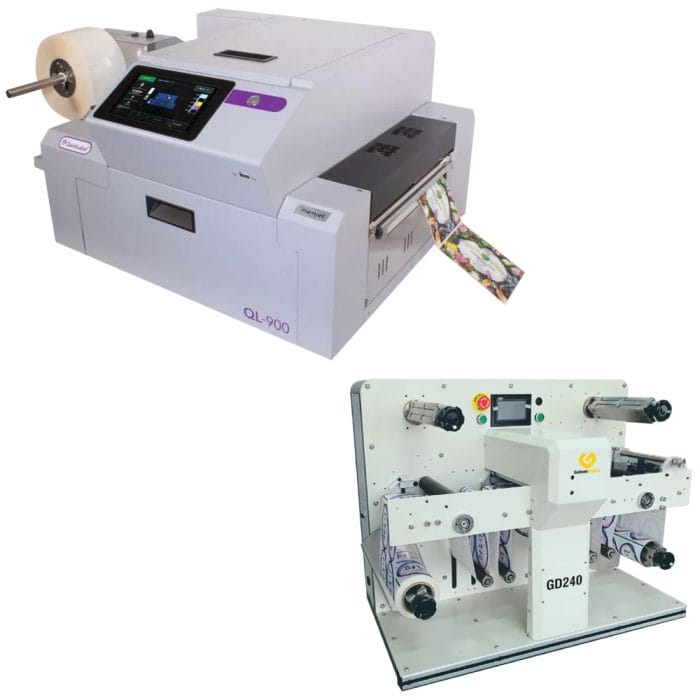
This guide covers what distinguishes wine label printing from general label work, how system requirements differ by production scale, what features to prioritise, and how Gulmen Digital supports Australian wineries through the selection process.

Prefer to talk it through? Call (03) 9318 7177. Gulmen Digital's team is in Ravenhall, VIC.
Why Wineries Are Moving to In-House Label Printing
Vintage Changes Create Constant Reprinting Cycles
Australian wine labels are not static assets. Vintage year, alcohol content, standard drinks, varietal composition, and geographical indication claims can all shift from one release to the next. Under FSANZ and Wine Australia requirements, the alcohol content statement must be accurate to within 1.5% alc/vol, and the standard drinks count must be accurate to the first decimal place for packages containing ten or fewer standard drinks.
Wine Australia's labelling guide outlines these requirements in full. When those figures change , and they often do between vintages ; your label artwork must be updated before a single bottle is labelled.
Outsourcing each revision means paying prepress or plate charges, waiting for proofs, approving artwork remotely, and absorbing freight costs. In-house digital printing removes that cycle entirely. You update the artwork file, load the approved stock, and print exactly what the current bottling run requires.
Short Runs Are Structurally Expensive to Outsource
Australia has over 2,500 wineries, and a substantial proportion are boutique producers releasing fewer than 5,000 cases per year. At that scale, a typical SKU might require 1,000 to 3,000 labels per vintage — well below the quantities where trade converters offer competitive pricing. Converters charge setup costs regardless of run length, and their business model is built around larger volume customers. Short runs are accommodated, but they are priced accordingly.
That pricing structure means boutique wineries often pay a per-label cost for outsourced printing that is several times what they would pay with an in-house system once equipment is amortised.
Label Aesthetics Are Non-Negotiable in Wine
Wine labels are a primary purchase driver in a category where buyers cannot taste the product before choosing it. Premium wine labels — embossed text, metallic foil, high-gloss finish, complex colour gradients — have historically required specialist converters. Modern digital label printers now achieve comparable quality on the right substrates, including gloss and matte stocks, textured papers, and foil-effect label materials.
The ability to proof a label and see the finished output before committing to a full run is a meaningful advantage. In-house production removes the uncertainty of receiving a full batch of labels that do not match the approved sample.
What Makes Wine Label Printing Different
Substrate Requirements
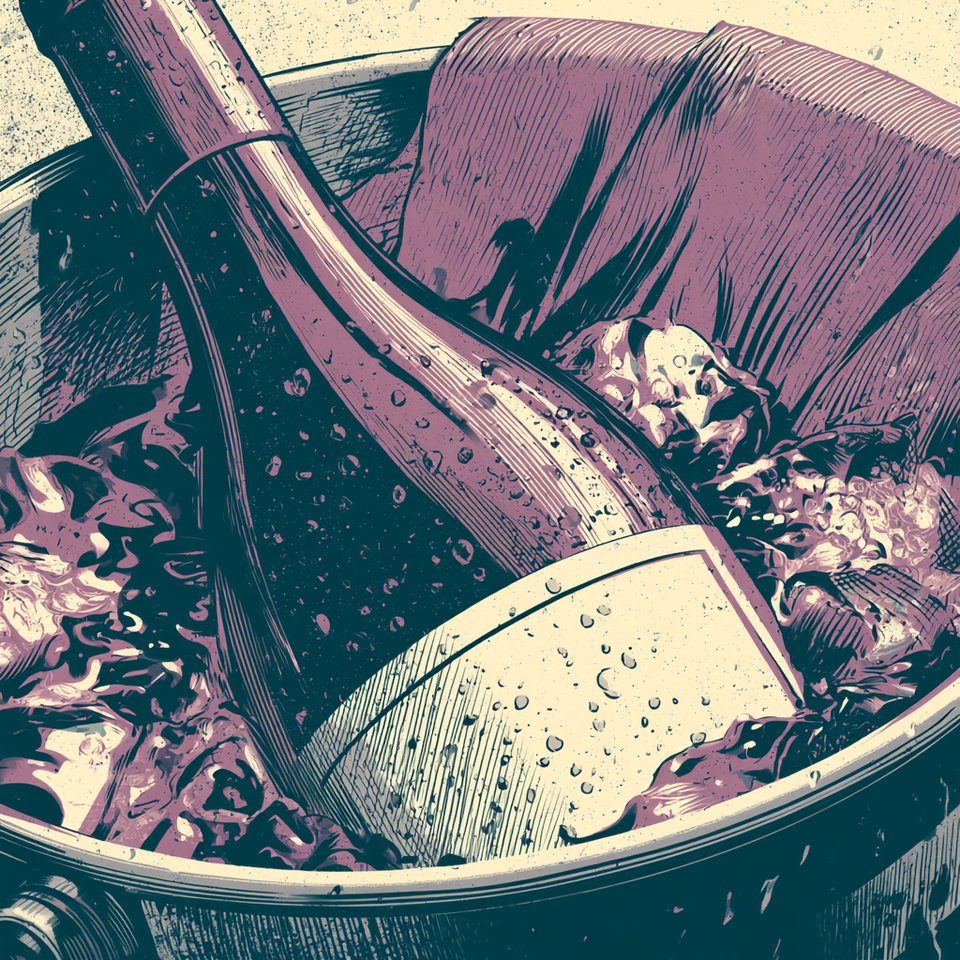
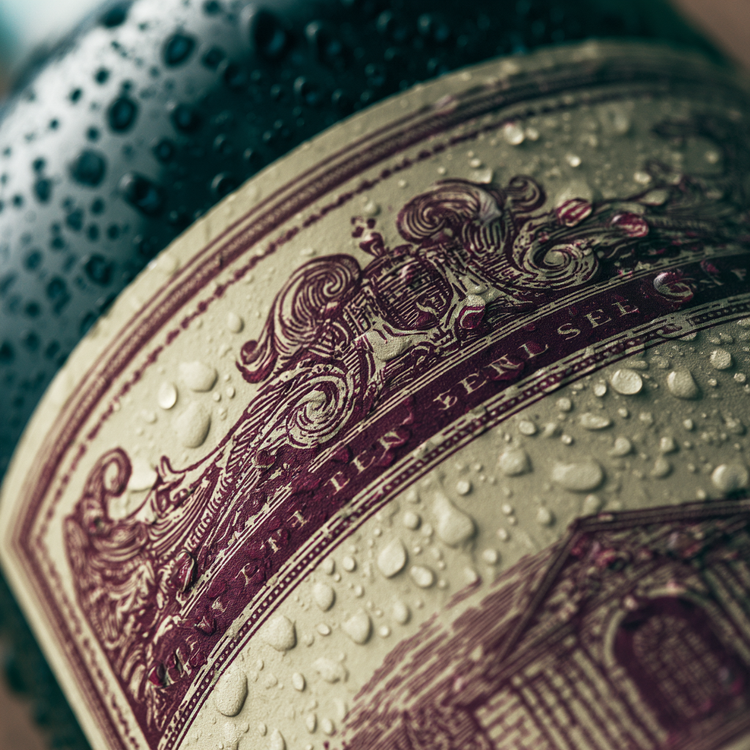
Wine labels face conditions that most other product labels do not. White wines, sparkling wines, and rosés are served chilled or iced, which means labels must withstand condensation and extended exposure to moisture without delaminating, wrinkling, or losing adhesion. Labels on bottles stored in wine fridges or ice buckets must remain intact and legible.
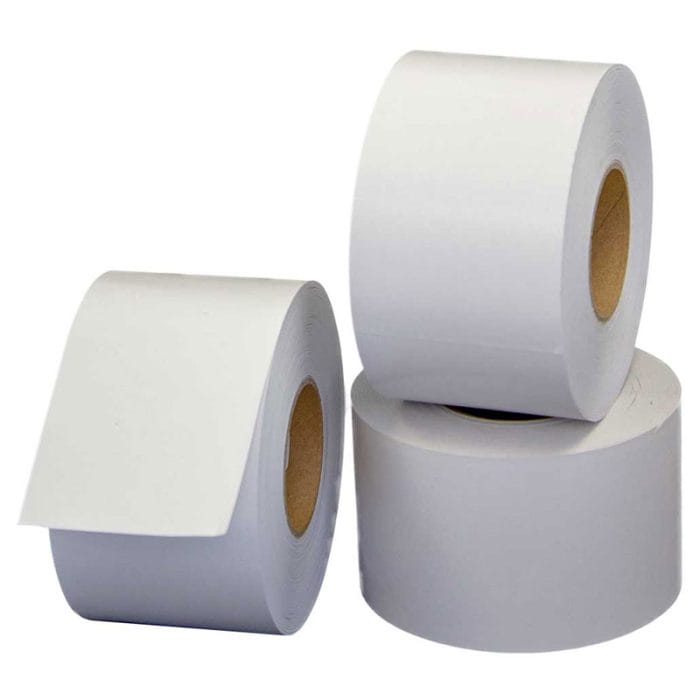
The label stock you select must be rated for cold and wet environments. Self-adhesive labels — the standard for digital label printing — are available in moisture-resistant and freezer-grade variants. Confirming substrate compatibility with your printer and finishing equipment before committing to a stock is essential.
Print Quality and Finish
Wine label print quality is assessed against a high benchmark. Colour accuracy, fine detail reproduction, and finish consistency across a run all matter. Key specifications to evaluate include:
- Print resolution: Minimum 1,200 dpi for sharp text, fine gradients, and detailed artwork. Higher resolution (1,600 dpi and above) for premium label tiers.
- Colour gamut: Wide colour gamut inkjet systems reproduce a broader range of wine label colours than standard CMYK toner systems.
- Finish options: Gloss, matte, and satin overlaminates applied through a finishing unit extend the aesthetic range significantly and protect the printed surface.
- Metallic and foil effects: Some digital inkjet systems support metallic inks or silver/gold substrates that approximate foil stamping — relevant for premium and reserve label tiers.
Label Shape and Die-Cutting
Wine labels depart from standard rectangles more often than most label categories. Arched tops, ovals, scalloped edges, and paired front-and-back rolls with different dimensions in the same job are all common. That design flexibility requires either:
- Pre-die-cut stock in your required shapes, ordered from your stock supplier — simpler and lower cost for stable label formats that do not change between vintages
- A digital finishing system with contour cutting capability, which allows any shape to be cut from a printed roll — necessary if you change label formats by vintage, tier, or SKU
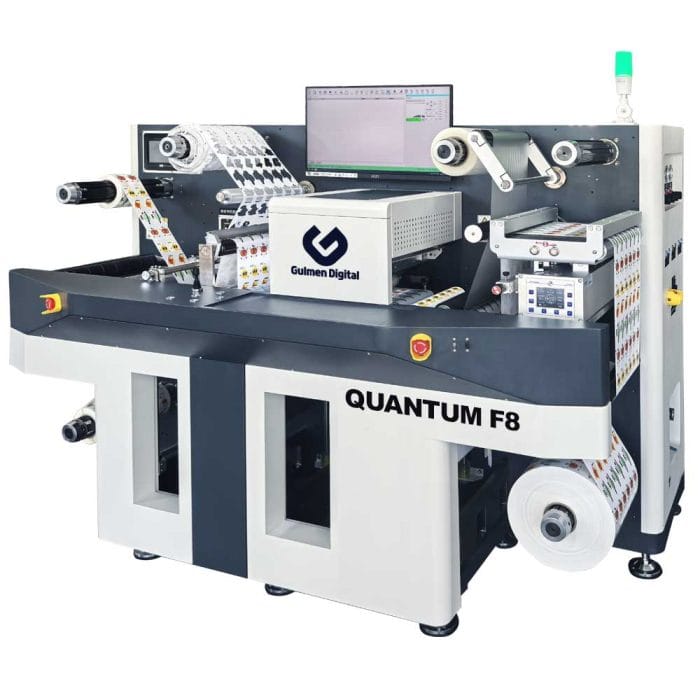
Daycon and other Australian label suppliers can provide pre-cut wine label rolls in standard shapes, while digital finishing systems from suppliers like Gulmen Digital allow fully flexible shape cutting in-house. The right approach depends on how often your label shapes change and how many distinct formats you need to produce.
Choosing the Right Wine Label Printer: Boutique vs. Commercial
System requirements differ substantially between boutique and commercial producers. The table below outlines the key decision factors at each scale.
For Boutique Wineries
A boutique winery label printer needs to deliver premium colour quality, handle moisture-resistant wine label stocks, and fit within a smaller footprint and budget. Compact roll-to-roll inkjet label printers , paired with an offline digital finisher for laminating and die-cutting ; are the standard configuration for this segment.
Key specifications to evaluate:
- Minimum and maximum label width: confirm the system covers both your front labels and narrower neck labels for 750 mL bottles and any larger formats you produce
- Print resolution: minimum 1,200 dpi for premium label detail
- Substrate compatibility: test on your preferred wine label stocks — moisture-resistant coated papers, pearlescent stocks, or textured uncoated papers if your brand calls for them
- Ease of changeover: wine labels change between vintages and SKUs; the system should allow fast job switching without lengthy calibration or cleaning cycles
- Offline finishing compatibility: ensure the printer output integrates with your chosen laminator and die-cutter
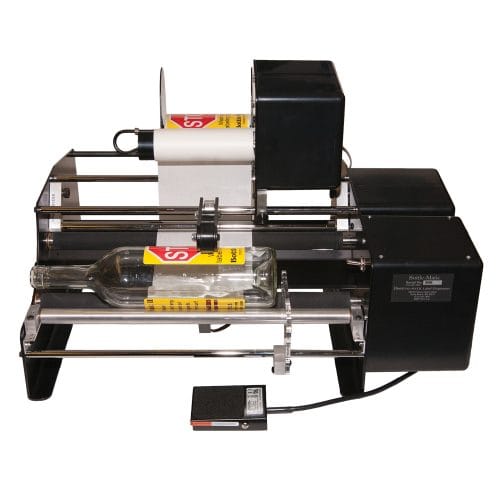
Boutique wineries benefit most from in-house production on their short, seasonal, and limited-edition runs — the club selections, museum releases, and single-vineyard labels that attract premium pricing from a trade converter. Owning the equipment means those runs carry only the marginal cost of ink and media, not setup charges.
For Commercial Wineries
Commercial wineries with 5,000+ cases and multiple tiers and SKUs require a different class of equipment. Industrial digital label printers designed for continuous production runs — with inline finishing that integrates laminating, die-cutting, and slitting into a single workflow — are the appropriate solution at this scale.
Key specifications to evaluate:
- Throughput: labels per minute or metres per minute must align with your bottling line speed — a label printer that creates a production bottleneck defeats its purpose
- Print width: larger formats for full-wrap back labels, promotional panels, and multi-lane printing increase efficiency
- Duty cycle and uptime: industrial systems are rated for extended operation; check mean time between failures and service interval schedules
- Ink or toner cost per square metre: at commercial volumes, consumable costs per label have a significant impact on total cost of ownership — model this before committing to a platform
- Integration: roll orientation, core size, and unwind direction must match your existing bottling and labelling equipment
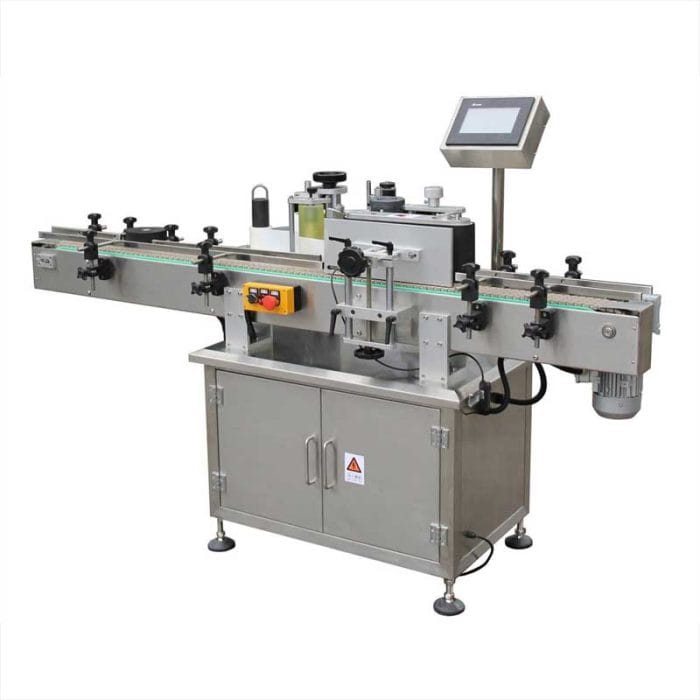
At commercial scale, the buying decision shifts from purchase price to total cost of ownership. A system with higher upfront cost but lower ink costs, faster throughput, and better uptime can outperform a cheaper alternative within the first year of operation.
Key Features to Look For in a Wine Label Printer
When evaluating systems for wine label production, prioritise the following:
- Moisture and condensation resistance on output — confirmed for the label stock you intend to use, not just the printer specification sheet
- High print resolution — 1,200 dpi minimum; 1,600 dpi or higher for premium label tiers
- Substrate flexibility — confirmed compatibility with gloss, matte, textured, and moisture-resistant wine label stocks
- Colour accuracy and consistency — Delta E performance data for the printer on your intended substrates
- Finishing capability — die-cutting, laminating, and slitting, either inline or through a paired offline unit
- Label width range — accommodates both standard front labels (typically 90–130 mm wide) and back labels
- Label design software compatibility — NiceLabel, BarTender, or vendor-supplied software with artwork import capability
- Local support and consumables availability — Australian supplier support for ink, toner, and label stock sourcing
Wine Label Printing Costs in Australia
The total cost of an in-house wine label printing setup covers equipment, finishing, and ongoing consumables.
Equipment: Entry-level commercial digital label printers suitable for boutique winery volumes start in the low to mid five-figure range (AUD). Industrial systems for commercial winery volumes are priced higher. Offline finishing units for boutique setups are available from the mid four-figure range; inline industrial finishing systems add proportionally more.
Consumables: Cost per label varies by print coverage, ink or toner type, and label stock grade. Wine label stock — particularly moisture-resistant and premium-finish varieties — costs more per roll than standard label stock. Your supplier should provide a cost-per-label estimate based on your specific requirements.
Return on investment: For a boutique winery printing 10,000 or more labels per year, in-house production commonly achieves payback within 18 to 24 months when the full cost of outsourcing is factored in — including setup fees, short-run premiums, freight, and the cost of reprinting labels for vintage updates. For commercial wineries at higher volumes, payback periods are typically shorter.
Australian Wine Label Regulatory Requirements
Wine label compliance in Australia is governed by FSANZ and Wine Australia, with specific requirements that apply whether you print in-house or outsource. Mandatory label elements for Australian wine include:
- Producer or bottler name and address
- Brand and product name
- Vintage year, where a vintage claim is made
- Alcohol content (accurate to within 1.5% alc/vol for still and sparkling wine above 6.5% alc/vol)
- Standard drinks count (to one decimal place for packages containing ten or fewer standard drinks)
- Allergen declarations, including sulphites where present above 10 mg/kg
- Pregnancy warning symbol and statement, in the format specified by FSANZ
- Country of origin
- Net volume
For a standard 750 mL bottle, mandatory volume-related text must reach a minimum character height of 3.3 mm. That dimension matters when setting up artwork: text that appears readable on screen at small sizes can fall below the minimum print height, which is a common compliance failure in submitted artwork files.
In-house printing supports compliance by giving your winery direct control over artwork versioning, proofing, and the ability to correct and reprint before labels are applied to bottles. If laboratory analysis returns an alcohol figure that differs from the estimate used in your initial artwork, updating and reprinting the relevant labels takes hours in-house — it takes days or weeks when outsourced.
Wineries should always verify current requirements directly with Wine Australia's labelling guidance and FSANZ. Gulmen Digital systems print compliant layouts; compliance responsibility for the content of the label remains with the winery.
How Gulmen Digital Supports Australian Wineries
Gulmen Digital is a specialist supplier of commercial and industrial label printing and finishing equipment, based in Maidstone, Victoria and serving the Australian market. Their range includes digital label printers, finishing machines, and auxiliary equipment suited to food and beverage label production, including wine and beverage bottle labels.
As an Australian-based business, Gulmen Digital provides local expertise on substrate selection, finishing configurations, and compliance with Australian wine labelling requirements. They can advise on the right system for your production scale — whether you are a boutique producer printing seasonal runs or a commercial winery requiring industrial throughput.
To discuss your winery's label printing requirements, visit gulmendigital.com.au or contact the Gulmen Digital team directly.
Conclusion
Wine labels are brand-critical and compliance-critical — and every vintage cycle makes the case for in-house production stronger. Modern digital label printers give Australian wineries the resolution, substrate flexibility, and finishing quality that premium wine branding demands, at a cost structure that suits both boutique and commercial producers.
The decision factors are clear: assess your volume, define your label requirements, evaluate systems against the feature checklist above, and calculate the return on investment for your operation. For most Australian wineries printing 10,000 or more labels annually, in-house label printing is a financially sound and operationally practical choice.
Gulmen Digital can walk you through the selection process and recommend the right equipment for your winery's specific needs. Visit gulmendigital.com.au to get started.

Prefer to talk it through? Call (03) 9318 7177. Gulmen Digital's team is in Ravenhall, VIC.
Frequently asked questions
1. Why should an Australian winery consider in-house label printing?
Every vintage cycle brings updated alcohol content declarations, revised standard drinks counts, and often new awards copy or branding changes. Outsourcing each revision means setup charges, minimum order quantities, freight costs, and lead times that compress your bottling schedule.
In-house digital label printing removes that cycle — you update the artwork file, load your approved stock, and print exactly what the current run requires. For wineries releasing multiple SKUs across a season, the cost and time savings compound quickly.
2. What makes wine label printing different from general label printing?
Wine labels face conditions most other product labels do not. White wines, sparkling wines, and rosés are served chilled or iced, so labels must withstand condensation and extended moisture exposure without delaminating or losing adhesion.
Wine labels also carry strict compliance requirements under FSANZ and Wine Australia — including precise alcohol content, standard drinks counts, allergen declarations, and pregnancy warning details — meaning artwork accuracy is non-negotiable. Add the premium finish expectations of the category, and wine label printing demands more from both the stock and the equipment than general label work.
3. What type of label printer is best for a boutique winery?
A boutique winery typically benefits most from a compact roll-to-roll digital inkjet label printer paired with an offline digital finisher for laminating and die-cutting.
This configuration suits seasonal production cycles, short per-SKU runs of 1,000 to 5,000 labels, frequent artwork changes between vintages, and the premium colour quality that wine branding demands — without the footprint or cost of industrial equipment. Gulmen Digital can advise on the right configuration for your specific volume and label formats.
4. What type of label printer is best for a commercial winery?
Commercial wineries producing 5,000 or more cases annually typically need an industrial digital label printer with inline finishing that integrates laminating, die-cutting, and slitting into a single workflow. The key criteria shift from flexibility to throughput, uptime, and total cost of ownership — particularly ink or toner cost per square metre at scale.
The printer's output speed must also align with your bottling line speed; a system that creates a production bottleneck defeats the purpose of bringing printing in-house.
5. What print resolution should a wine label printer have?
A minimum of 1,200 dpi is recommended for sharp text, fine gradients, and detailed artwork. For premium and reserve label tiers — where colour accuracy, fine detail, and finish consistency are assessed against a high benchmark — 1,600 dpi or higher is preferable.
It is also worth noting that FSANZ requires mandatory volume-related text on a standard 750 mL bottle to reach a minimum character height of 3.3 mm; a higher-resolution system makes it easier to achieve that clearly at small text sizes.
6. Can digital label printers handle premium finishes like matte, gloss, or foil effects?
Yes. Modern digital label printers, when paired with the right finishing equipment and substrates, can produce gloss, matte, and satin overlaminates, as well as metallic-effect finishes using silver or gold substrates or metallic inks.
While digital systems approximate rather than replicate traditional foil stamping, the results are suitable for premium and reserve label tiers. The specific finishes available depend on your printer, finishing unit, and the label stocks you select — Gulmen Digital can advise on compatible configurations.
7. What compliance issues should wineries watch for when printing wine labels in-house?
Whether you print in-house or outsource, your winery remains responsible for label compliance. Under FSANZ and Wine Australia requirements, mandatory elements include: producer name and address, alcohol content accurate to within 1.5% alc/vol, standard drinks count to one decimal place for packages containing ten or fewer standard drinks, allergen declarations (including sulphites above 10 mg/kg), the pregnancy warning symbol and statement in the FSANZ-specified format, vintage year where claimed, country of origin, and net volume.
In-house printing supports compliance by giving you direct control over artwork versioning — if laboratory analysis returns an alcohol figure that differs from your initial estimate, you can update and reprint within hours rather than days. Always verify current requirements directly with Wine Australia's labelling guidance and FSANZ.
8. How do I choose the right wine label printer for my winery?
Start by mapping your production reality: annual case volume, label run sizes per SKU, how frequently your label formats or shapes change, what substrates and finishes your brand requires, and whether you need inline or offline finishing. Boutique producers should prioritise print quality, substrate flexibility, and ease of job changeover.
Commercial producers should prioritise throughput, duty cycle, uptime ratings, and total cost of ownership — particularly consumable costs per label at volume. Once you have those parameters clear, a specialist supplier can match you to the right system. Gulmen Digital works through exactly this process with Australian wineries — visit gulmendigital.com.au to start the conversation.


Comments ()