



Quantumjet Elite Review: Is This Industrial Label Printer Worth It for Australian Manufacturers? (2026)
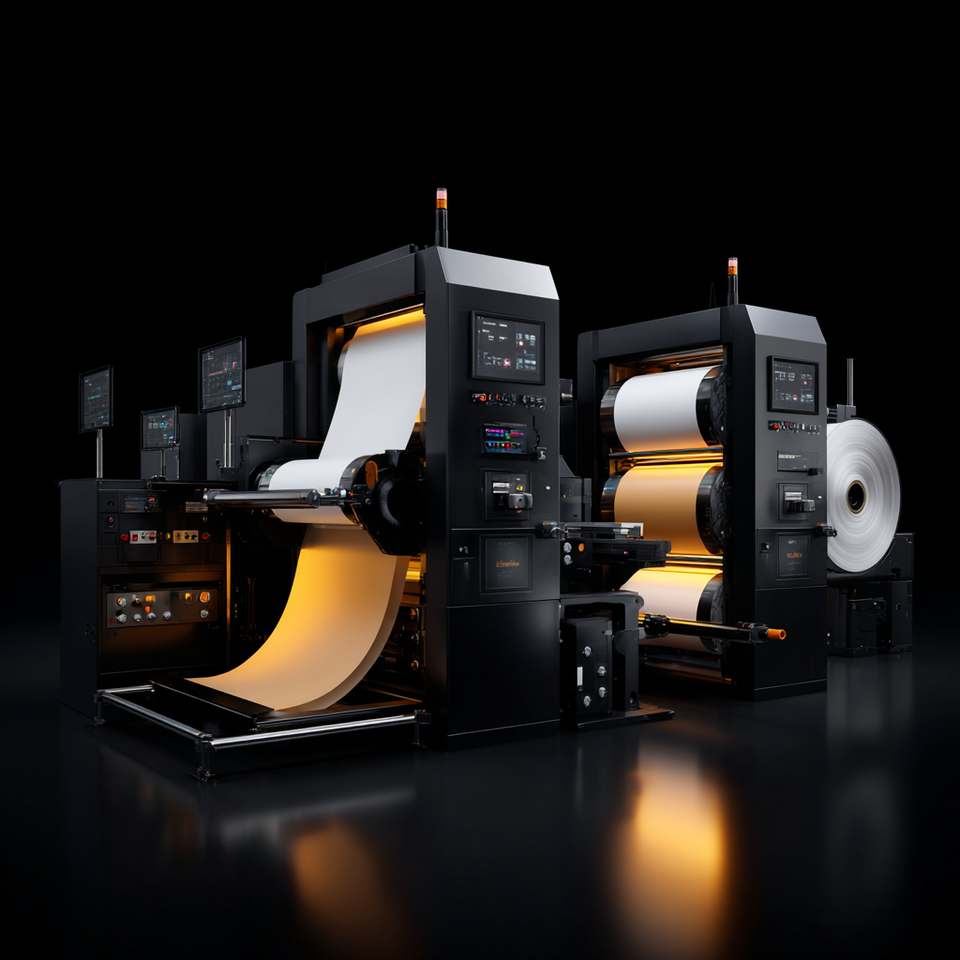
Your converter quotes a three-week lead time. Your FSANZ allergen update needs new labels on shelf in ten days. You have 14 SKUs, two seasonal variants launching next quarter, and a retailer asking when your carton barcodes will be GS1-compliant.
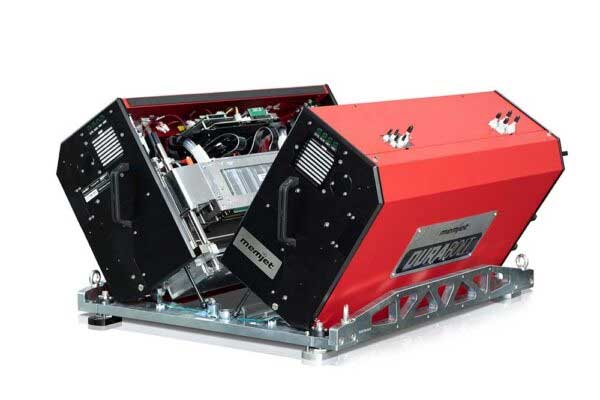
If that sounds familiar, you are exactly who the Quantumjet Elite was built for. It is Gulmen Digital's flagship industrial label printer—a CMYK digital label and packaging press designed and manufactured in Melbourne, built around the Memjet DuraBolt 325C inkjet print engine, and capable of printing up to 330 mm wide at 45 m/min on everything from 30 µm films to 450 gsm light cardboard.
The timing is not incidental. According to Future Market Insights, the global digital label printing market was valued at USD 12.3 billion in 2025 and is projected to reach USD 20.6 billion by 2035, driven by precisely the conditions Australian manufacturers face: short runs, frequent artwork changes, traceability requirements and on-demand production.
This review covers what the Quantumjet Elite actually does, who it suits, how it performs against entry-level and offshore alternatives, and how to model the ROI in AUD—so you can decide whether it belongs on your production floor.

Prefer to talk it through? Call (03) 9318 7177. Gulmen Digital's team is in Ravenhall, VIC.
What Is the Quantumjet Elite?
The Quantumjet Elite is a true production press—not a desktop device, not a light commercial unit. It is a continuous roll-fed industrial digital label printer built for manufacturing and converting environments, engineered for businesses that have outgrown outsourced or low-speed in-house label production.
The machine sits in a clearly defined space: above entry-level colour label printers that cap out at narrow web widths and modest speeds, and below the multi-million-dollar hybrid flexo-digital lines installed by major label converters. That middle ground is precisely where most Australian mid-sized manufacturers and growing brand owners operate—high enough volume to justify the capital, complex enough SKU mix to make digital's fast changeover financially compelling, and close enough to Melbourne to benefit from Gulmen's local engineering and support team.
Primary applications:
- Self-adhesive labels on roll stock
- Short-run carton and sleeve work on board up to 450 gsm
- Any production environment where artworks change frequently, compliance text must be exact, and label quality reflects directly on brand credibility
Verified Technical Specifications
These figures come directly from Gulmen Digital's published specification sheet. The DuraBolt 325C engine can run above 45 m/min at lower resolutions—Gulmen's own demonstration content shows operation at 65–70 m/min under certain conditions—but 45 m/min is the formal rated production specification, and the appropriate planning figure for ROI modelling and capacity assessments.
The 3 Engineering Decisions That Define the Quantumjet Elite
1. Memjet DuraBolt 325C Print Engine — Built for Duty Cycle, Not Demos
The Quantumjet Elite is powered by a tandem-head industrial inkjet engine with two printheads providing image coverage up to 324 mm wide. Each head is specified to jet up to 240 litres of ink over its service life and incorporates four-times nozzle redundancy per colour channel.
That redundancy is the difference between an industrial platform and a graphics device. Individual nozzle drop-outs are inevitable over time in any inkjet system—on the Quantumjet Elite, adjacent nozzles compensate automatically, maintaining visual uniformity across long runs without forcing a production stop.
2. CMYK Aqueous Pigment Inks — Durability Plus Food-Contact Sensibility
The press runs Memjet's pigment-based aqueous ink system, formulated for fast-drying, industrial-speed production. Pigment inks deliver better durability and light-fastness than dye-based alternatives—meaningful for labels exposed to ambient light, moisture or handling in retail and distribution.
The aqueous chemistry also matters for food and beverage applications, where label materials and inks may face indirect food-contact considerations and brand owners want to avoid the migration concerns associated with some UV-cured systems.
At 1,600 × 1,280 DPI, the system resolves fine gradients, halftone transitions and small-point text with the precision regulated industries—food, cosmetics, wine—require for both brand and compliance reasons.
3. Servo-Driven Web Handling — Where Presses Actually Differentiate
Web speed, tension and registration are controlled by closed-loop servo motors rather than mechanical tension systems. The practical result:
- More consistent print registration across long runs
- Better control transitioning between substrates of different weight and stiffness
- Reduced web waste from misfeeds and tension spikes
The unwind/rewind accommodates rolls up to 1,250 mm in diameter—large-format industrial rolls that minimise roll changes, setup waste and downtime. The machine is compatible with standard label roll cores and formats already used by Australian converters, so it slots into an existing supply chain without re-tooling.
Performance: What You Get on the Floor
Print Quality
Fine text—GS1 barcodes, ingredient panels, allergen declarations, nutritional information in small type—remains legible and scanner-compliant at production speed. That matters more in 2026 than ever: with the industry-wide GS1 Sunrise 2027 transition to 2D barcodes underway, barcode print precision is moving from a logistics nicety to a point-of-sale requirement.
Photographic imagery on wine labels, cosmetic packaging and specialty food products reproduces with smooth gradients and strong colour density, without the banding or colour shifts common on lower-resolution inkjet platforms. Colour accuracy over long runs depends—as on any digital press—on proper ICC profiling per substrate and stable web tension. The servo transport and nozzle redundancy support both mechanically.
Substrate Versatility
One platform covers:
- Paper label stocks — gloss, matte, coated, semi-gloss; the most common use case, no particular challenge
- PP and PE films — the workhorse substrates of beverage, household chemical and personal care labels, from 30 µm minimum thickness
- Metallic materials — premium foil-look labels for wine, spirits and cosmetics without the cost and lead time of hot foil stamping on short runs
- Light cardboard up to 450 gsm — extending the machine from pure label work into short-run carton, sleeve and header card production
The practical advantage: many digital label printers are restricted to films and lightweight papers. Running 450 gsm board on the same platform as thin PP films means the Quantumjet Elite consolidates work that would otherwise require two devices—or two outsourcing relationships.
Speed at Real Production Volumes
On a standard FMCG label with a 100 mm pitch, 45 m/min equates to approximately 450 labels per minute, or roughly 27,000 labels per hour. Monthly capacity in a single-shift operation runs well into the millions—more than sufficient for the 5,000–50,000+ label/month range that defines the target market.
Real-world throughput varies with label size, ink coverage, resolution mode and the number of changeovers per shift. The relevant planning figure is effective throughput across a mixed production day, not peak speed at minimum coverage. Gulmen Digital can model this directly against your job mix.
Changeover: Minutes, Not Hours
A job change on the Quantumjet Elite means calling up a new file, loading a new roll if required, and confirming registration—not the hour-plus plate, ink and anilox makeready of a flexo press.
For operations managing 10, 20 or 50 SKUs, the cost arithmetic shifts sharply. A few hundred labels for a seasonal variant or a compliance update—uneconomical on flexo—becomes routine. This is where digital most clearly outperforms analogue for the SKU-complex operations that dominate Australian food, beverage and personal care manufacturing. It is also exactly the trend the wider market confirms: traceability, customisation and short-run agility are the forces driving digital label adoption through 2035.
Operator Skill Requirements
The press runs from a touchscreen control panel—speed adjustments, job selection and configuration changes happen during production, with operators able to move between 5 m/min and 50 m/min mid-run without stopping the press.
Gulmen describes the platform as suitable for "cost-effective, non-expert print operators."
In an Australian market where specialist press operators are scarce and costly, that claim has real commercial weight: most manufacturers with basic industrial equipment competency can train operators to a functional production standard in days, not weeks.

Prefer to talk it through? Call (03) 9318 7177. Gulmen Digital's team is in Ravenhall, VIC.
How the Quantumjet Elite Compares
Versus Entry-Level Colour Label Printers
Desktop and benchtop units occupy a different market: 100–220 mm web widths, speeds rarely above 10–15 m/min at quality output, substrates limited to papers and thin films. They suit micro-businesses and prototyping.
The Quantumjet Elite's 330 mm width, 45 m/min speed and 450 gsm capability is a step-change, not an increment. For any business running 5,000+ labels per month across multiple SKUs, an entry-level printer becomes a bottleneck—driving overtime, outsourcing overflow or quality compromises. The Quantumjet Elite is designed to be the primary production asset, not a backup device.
Versus Offshore Industrial Machines
Comparable industrial inkjet presses exist offshore, and the spec sheets can look broadly similar. The difference is what happens after the purchase order.
Imported machines typically come with Australian agents rather than the manufacturer's own engineering team. Parts are sourced internationally. Service calls wait on technician travel or customs clearance. When label supply is tied directly to despatch schedules, extended downtime carries a direct, measurable cost.
The Quantumjet Elite is designed and manufactured in Melbourne. The engineering team is local. Parts are held locally. Service response does not depend on international freight. This is risk management, not sentiment—and it aligns with the broader 2026 shift toward sovereign manufacturing capability and supply chain resilience across Australian industry.
Who Should Buy the Quantumjet Elite
- Food and beverage producers managing multiple SKUs, seasonal labels and regulatory compliance where ingredient panels and allergen declarations must be accurate and legible at all times. FSANZ requirements continue to evolve—the regulator's own 2026 cost modelling puts hard numbers on what every label change costs across an Australian SKU portfolio
- Wineries and craft beverage brands needing premium photographic quality on paper and metallics, with short-run flexibility for vintage-by-vintage and variety-by-variety labelling
- Cosmetics and personal care manufacturers balancing brand imagery with compliance text across a complex portfolio
- Chemical and industrial product companies where hazard symbols, GHS classifications and barcodes must meet print quality standards for regulatory audit
- Label converters and trade printers adding high-resolution digital short-run capability alongside existing flexo or offset equipment
The common thread: volume sufficient to justify the capital, SKU complexity that makes digital changeover economics compelling, and quality requirements that rule out desktop-grade alternatives. The 5,000–50,000+ labels/month range is a starting point—the higher the volume, or the more outsourced work you consolidate onto the asset, the faster the payback.
The True Cost: An Illustrative ROI Model in AUD
Exact pricing is available directly from Gulmen Digital and is not published online. The model below uses conservative per-label assumptions to show how payback compresses with volume.
Key assumptions (illustrative only):
- Current outsourced full-colour label cost: A$0.07/label (blended, including freight and MOQ premiums)
- In-house variable cost on the Quantumjet Elite (ink + substrate): A$0.03/label
- Saving: A$0.04/label
The capital figures are placeholders—request a formal quote for accurate investment figures. The principle is what matters: payback compresses rapidly with volume, and improves further when you include indirect savings—reduced write-offs from obsolete artwork, eliminated rush freight, and shorter time from artwork sign-off to product on shelf.
For operations currently outsourcing on 5–10 business day lead times, the strategic value of on-demand production may justify the investment independently of per-label savings.
Pros and Cons
- Designed and manufactured in Melbourne — local engineering, support and parts
- Industrial-grade throughput: up to 45 m/min at production resolution
- Up to 1,600 × 1,280 DPI for premium colour and compliance-grade detail
- Broad substrate range: paper, PP/PE films, metallics, 450 gsm light cardboard
- Servo-driven web handling for consistent registration and reduced waste
- Large 1,250 mm unwind/rewind for extended runs
- Changeover in minutes, not hours
- Compatible with standard roll formats and existing converting equipment
Considerations:
- Industrial footprint — requires floor space, appropriate power and a production environment
- Capital only justified at sufficient monthly volume; very low-volume users face long payback
- CMYK-only; operations needing white ink on opaque or dark substrates should discuss substrate and finishing options with Gulmen
- As with any inkjet system, substrate qualification and per-material colour profiling are required for repeatable output
The Verdict: Should You Buy the Quantumjet Elite?
The question for Australian manufacturers in 2026 is not whether digital label capability is worth having—the global print label market is heading past USD 67 billion by 2031, and digital is taking an ever-larger share of SKUs. The question is which platform, at which capacity, with which support model.
For operations printing 5,000 to 50,000+ labels per month with real SKU complexity, the Quantumjet Elite makes a strong case: industrial throughput, compliance-grade resolution, a substrate range that consolidates two machines into one, and—uniquely in this class—a manufacturer 30 minutes from your facility instead of an agent 15,000 km from one.
The right way to evaluate a production investment is on your own artwork, on your own substrates. Gulmen Digital offers demonstrations using customer-supplied artwork and materials, technical consultation on workflow integration with existing finishing equipment, and tailored ROI modelling against your actual volumes, label sizes and current outsourcing costs.

Contact Gulmen Digital at 42 Orbis Drive, Ravenhall VIC 3023 to book a demonstration or request a formal quotation.

Comments ()