
Waterproof label printers: what survives wet, cold and handling
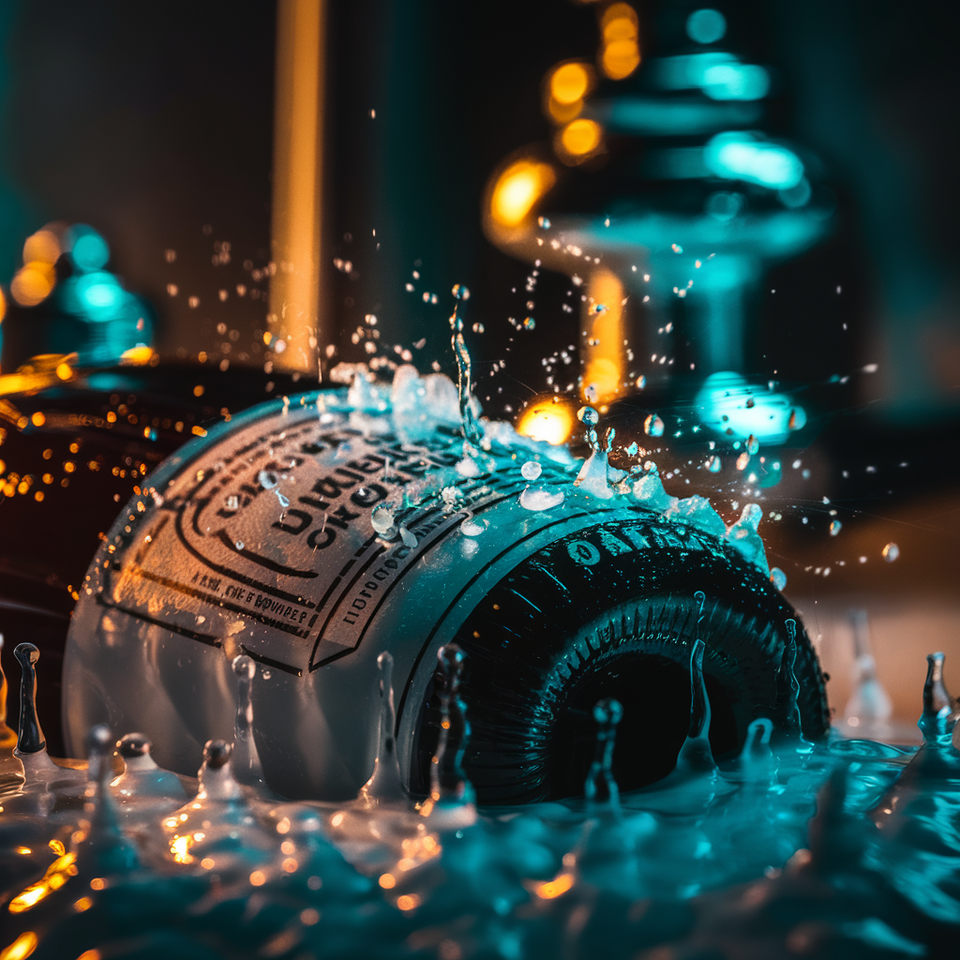
A waterproof label printer is not a single machine — it is a system: printer, synthetic face stock, durable ink or ribbon, and an adhesive matched to the specific wet or cold conditions the label must survive. Get that combination right and labels hold through ice buckets, wash-downs and freezer cycles; get any part wrong and even a "waterproof" label peels off a chilled bottle before the product reaches the shelf.
That distinction matters because most searches for waterproof label printer are really three different questions wearing the same words.
 Gulmen Digital
What "waterproof" actually has to mean
Splash and incidental wetting is the lightest requirement. The label sees brief contact — a spill, a rinse, a wipe — then dries between events. A synthetic polypropylene (BOPP) face stock with a standard permanent adhesive and pigment-ink or thermal-transfer print handles this comfortably. Most labels sold as "waterproof" are designed for this level.
Repeated wetting and condensation is where most projects fail. Cold beverages, refrigerated foods and pharmaceutical cold-chain products cycle between the cold room and ambient air constantly. Condensation forms on the container surface, sits against the label edge, and works its way under the adhesive over dozens of cycles. The face stock may be fine — it's a film, it doesn't absorb water — but a standard permanent adhesive loses its grip when it was never designed to bond through condensation or at low temperatures. The label slides or lifts at the corners long before the print degrades.
Full immersion is the most demanding tier. Containers that sit in ice baths, pass through hot-water wash cycles, or are stored in standing meltwater need labels where every component — face stock, ink and adhesive — is rated for extended submersion. Research on water-based acrylic adhesives for beverage labels shows that well-specified constructions can survive 24 hours in a cold-water bath, with structural failure occurring in the substrate rather than at the bond line. That's the target: the label tears before it peels.
The reason to separate these three levels before choosing a printer or materials is simple. The answer changes at each level, and specifying a full-immersion construction for a pantry jar wastes money, while specifying a splash-resistant label for a chilled RTD bottle guarantees early failure.
Substrate, ink and adhesive as one system
Every durable label is an engineered stack of three components, and they only perform when chosen together.
The face stock (substrate) determines whether the label survives physical contact with water at all. Paper absorbs moisture, swells and weakens — even with waterproof printing on top, the label structure itself fails in wet conditions. Synthetic films — BOPP, polyester (PET), vinyl — do not absorb water, retain their strength when wet, and form the base of any genuinely waterproof construction. PET offers the highest dimensional stability and chemical resistance; BOPP is the everyday workhorse for food, beverage and cosmetics; vinyl handles curved or flexible containers.
The ink or ribbon determines whether the printed information — barcodes, regulatory text, branding — survives alongside the label. Dye-based inks bleed when wet. Pigment-based inks bind more tightly to the surface and resist water, UV and many chemicals. Thermal transfer printing with a resin or wax-resin ribbon fuses the image directly into the synthetic face stock, producing prints that survive solvents, abrasion and prolonged moisture. UV-curable inkjet systems crosslink the ink into a robust film. The print technology has to match the durability requirement, not just the colour gamut.
The adhesive is where most waterproof label projects actually fail. A label can carry a waterproof face stock and a durable thermal-transfer print and still fall off a refrigerated bottle if the adhesive was formulated for dry surfaces at ambient temperature. Standard permanent acrylic adhesives lose tack below their minimum application temperature, and they cannot wet out a condensed or frosted surface. Specialist cold-temperature, wet-surface, and cryogenic adhesives are formulated to maintain initial tack and bond strength under conditions that standard grades cannot handle.
The system framing matters practically: when you evaluate a waterproof label printer, you are really evaluating whether the printer can run compatible synthetic label stocks with the adhesive grades your environment requires.
Cold chain and condensation
Cold-chain labelling introduces two variables that override adhesive chemistry if you ignore them: application temperature and surface condition at the moment of application.
Applying labels to clean, dry containers at ambient temperature — then moving those containers into refrigeration or freezing — is consistently the more reliable approach. The adhesive wets out the substrate fully while warm, builds bond strength during a dwell period, and then survives the cold because it was never asked to bond through a moisture or frost barrier. Most cold-chain adhesive guides recommend allowing at least 24 hours of bond development at ambient before the first hard freeze cycle.
When the process forces labelling onto already-cold or damp containers, the problem changes. Condensation creates a physical barrier between the adhesive and the substrate surface. A standard adhesive, confronted with that water film, never achieves proper contact — the label is already weakened at the moment of application, and repeated temperature cycling finishes the job. The solution is adhesives specifically formulated to bond through moisture, or to maintain flow and tack at low application temperatures (some grades are designed to apply from 0°C to −10°C and remain functional in service down to −40°C or below).
For freezer labels specifically, the substrate must also remain flexible and intact at low temperatures. PET and BOPP films handle this well; paper-based constructions do not.
Gulmen DigitalAbrasion, chemicals and UV
Waterproof and weatherproof requirements rarely travel alone.
Handling and transport introduce abrasion — friction against other packs, conveyor belts, retail shelving and consumer hands. A film label that stays adhered through ice-bucket exposure can still lose its print legibility if the ink scuffs off under handling. Resin thermal-transfer prints and UV-cured inks hold up here; standard dye-based inkjet does not.
Chemical exposure is the dominant stress in food processing, industrial and laboratory environments. Detergents, alcohol sanitisers, oils and solvents attack both ink and adhesive. For chemical drums and industrial asset tags, full-resin thermal-transfer ribbons on PET substrates are the standard specification — they resist a range of solvents and cleaning agents that would dissolve other print methods.
UV adds a time dimension. Outdoor and near-window labels face sunlight that fades ink and embrittles plastics over months. Weatherproof labels need UV-stabilised films, UV-resistant ink systems, and often a clear UV-protective laminate. Testing data on thermal cycling (−25°C to +40°C repeated cycles) shows peel strength reductions significant enough to allow clean label removal — which is why outdoor weatherproof constructions are specified differently from indoor waterproof ones, even when water resistance is needed in both cases.
Testing before you commit
Spec sheets describe controlled conditions. Your product, container and process are not controlled. The only reliable way to confirm a label construction is to run it through the actual environment before committing to production.
A practical protocol:
- Define the worst case. Maximum moisture exposure (splash, condensation cycles, or immersion?), temperature range (chilled, frozen, cryogenic?), chemical contact, and handling frequency.
- Source representative samples. Request film face stocks (BOPP, PET) with two or three adhesive grades — standard permanent, cold-temperature, and wet-surface if relevant — plus print samples from the intended printer technology.
- Apply to your real containers. Use the actual substrate (glass, PET bottle, HDPE tub, metal). Apply some labels at room temperature; apply others to cold or damp containers to replicate both scenarios.
- Run real conditions. Cycle between cold room and ambient to induce condensation. Submerge in ice water for 24 hours if immersion is a real exposure. Rub and handle the labeled containers as they would be handled in distribution.
- Check at intervals. Inspect at 15 minutes, 24 hours, and after multiple thermal cycles. Look for edge lift, corner peeling, ink bleed, barcode scan failure, or print fade. Record which combinations fail and at which stage.
- Involve your materials supplier with the results. A supplier who can see where and why a construction failed can recommend targeted adjustments — a different adhesive grade, a topcoat, a substrate switch — rather than suggesting you start from scratch.
Matching equipment and materials to the requirement
The printer's role is to enable the right materials. It does not make labels waterproof independently.
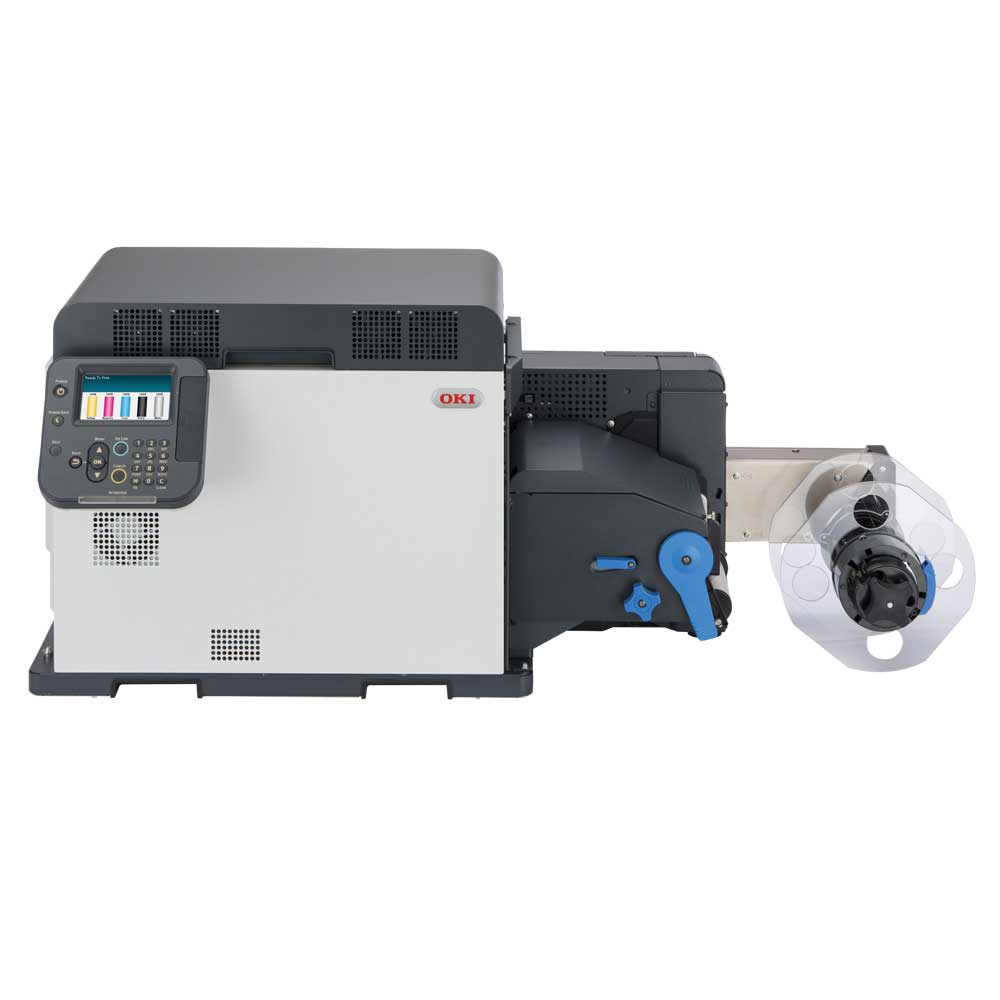
Thermal transfer printers with resin or wax-resin ribbons produce the most durable output for industrial, cold-chain and chemical applications. They run synthetic waterproof label stocks reliably and produce prints that resist abrasion, chemicals and prolonged moisture. The trade-off is that full colour requires more specialised configuration.
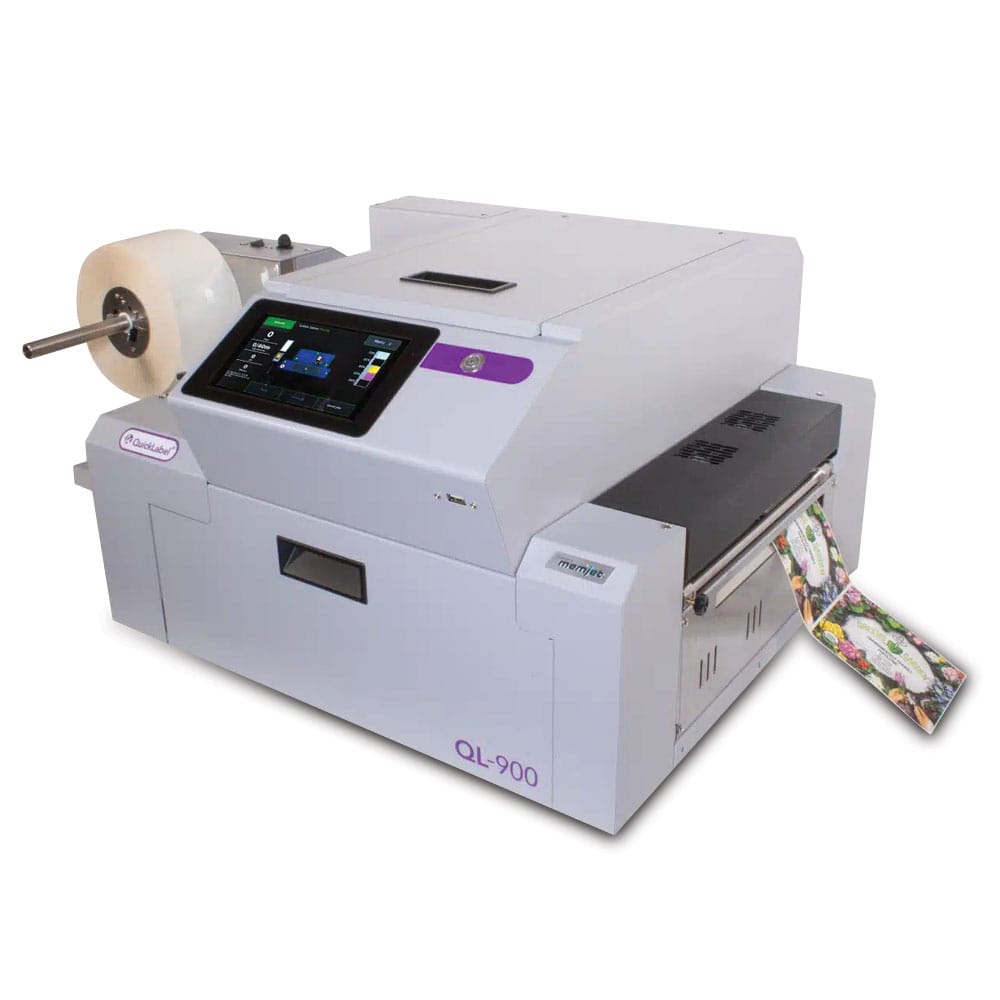
Pigment-ink inkjet label printers handle full-colour product labels with good water and UV resistance on compatible synthetic media. They suit short-run, on-demand production in food, beverage and cosmetics where branding matters alongside durability. Drying or curing time affects final resistance, so settings and media choices matter.
Laser (dry-toner) printers offer sharp output on synthetic label stocks and reasonable water resistance, though media compatibility — thickness, heat tolerance, face-stock type — must be confirmed before assuming all waterproof stocks will run without issue.
Direct thermal printers are suitable for short-term shipping and inventory labels in dry environments. They are not recommended for applications requiring long-term water, UV or chemical resistance.
For any of these technologies, finishing — clear laminates, self-laminating modules, protective topcoats — substantially raises the durability ceiling and is worth including in the system specification wherever abrasion or UV exposure is a factor.

About Gulmen Digital
Gulmen Digital has operated in the Australian label and packaging printing market for more than 20 years, working with manufacturers across food, beverage, chemical, pharmaceutical and cold-chain sectors. That experience centres on complete durable-label systems — not just hardware, but the material knowledge to match face stocks, ink systems and adhesive grades to the specific wet, cold and chemical conditions a label must survive in the real world. For a manufacturer labelling chilled beverages, frozen ready meals or chemical containers, Gulmen's approach starts with the environment and works backward to the specification, rather than recommending a printer and leaving the materials as an afterthought.
The Australian-developed Quantum platform sits at the centre of Gulmen's production offering: a modular print-cut-finish solution designed for label, sticker and packaging production at the quality levels that demanding environments require. Configurations that integrate waterproof-capable printing with in-line lamination address the abrasion and UV exposure that accompany most waterproof requirements, delivering finished labels rather than requiring a separate finishing step. Gulmen's focus on complete workflows — substrate selection, print technology, protective finishing, and adhesive matching — means a business can move from a clearly defined durability requirement to stable production without coordinating multiple suppliers.
Post-installation support is a deliberate part of Gulmen's service. Waterproof and freezer labels are sensitive to changes in substrates, adhesive grades and regulatory print content, and the conditions a label must survive can shift as product ranges or distribution channels change. Gulmen provides ongoing technical assistance with qualification testing, material changes, print quality and colour consistency — helping customers adapt without restarting the specification process from scratch. For Australian manufacturers who need labels that reliably survive wet, cold and demanding handling conditions, the practical next step is to share your specific product, container, process and environment with Gulmen Digital and work through a targeted sample-and-test sequence before committing to full production volume.
Gulmen Digital — 1/42 Orbis Drive, Ravenhall VIC 3023 · (03) 9318 7177 · sales@gulmen.com.au · gulmendigital.com.au
Gulmen DigitalFrequently asked questions
Are waterproof labels the same as weatherproof labels? Not exactly. Waterproof labels are designed to resist water and moisture — splashes, condensation, immersion. Weatherproof labels add UV stability, resistance to temperature swings and often abrasion or chemical resistance for outdoor or industrial exposure. Both require synthetic face stocks and durable print, but weatherproof constructions carry additional UV and thermal-cycling specifications.
Will labels stay on in a freezer? They will if the construction is right. Freezer labels need a synthetic film face stock, a cold-temperature or freezer-grade adhesive specified for the application temperature, and a print method that remains legible and adhered through repeated freeze-thaw cycles. Applying labels to clean, dry containers at ambient temperature and allowing dwell time before the first freeze significantly improves performance.
What makes a label adhesive fail in wet conditions? The most common cause is mismatched application conditions — applying at a temperature below the adhesive's minimum, or onto a wet or condensed surface that prevents proper contact. Surface contamination (moisture, oils, dust) and using a standard permanent adhesive outside its design window account for the majority of cold-chain and wet-environment failures.
Can you print waterproof labels in-house? Yes. Thermal transfer printers with resin ribbons, pigment-ink inkjet label printers and laser-based systems can all produce waterproof labels in-house when paired with compatible synthetic stocks and appropriate adhesives. In-house printing enables rapid iteration and testing, which is valuable when dialling in a construction for a new product or container.
How do you test whether a label is durable enough? Apply sample labels to your actual containers under realistic conditions, expose them to the full moisture, temperature and handling profile your product will see, and inspect adhesion and print legibility at intervals — 15 minutes, 24 hours, and after multiple thermal cycles. Where the label fails tells you which component to change: edge lift points to adhesive; ink bleed or fade points to print technology or topcoat; substrate cracking points to film grade.


Comments ()