
Pharmaceutical label printers: control over the whole chain
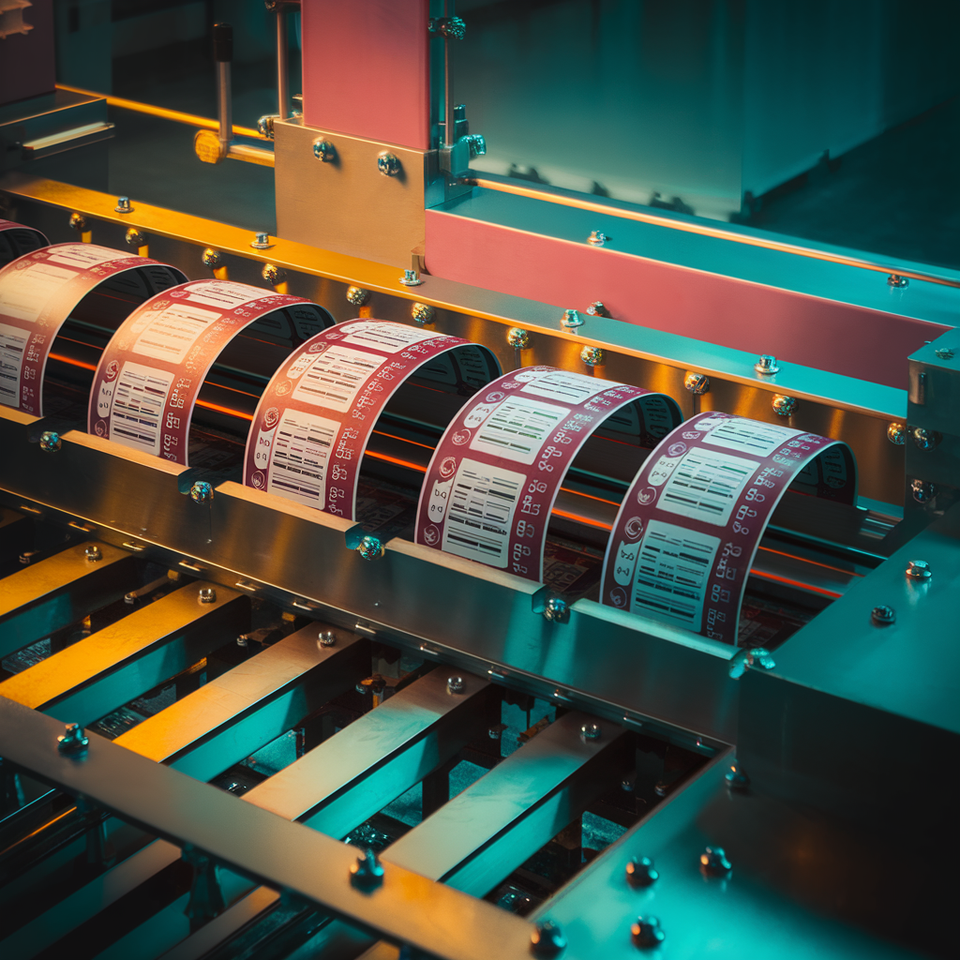
A pharmaceutical label printer is a controlled printing system designed to put the right approved artwork and the right variable data on every product unit, with a documented record that proves it happened. In regulated environments, that chain of custody is the entire value proposition — not the cost per label.
Most in-house printing arguments lead with savings. In pharmaceutical manufacturing, that argument misses the point. The primary risk is not overspending on labels. It is printing the wrong artwork version, the wrong batch code, or an unverified serial number — and not discovering it until the product has moved downstream. The global pharmaceutical label printing machines market reflects this reality: one 2026 analysis values it at USD 1.2 billion in 2024, forecast to reach USD 1.99 billion by 2033, growing at 6.5% annually. That growth is not driven by cost optimisation. It is driven by manufacturers investing in control.
 Gulmen Digital
What pharmaceutical labelling has to guarantee
Every pharmaceutical labelling process must answer four questions with evidence, not just intention.
Right artwork version. The label printed on the line today must match the artwork that received final approval — not an older version saved in someone's email, not a test file that never got retired. Version drift is one of the most common root causes in labelling investigations.
Right variable data. Batch numbers, expiry dates, and serialisation codes must be correct for each specific unit. These fields change with every production run, and in serialised products they change with every single pack.
Right product match. The label content must consistently correspond to the physical product, strength, and market for which it was prepared. A mismatch here is a mislabelling event regardless of how well the printer performed.
Right record. There must be an auditable trail — who initiated the print job, which artwork version was used, which data source populated the variable fields, how many labels were produced, and what happened to any that were spoiled or reprinted.
These four requirements distinguish pharmaceutical labelling from general industrial or consumer labelling. A label that looks correct is not enough. A label that is correct and documented is what regulated environments require.
Artwork version control
The wrong version reaches production in predictable ways. A packaging operator pulls a PDF from a shared drive that was not updated after the last regulatory change. A test label created during artwork development was never formally retired and remains selectable in the system. Two lines in the same facility run different versions of the same SKU because their local files were not synchronised after an approval.
None of these are unusual. They are common enough that artwork version control appears as a recurring theme in quality system guidance globally.
A controlled printing setup prevents these failures through a combination of process and system design. The artwork library contains only released, approved versions. Operators cannot select files from outside that library. Every change to a label template goes through a defined approval sequence before it becomes available for production. When a job runs, the system records which version it used — not which file was open on a desktop.
The TGA's labelling guidance and broader GMP principles describe the obligation to maintain current, accurate labelling as fundamental to product quality and patient safety. The specific controls that meet that obligation vary by operation, and manufacturers should verify current expectations directly with the TGA for their product class. The general requirement is clear: labelling must be controlled, traceable, and correct.
For a pharmaceutical label printer to support this, it must be part of a workflow — not a stand-alone device. The printer executes jobs. The workflow governs which jobs can run, from which templates, with which data.
Variable data, batch codes and serialisation
Most pharmaceutical labels are not static designs. They carry variable data — information that changes with each batch or each unit — and the printer must handle that data reliably at production speed.
Batch and lot numbers, manufacturing dates, and expiry dates are standard variable fields on most medicine labels. The TGA notes that medicine labels must include the batch number and expiry date as required identifiers. For serialised products, the requirement extends further: each individual saleable unit carries a unique serial number, typically encoded in a GS1 DataMatrix code alongside the GTIN, lot, and expiry. The pharmaceutical labels market, valued at USD 4.8 billion in 2025 and forecast to reach USD 7.9 billion by 2034 at 5.6% annual growth, is explicitly linked to growing demand for track-and-trace and serialisation features.
Variable data printing at this level is database-driven. The label template contains defined fields. At print time, each label draws its values from a structured data source — a batch record, a production order, a serials database. The printer does not decide what to print; it executes what the data provides. That distinction matters enormously for data integrity: if a serial number is wrong, the problem originates in the data, not the print mechanism.
This has practical implications for the printing system. It must handle high-volume, unique-per-unit data without slowing the line. It must print DataMatrix codes and barcodes at sufficient resolution to remain scannable on small containers — vials, ampoules, syringes — where space is limited and the code must survive handling and cold-chain logistics. Batch traceability labels on cartons and shipping units carry aggregated codes that link units to cases and cases to pallets. Medical device labelling follows a parallel structure through UDI requirements, where each device carries a unique device identifier that supports traceability throughout its lifecycle.
 Gulmen Digital
Reconciliation and record keeping
Reconciliation is the practice of accounting for every label produced during a packaging run — including labels applied to product, labels spoiled or damaged, labels used for line setup, and any reprints. It closes the loop between labels issued and labels consumed, leaving no untracked label in circulation.
GMP packaging controls consistently describe reconciliation as a core safeguard against mix-up and mislabelling. The logic is straightforward: if you cannot account for a printed label, you cannot confirm it was not applied to the wrong product or retained for misuse. A documented reconciliation record demonstrates that the label population was fully controlled from issue to disposal.
For a pharmaceutical label printer, this means the system must generate job logs that capture quantities requested, quantities printed, and any exceptions. Reprints must be recorded with a reason. Spoiled labels must be physically destroyed and that destruction documented. At batch close-out, the reconciliation count must reconcile against the batch record — quantities on product plus spoilage must equal labels issued.
Auditors examine these records because they reveal the integrity of the labelling process. A clean reconciliation record, consistently maintained, is evidence of a controlled operation. Gaps in reconciliation — missing counts, undocumented reprints, unaccounted quantities — are evidence of a control failure, regardless of whether any individual label caused harm.
Durability and legibility requirements
Pharmaceutical and medical device labels face conditions that consumer labels rarely encounter. They must remain legible and adhered through cold-chain logistics, refrigeration, handling by clinical staff, potential exposure to moisture or disinfectants, and in some cases sterilisation processes. The label must remain readable — for humans and scanners — across the full product lifecycle.
Small containers create particular challenges. Vials, ampoules, and prefilled syringes offer limited surface area. Labels must carry dense regulatory text, variable data, and machine-readable codes in a small, often curved space. Print resolution must be sufficient to render fine fonts and high-density 2D codes clearly. Adhesives must bond to glass or plastic under temperature variation. A label that peels or fades before the product is used is not a cosmetic problem — it is a traceability failure.
Label material selection matters as much as print quality. Synthetic substrates generally outperform paper in humid, cold, or high-handling environments. Thermal transfer printing, which transfers ink from a ribbon onto the label surface using heat, produces durable, smear-resistant output well suited to long-term readability requirements. Direct thermal printing is simpler but can fade under heat and light exposure. The right choice depends on the specific storage and handling conditions the product will encounter.
Why control usually beats cost in this decision
The business case for in-house pharmaceutical label printing is built on control — specifically, on shortening and securing the path between an approved artwork change and a correct label on the product.
When a regulator issues new safety information, or when a formulation change requires a labelling update, the question is not only "how quickly can we print new labels" but "how confidently can we ensure the old version stops being used." In-house printing with a governed artwork library and role-based access answers that question more definitively than a model that relies on external suppliers holding pre-printed stock.
The cost argument is secondary and sometimes misleading. Total cost of ownership for in-house pharmaceutical labelling includes hardware, label and ribbon consumables, maintenance, validation effort, software licensing, and training. These are real costs. The question to weigh against them is the expected cost of a labelling deviation — rework, quarantine, potential recall, regulatory finding — and whether tighter control reduces the probability of that outcome.
For most regulated manufacturers who move labelling in-house, the answer is yes. Not because the hardware is cheap, but because the control it enables is worth the investment.
About Gulmen Digital
Gulmen Digital provides variable-data label printing solutions designed for controlled and regulated environments, including pharmaceutical and medical device applications where short runs, frequent artwork changes, and auditable records are operational realities. The focus is on enabling manufacturers to bring pharmaceutical label printing in-house without compromising the version control, data integrity, and reconciliation practices that regulated labelling demands.
With over 20 years in the Australian market, Gulmen Digital has developed the Quantum platform — an Australian-built print, cut, and finish solution designed to support the complete label workflow, from approved template to finished label. The platform supports database-driven variable data printing for batch codes, expiry dates, and serialisation labels, and is designed to integrate with existing production and quality workflows rather than operate as a stand-alone device.
The practical next step for any pharmaceutical manufacturer or medical device producer evaluating in-house labelling is to map current artwork, data, and reconciliation workflows before selecting equipment. Gulmen Digital works through that assessment with prospective customers — identifying where current processes introduce version risk or reconciliation gaps, and configuring a print solution around those specific requirements. For organisations ready to have that conversation, Gulmen Digital's team is available to discuss requirements and propose a suitable configuration.
Gulmen Digital — 1/42 Orbis Drive, Ravenhall VIC 3023 · (03) 9318 7177 · sales@gulmen.com.au · gulmendigital.com.au
Gulmen DigitalFAQ
Can pharmaceutical labels be printed in-house? Yes. Many manufacturers print labels in-house specifically to gain tighter control over artwork versions, variable data, and reconciliation. When done correctly, in-house printing is embedded in the quality system with defined SOPs governing template access, job approval, and batch-level records.
What is serialisation in pharmaceutical labelling? Serialisation is the assignment of a unique identifier to each individual saleable unit, typically encoded in a GS1 DataMatrix barcode alongside product and batch information. It enables unit-level traceability through the supply chain and supports track-and-trace requirements in regulated markets.
How is label artwork version controlled? Artwork version control combines procedural and technical controls: a defined approval workflow, a single controlled repository for released templates, role-based access so only authorised users can modify or release artwork, and automatic logging of which version was used for each print job. Obsolete versions are archived and cannot be selected for production.
What records are needed for regulated label printing? Core records include the artwork version used, job initiation details, quantities printed, spoilage and reprint logs with reasons, reconciliation counts at batch close-out, and links to the relevant batch or production record. These records support both internal QA review and external audits.
What makes pharmaceutical labelling different from food labelling? Both sectors use batch codes and expiry dates, but pharmaceutical labelling operates under stricter traceability obligations, serialisation requirements for many products, and tighter expectations around artwork version control and reconciliation. Medical device labelling adds UDI requirements that demand durable, machine-readable identification across the full device lifecycle. Manufacturers should verify current sector-specific requirements with the TGA or relevant regulator for their product class.




Comments ()