
Best Industrial Label Printer Australia: Expert Guide for Manufacturers and Brand Owners
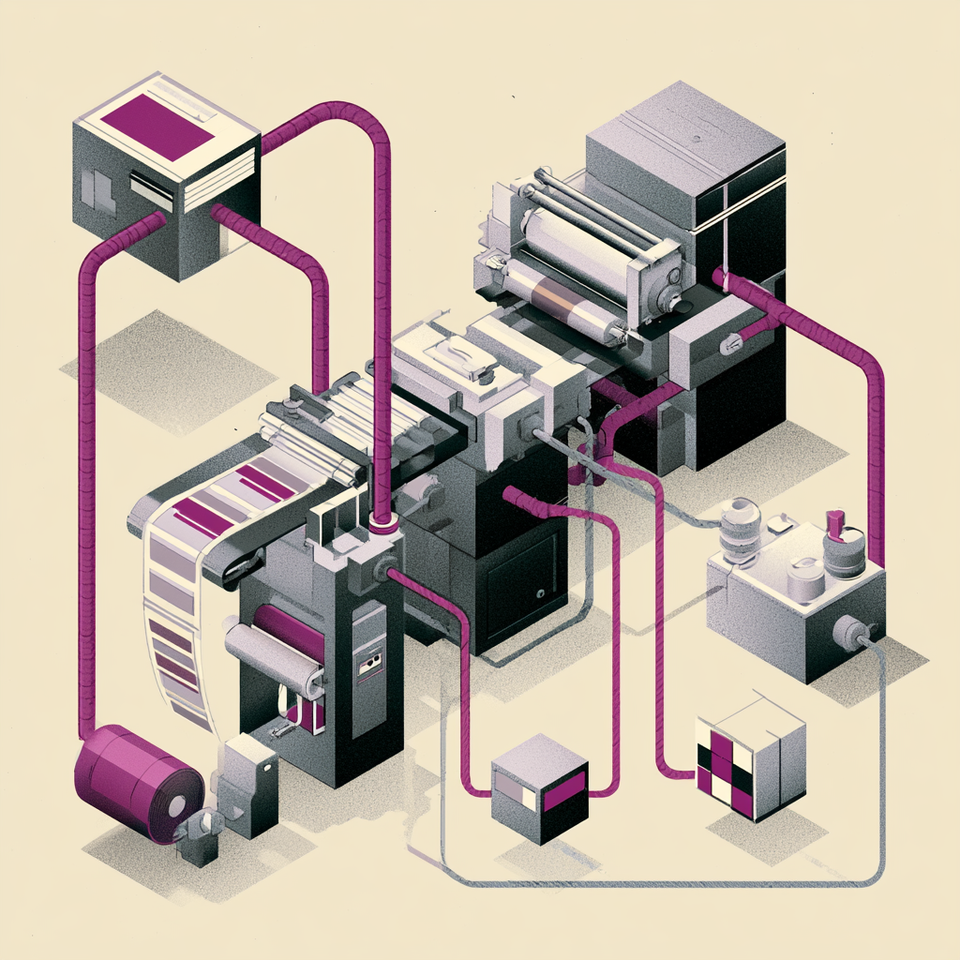
Every week an Australian manufacturer waits on an outsourced label order, production slows, packaging lines stall, and the cost of that delay quietly compounds. Add minimum order quantities, plate charges that make short runs uneconomical, and the scramble to reprint when a formula or compliance requirement changes — and the case for bringing label production in-house becomes less a convenience and more a supply-chain necessity.
This guide is written for operations managers, production leaders, and business owners evaluating an industrial label printer Australia investment. It covers the core technology types available in the Australian market, the six buying criteria that separate good decisions from expensive mistakes, how to model total cost of ownership, and which industries extract the most value from in-house production. Gulmen Digital, based in Maidstone, Victoria, specialises in commercial and industrial label printing machinery for Australian manufacturers and brand owners — this guide draws on that applied knowledge.

Prefer to talk it through? Call (03) 9318 7177. Gulmen Digital's team is in Ravenhall, VIC.
What Is an Industrial Label Printer?
An industrial label printer is a production-grade system built for continuous, high-volume label output across a wide range of substrates, with mechanics and duty cycles suited to manufacturing and logistics environments — not the occasional office print run.
Industrial vs Desktop Label Printers
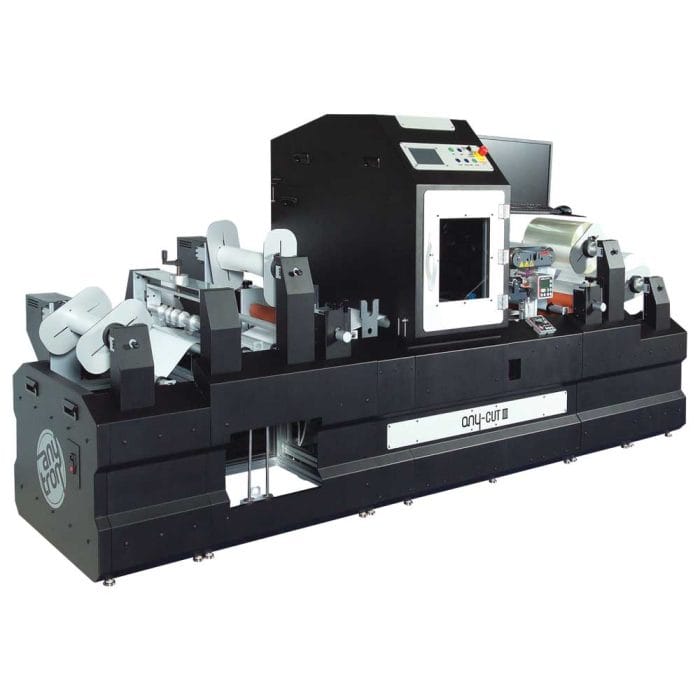
The practical difference is not just size. A desktop label printer — the kind used for shipping addresses or file folders — is designed for light, intermittent use. An industrial label printing machine is built to run shifts, handle large-diameter media rolls, manage variable data across thousands of labels, and maintain consistent output quality under real production conditions.
Specific distinctions include:
- Duty cycle: Industrial printers are rated for continuous production; desktop units are not. Toshiba's industrial printer selection guidance notes that printhead life on industrial-grade systems can extend to 100 km of printing or more before replacement — a figure that reflects design intent, not marketing copy.
- Roll capacity: Industrial systems handle significantly larger roll diameters, reducing changeover frequency on high-volume lines.
- Substrate flexibility: Industrial printers support paper, polypropylene, polyester, synthetic films, metallic stocks, textured materials, and specialty adhesive formats that desktop units cannot process reliably.
- Integration: Industrial systems are designed to connect with ERP, WMS, and MES platforms, barcoding software, and physical production infrastructure including applicators, finishers, and inspection systems.
Typical Use Cases in Australian Manufacturing
- Product labels: Food and beverage, cosmetics, nutraceuticals, cleaning products, and health products where print quality and compliance are non-negotiable
- Compliance labels: Ingredient panels, nutritional information, FSANZ-mandated declarations, TGA requirements, allergen statements
- GS1 barcodes and variable data: Batch codes, best-before dates, serial numbers, unique item identifiers for traceability
- Warehouse and logistics labels: Carton labels, pallet IDs, rack locations, and asset tags
- Industrial asset tracking: Durable identification on machinery, cables, components, and equipment
The volume that defines "industrial" in practice is typically several thousand labels per week at minimum, often extending to tens of thousands per production shift for larger operations. More important than a specific number is the combination of continuous use, substrate variety, and the requirement for consistent, compliant output.
Types of Industrial Label Printers Available in Australia
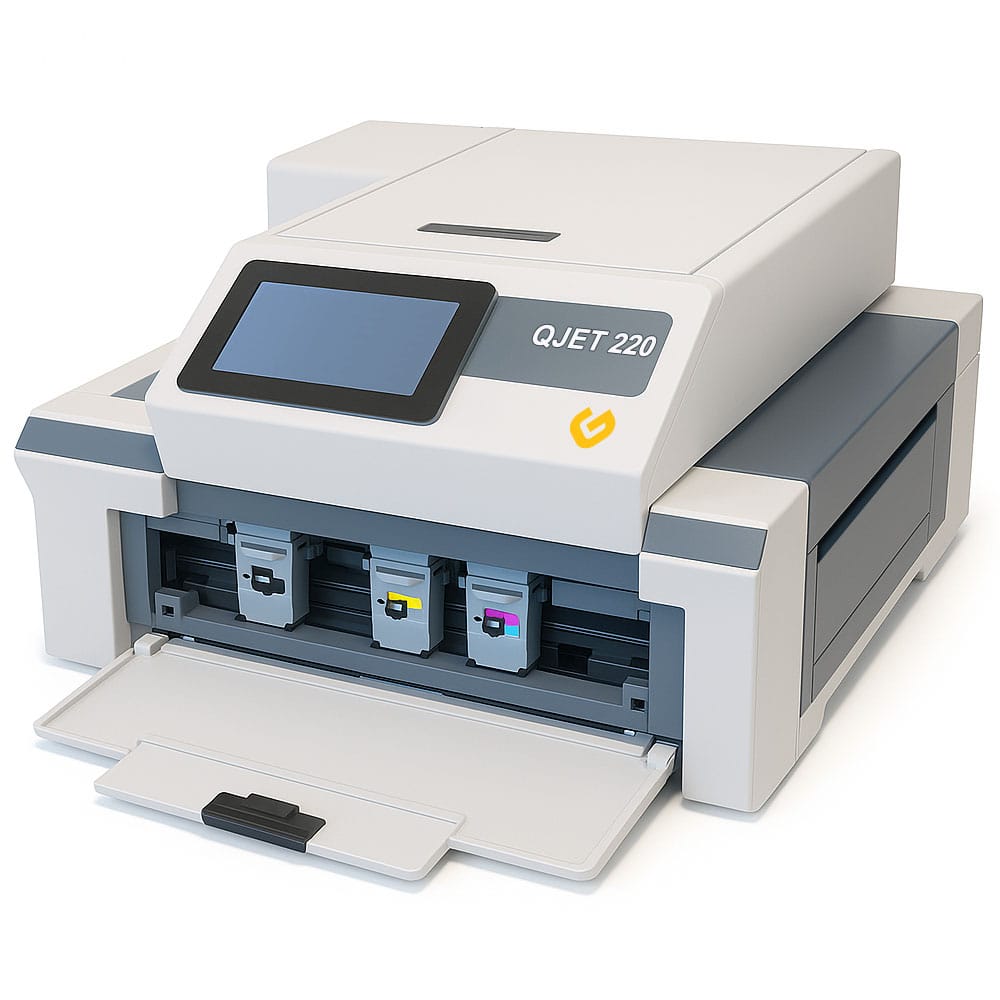
Four main technology classes are relevant to Australian manufacturers. Choosing correctly depends on whether your labels are primarily a branding asset, a compliance tool, a logistics identifier, or some combination of all three.
Digital Inkjet Label Presses
High-speed digital inkjet presses — including Memjet-based systems like the Inkjet Technology printer range — use single-pass aqueous inkjet technology to deliver full-colour labels at production speeds, with resolutions up to 1600 dpi suitable for fine text, detailed graphics, and small barcodes.
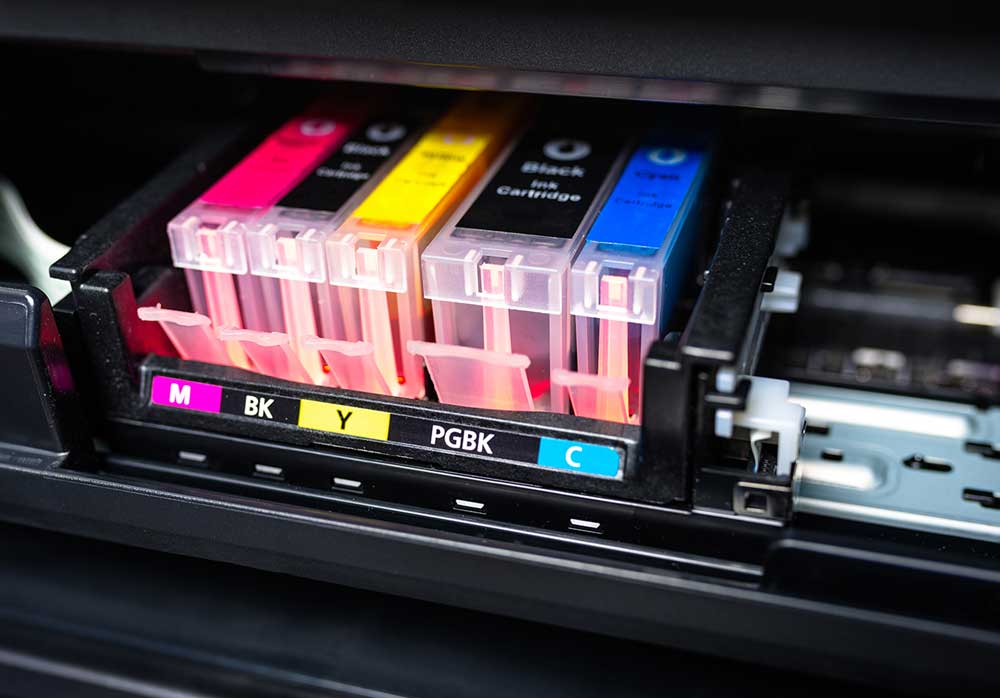
This technology suits businesses that need:
- Short- to medium-run colour labels across many SKUs
- Frequent artwork changes — new flavours, seasonal designs, export variants
- Variable data printing on every label — batch codes, personalisation, unique identifiers
- Fast turnaround without plate charges or lengthy press makereadies
Food and beverage producers, nutraceutical brands, craft producers, and label converters handling multiple customer jobs are the primary Australian buyers in this segment. The trade-off is that substrates must be compatible with aqueous inks, and most colour inkjet lines benefit from finishing equipment — lamination, varnish, or die-cutting — to produce durable, shelf-ready labels.
Toner-Based Digital Label Printers
OKI PRO 1040 Label Printer systems and similar toner-based digital platforms use LED or laser imaging with dry toner fused to label stocks. Their key capability is strong, stable colour output on a wider range of specialty substrates — including clear films and metallic stocks — particularly where white toner is available.
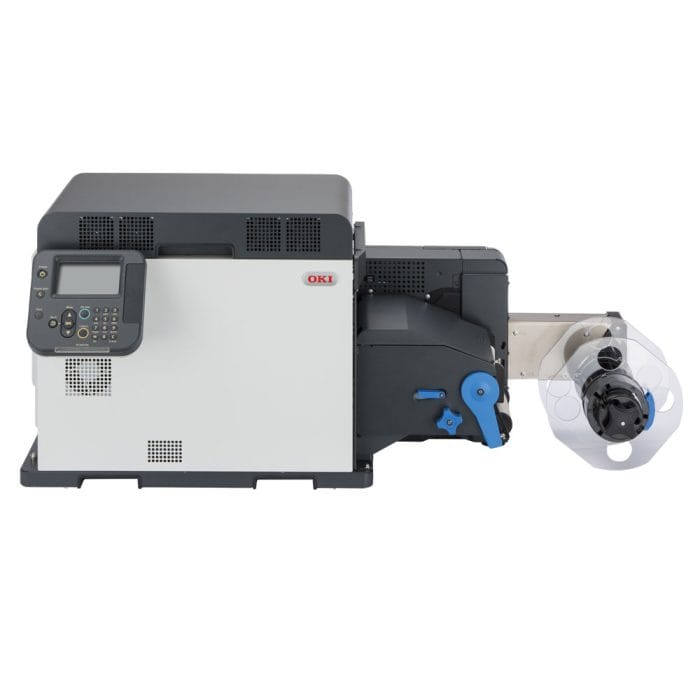
This technology suits businesses that need:
- Short-run, high-quality colour labels with demanding substrate requirements
- White toner capability for printing on dark, clear, or metallic label stocks
- Batch production across frequent changeovers without long setup times
- Premium presentation on boutique or specialty products
Toner cost per label can be higher than inkjet at scale and under heavy ink coverage, so volume and design complexity should be modelled before purchase.
Thermal Transfer Industrial Printers
Thermal transfer printers transfer ink from ribbon to label stock using a heated printhead, producing durable, high-contrast monochrome output suited to barcodes, compliance labels, and industrial identification. This is the established workhorse technology for warehouse, logistics, and industrial manufacturing environments.
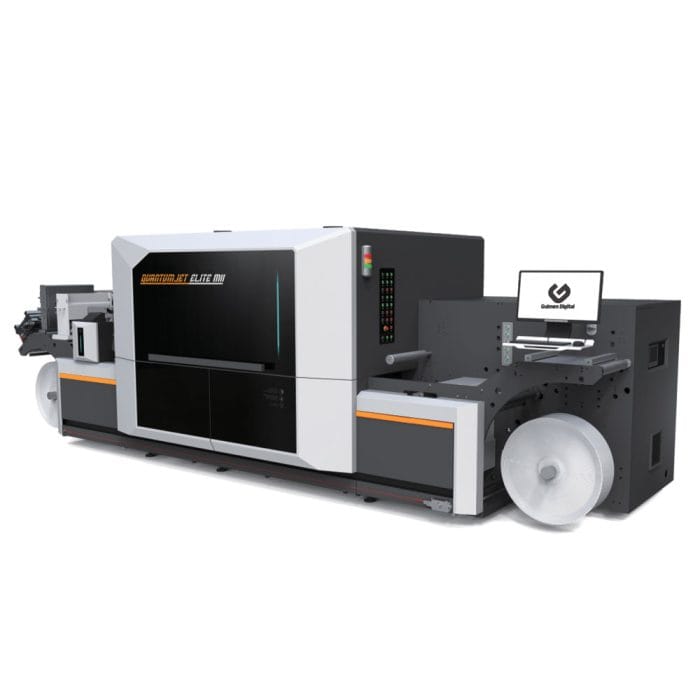
This technology suits businesses that need:
- High-volume monochrome barcodes, batch codes, and regulatory text
- Durability in harsh conditions — heat, moisture, chemical exposure, outdoor environments
- Asset tags and compliance labels with long service life
- Reliable, scannable GS1 and 2D barcodes on industrial substrates
Thermal transfer's strength is predictability. Cost per label for monochrome work is low, hardware is robust, and the technology integrates cleanly with warehouse and ERP systems. For a deeper comparison of inkjet vs toner label printers — including thermal — Gulmen Digital's dedicated guide covers the tradeoffs in detail.
Finishing-Integrated Solutions
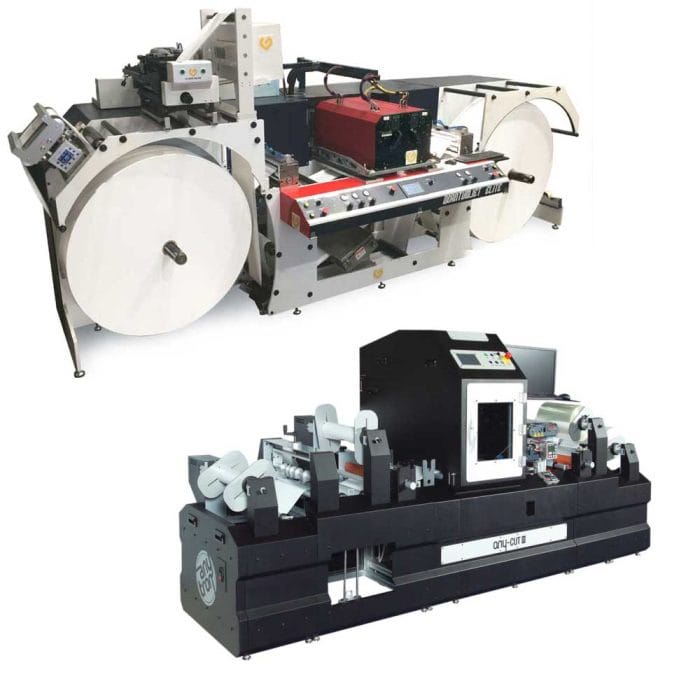
For label converters and higher-volume brand owners, the most productive configuration is often a complete print-and-finish line: digital print, lamination or varnish, die-cutting, and slitting in a single integrated workflow. This eliminates manual handling between steps, reduces lead time from roll to finished label, and produces a consistent result that standalone printers cannot replicate without additional equipment.
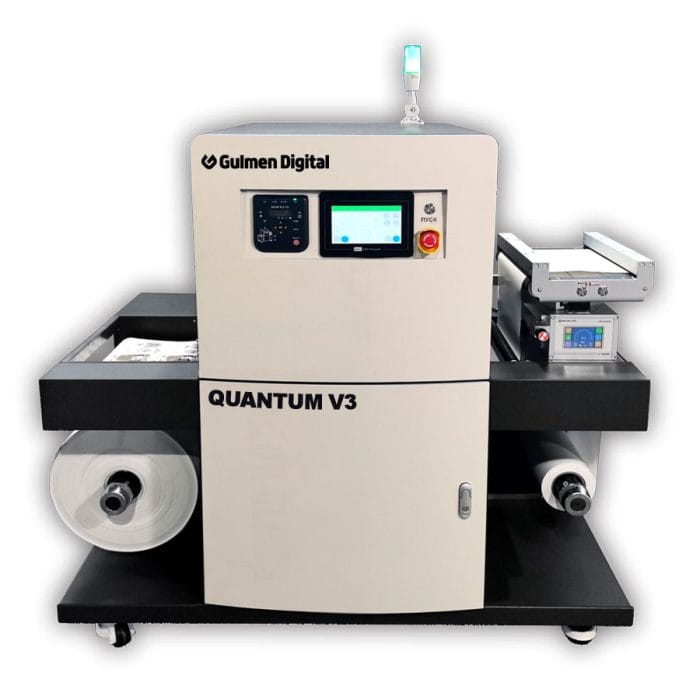
The global label printing market is moving clearly in this direction. Digital label printing machine revenues are projected to grow from USD 11.9 billion in 2023 to USD 19.7 billion by 2032 as converters and manufacturers invest in flexible, short-run-capable integrated production lines. Gulmen Digital's focus on complete in-house workflows — print plus finish — is directly aligned with this shift.
6 Key Factors When Choosing an Industrial Label Printer in Australia
Choosing the right industrial label printing solutions comes down to matching the machine to your operation, not to a brochure specification. These six factors consistently separate good purchasing decisions from regrettable ones.
1. Print Volume and Speed Requirements
Start with a realistic annual volume estimate, broken down by peak demand and daily production. A printer sized for average throughput will bottleneck at peak; one sized only for peak will be underutilised and overpriced. Consider:
- Labels per day and per month, not just annual totals
- Whether volumes are steady or seasonal
- How frequently production runs are short and changeover-intensive
- Whether growth over the next three to five years will require a higher-capacity system
Matching duty cycle and engine speed to actual production requirements — including headroom for growth — is more valuable than chasing headline speed specifications.
2. Label Material and Substrate Compatibility
Your label stock constrains the viable technology shortlist before any other factor. Consider:
- Paper (semi-gloss, matte, uncoated), polypropylene, polyester, synthetic films, textured, metallic, and clear stocks
- Environmental exposure: cold chain, freezer storage, condensation, outdoor UV, oils, cleaning chemicals, and abrasion
- Adhesive performance on glass, PET, HDPE, tin, and other packaging materials
- Regulatory requirements on food-contact or chemical-label substrates
If your labels must survive cold storage at -18°C or exposure to industrial cleaning agents, the substrate specification is as important as the printer specification. Thermal transfer with resin ribbons handles harsh environments well; inkjet systems require compatible, often pre-tested label stocks.
3. Print Resolution and Colour Accuracy
For branded consumer products, resolution and colour consistency affect shelf presence and brand integrity. For compliance-heavy categories, they affect legal risk. Practical considerations:
- Resolution for small text, 2D barcodes (QR codes, Data Matrix), and fine brand graphics — higher dpi matters here
- Colour management and ICC profiling for consistent brand colour across high-SKU ranges
- Barcode scan quality at production speeds — thermal transfer is exceptionally reliable; inkjet and toner systems require careful media and print setting optimisation
A food brand in Coles or Woolworths will weight colour accuracy differently from a warehouse printing pallet labels. The requirement determines the technology.
4. Total Cost of Ownership
The machine purchase price is typically the smallest component of total cost over a five-year production life. A complete TCO model includes:
- Hardware: purchase price, depreciation over useful life
- Consumables: ink, toner, ribbons, and media — the largest ongoing cost for most systems
- Maintenance: service contracts, printhead replacement, drum or fuser life
- Labour: operator time, changeover, waste management
- Downtime: lost production during service, repairs, or consumable delays
Cost per label — not cost per machine — is the metric that matters. For high-coverage colour labels at moderate volumes, inkjet and toner costs diverge significantly from thermal transfer. The complete label printer guide for Australian manufacturers provides detailed TCO frameworks for different technology combinations.
5. Local Support and Parts Availability in Australia
In a production environment, a label printer is not a peripheral — it is process-critical infrastructure. When it stops, labels stop, and when labels stop, production often stops. Australian buyers should ask suppliers directly:
- Where are service technicians based, and what is the response time to site?
- Are spare parts and consumables held locally, or shipped from overseas?
- What is the standard warranty, and what does it cover?
- Is remote diagnostics available to speed fault resolution?
International shipping adds days to parts availability. A supplier based in Australia with local inventory and technicians reduces that risk substantially.
6. Integration With Existing Production Workflows
An industrial label printer that improves print quality but disrupts workflow creates new problems. Before purchasing, map out:
- How artwork is approved and updated — version control, SKU management
- Which software generates label data — ERP, WMS, barcoding platforms, spreadsheets
- Physical workflow: is printing in-line with packaging, or a separate room operation?
- How reprints and urgent jobs are handled
- Whether finishing equipment needs to be synchronised with the printer
The more complex the SKU mix, the more valuable the workflow integration becomes. Printers that connect cleanly with existing systems save labour and reduce error risk.
Industrial Label Printing Technology Comparison
No technology is universally correct. Many Australian manufacturers operate more than one — thermal transfer for logistics and compliance labels, digital inkjet or toner for branded product labels.
Industries That Benefit Most From In-House Industrial Label Printing
Australia's print label market is valued at USD 49.11 billion in 2025, forecast to reach USD 64.56 billion by 2034 at a 5.7% compound annual growth rate. That growth reflects real production demand — and a significant portion of it is being pulled in-house as manufacturers recognise the operational and financial advantages of controlling their own label output.
Food and Beverage Manufacturers
Food producers face a label compliance burden that outsourcing makes genuinely difficult to manage. Ingredient changes, allergen updates, FSANZ revision cycles, and export variant requirements can all trigger label reprints on short notice. In-house production means:
- Immediate turnaround on regulatory updates without reprinting obsolete stock
- Cost-effective short runs for new flavours, seasonal SKUs, and private-label jobs
- Variable data capability for batch codes, best-before dates, and traceability identifiers
Digital inkjet for premium product labels combined with thermal transfer for carton and logistics labels is a common configuration for Australian food manufacturers of medium size and above.
Health and Beauty / Nutraceuticals
These categories demand premium visual presentation alongside strict regulatory compliance. Labels must carry precise ingredient lists, dosage instructions, and claims — all in small type with high legibility — while also projecting strong brand identity at retail.
The challenge is that SKU counts are high and product ranges change frequently. In-house printing removes the minimum order barrier and allows last-minute artwork changes before product launches. Toner-based systems with white toner are often specified for clear and metallic label stocks common in this category.
Industrial Manufacturing
Manufacturers need durable, readable labels on assets, equipment, components, storage locations, and safety infrastructure. These labels must survive heat, oils, vibration, chemical contact, and years of service. The requirement is for reliability and durability, not premium colour. Thermal transfer printers with resin ribbons on industrial-grade synthetic stocks deliver exactly that — at low cost per label and high throughput.
Label Converters and Print Shops
Converters already in the printing business are often the earliest and most sophisticated adopters of in-house digital label production. Digital technology allows them to take on short-run jobs profitably — jobs that would be unprofitable on conventional flexo presses due to setup and plate costs. For these businesses, alternatives to outsourcing label printing are often the starting point for a broader digital transformation of their workflow.
Craft and Boutique Producers
Craft breweries, small-batch food producers, artisan cosmetic brands, and specialty retailers share a common problem: many SKUs, small runs, and frequent design changes — exactly the conditions under which outsourcing becomes most expensive. In-house digital label printer Australia capability removes the outsourcing premium and gives these businesses the freedom to experiment with seasonal packaging, limited editions, and market-specific variants without minimum order constraints.
How to Calculate ROI on an Industrial Label Printer
The financial case for in-house in-house label printing Australia is straightforward to model. The fundamental comparison is:
vs.
In-house cost per label × annual volume + annualised machine cost
To construct the in-house cost per label, combine:
- Media cost per label (roll cost ÷ labels per roll)
- Ink, toner, or ribbon cost per label (based on average coverage)
- Maintenance and service cost, allocated per label
- Operator labour, allocated per label
- Machine purchase price spread over the expected useful life (typically five to seven years)
For many Australian food and beverage manufacturers producing 50,000 to 200,000 labels per month, the in-house cost per label at volume undercuts outsourced pricing — particularly when outsourced pricing includes plate charges, minimum order premiums, and rush freight. The global industrial label printer market, valued at USD 23.8 billion in 2025 and projected to reach USD 38.8 billion by 2035, reflects the commercial confidence manufacturers are placing in this investment category.
The financial model alone rarely tells the full story. Qualitative benefits that don't appear in a cost-per-label calculation include:
- Faster time to market — new SKUs and packaging changes don't wait for supplier lead times
- Zero minimum orders — run exactly what is needed, when it is needed
- Last-minute change capability — an ingredient change at 4pm does not mean a production shutdown
- Reduced obsolete stock write-offs — pre-printed label inventory carries real waste risk when formulations or regulations change
For a detailed breakdown of when digital makes financial sense against traditional production methods, Gulmen Digital's digital label printing vs traditional comparison provides the full analysis.
Why Australian Manufacturers Choose Gulmen Digital
The Australian market has no shortage of label printer distributors, but most are either global IT resellers who handle label printers as a product line among hundreds, or general office equipment companies that extend into labels at the low-volume end. Neither is well positioned to advise on a production-grade label printing equipment Australia investment for a manufacturer running two shifts.
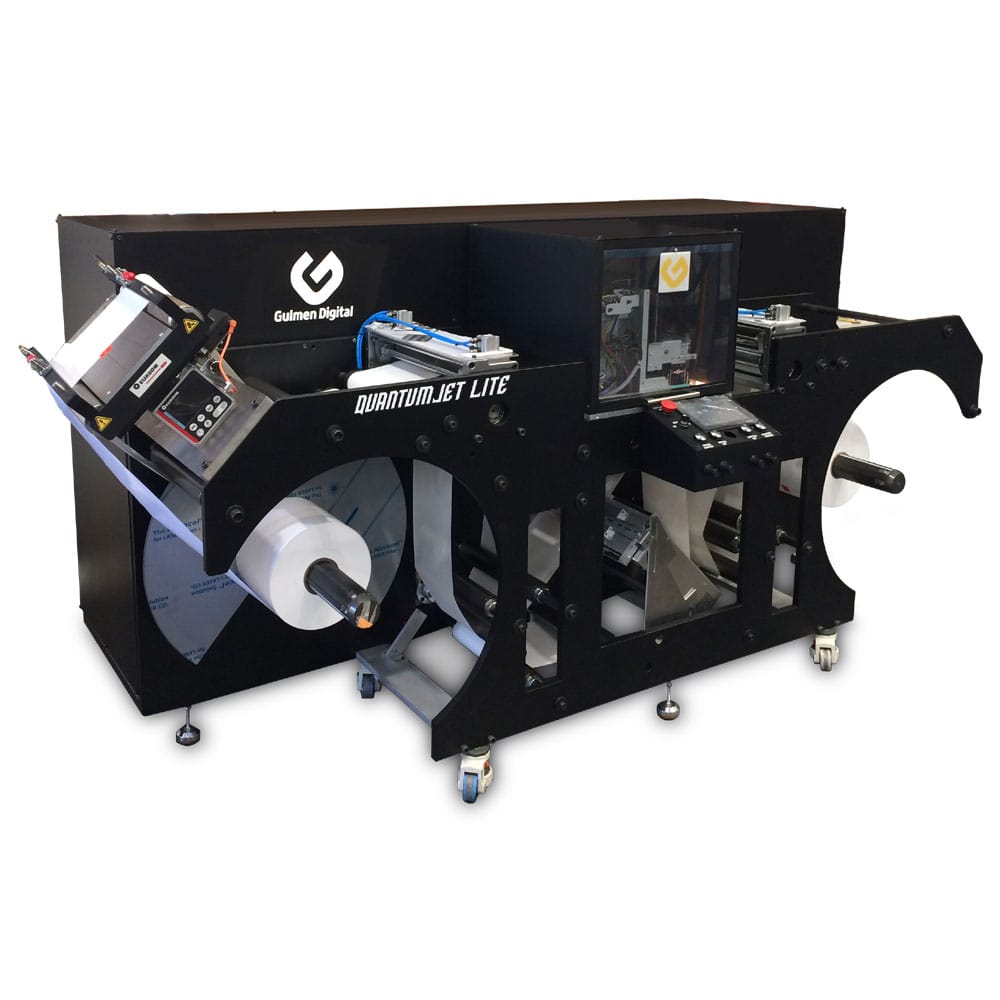
Gulmen Digital's positioning is specific. Operating from Maidstone, Victoria, with a focus on commercial and industrial label printing and finishing machinery, the company serves label converters, packaging producers, and manufacturers who need capable, reliable production equipment with real Australian support behind it.
What that means in practice:
- Local stock of consumables and commonly needed parts — not dependent on international freight for day-to-day operations
- Service and application support available in Australian time zones
- A product range built around production label printer use cases: the QuantumJet Elite and MemJet-based inkjet systems for high-speed colour, OKI Pro toner-based systems for short-run and specialty work, and thermal transfer options for compliance and monochrome industrial applications
- Integrated workflows — Gulmen Digital can configure print-and-finish solutions rather than supplying isolated printers, which means you work with one partner for the complete production system
If you are evaluating an industrial label printing investment and want to understand which configuration suits your volumes, substrates, and workflow, contact Gulmen Digital for a consultation and sample demonstration using your own artwork and label stock.
The Case for Acting Now
The manufacturers who will be best positioned in five years are not necessarily the ones who will buy the most advanced equipment — they are the ones who will build consistent, controllable, cost-effective label production capability before their competitors do.
In-house industrial label printing gives your operation faster turnaround, tighter quality control, zero minimum order constraints, and the ability to respond to regulatory or commercial changes without depending on an external supplier's schedule. For Australian manufacturers operating in food, health, industrial products, or any sector where label compliance and brand presentation both matter, that operational control has real and measurable value.
If you are ready to evaluate your options, Gulmen Digital's specialists can assess your application requirements, model your total cost of ownership, and demonstrate suitable equipment using your own artwork and substrates. Contact Gulmen Digital to arrange a consultation or on-site demonstration and take the first step toward a production-ready in-house label capability.

Prefer to talk it through? Call (03) 9318 7177. Gulmen Digital's team is in Ravenhall, VIC.
Frequently Asked Questions
What is the best industrial label printer for food manufacturing in Australia?
There is no single answer because the requirement splits across label types. For branded product labels requiring full colour, fine nutrition panel text, and brand graphics, a digital inkjet or toner-based system is typically the right fit.
For secondary labels — carton barcodes, pallet IDs, date coding — thermal transfer is the practical choice. Most food manufacturers above a certain volume operate both. Gulmen Digital typically starts with an application audit to identify the right technology mix before recommending specific equipment.
How much does an industrial label printer cost in Australia?
Costs vary substantially by technology and capability. Entry-level industrial thermal transfer printers sit at the lower end of the capital cost range and are suitable for barcode and compliance applications. Mid-range digital toner systems represent a moderate investment, justified by colour capability and specialty media support.
High-speed digital inkjet presses and integrated print-and-finish lines represent larger capital outlays aligned with higher-volume or converter applications. The more important figure is total cost of ownership over five years, which includes consumables, maintenance, and amortised machine cost. Gulmen Digital can model this against your specific volumes and label types.
What's the difference between an industrial label printer and a desktop label printer?
The difference is production capability. Industrial printers are built for continuous operation, large-roll media, broad substrate compatibility, and integration into production workflows. Desktop label printers are designed for occasional, light-duty use — shipping labels, file labels, shelf labels in small quantities.
Attempting to run production volumes through a desktop unit causes premature wear, inconsistent quality, and frequent downtime. For any application involving consistent daily production, an industrial-grade system is the correct specification.
Can I print colour labels with an industrial label printer?
Yes. Digital inkjet and toner-based systems are designed for full-colour production, including photographic-quality graphics at high resolution. Thermal transfer is primarily a monochrome technology, though coloured ribbons exist for limited applications.
If colour is required, the choice between inkjet and toner depends on volume, substrate requirements, white toner needs, and coverage levels — factors that affect running cost significantly. The inkjet vs toner label printers guide covers this decision in depth.
How long does it take to set up an industrial label printing system?
A standalone thermal transfer printer can typically be installed and produces labels within a day or two, including basic software integration. A digital colour press with finishing equipment and ERP integration is a more involved project — typically several weeks from delivery to full production readiness, including colour management, workflow configuration, and operator training.
The more complex the integration, the more value there is in working with a supplier who can manage the commissioning process rather than simply delivering hardware.
Is Gulmen Digital able to support businesses outside Victoria?
Yes. While Gulmen Digital is based in Maidstone, Victoria, the company supports manufacturers and brand owners across Australia. Remote diagnostics and support are available for many service scenarios, consumables are shipped nationally, and on-site service visits are arranged for commissioning, maintenance, and fault resolution. Australian-local support is a consistent priority rather than a geographic limitation.
What maintenance does an industrial label printer require?
Routine maintenance on industrial label printers typically includes printhead cleaning, platen and media path cleaning, calibration checks after roll changes, and replacement of wear components at manufacturer-recommended intervals. For digital inkjet systems, ink system maintenance is also part of the routine.
Adherence to a preventative maintenance schedule is the single most effective way to avoid unplanned downtime and print quality issues. Gulmen Digital provides maintenance guidance aligned to each system and can structure service arrangements suited to your production schedule.




Comments ()