



Stop Outsourcing Your Food Labels — And Stop Losing Control of Your Compliance
On 25 February 2024, thousands of Australian food businesses faced the same uncomfortable reality: their labels were no longer compliant. The Plain English Allergen Labelling (PEAL) requirements had become fully mandatory, and any product entering the market needed allergen declarations rewritten, reformatted, and reprinted.
For manufacturers using external print suppliers, this meant urgent artwork submissions, rush fees, and lead times of one to three weeks — during which non-compliant labels were still sitting on the production floor, or worse, already on shelf.
Manufacturers who printed labels in-house updated their artwork, ran new rolls, and kept production moving. Same day.
That gap — between businesses that control their label production and those that depend on external suppliers — is the central problem this article addresses. What follows covers exactly what Australian food label compliance requires under the FSANZ Food Standards Code, why PEAL has permanently raised the stakes, and why in-house digital label printing is the most practical way to stay compliant without losing production time every time the rules or your recipes change.

Prefer to talk it through? Call (03) 9318 7177. Gulmen Digital's team is in Ravenhall, VIC.
What Australian Food Label Compliance Requires
Most packaged food sold in Australia must comply with the Australia New Zealand Food Standards Code, administered by Food Standards Australia New Zealand (FSANZ). The Code defines what information must appear on a label, how it must be formatted, and what happens when it is missing or wrong. State and territory food regulators enforce these rules, and the Australian Competition and Consumer Commission (ACCC) handles misleading or deceptive claims under Australian Consumer Law.
Here are the mandatory elements your labels must cover for most packaged retail foods.
Food Name and Description
The label must identify the food clearly — not just by brand name, but by a name or description that tells consumers what the product is. "Roasted salted cashews" or "strawberry flavored yoghurt" rather than a creative product title alone. If the product name does not self-describe the food, a separate descriptor is required to avoid misleading consumers.
Supplier Details
Every label must display the name and Australian or New Zealand street address of the manufacturer, packer, or importer — not a PO Box. This address is a traceability requirement. In a recall, regulators need a physical location, and a missing or incorrect address can escalate an incident into an enforcement action.
Ingredients List in Descending Order by Ingoing Weight
If a product contains more than one ingredient, they must be listed in descending order by the weight added at the time of manufacture — before cooking or processing changes that weight.
Compound ingredients (for example, "chocolate" within a biscuit) must declare their own sub-ingredients where required. Additives appear in the list by class name plus specific name or code number (e.g., "preservative (220)" or "emulsifier (soy lecithin)").
Any recipe change that alters ingredient proportions, introduces a new ingredient, or removes one demands an updated ingredient list — and therefore a label reprint.
Allergen Declaration — PEAL-Compliant from 25 February 2024
This is where most compliance pressure is concentrated right now, and the detail matters. Under PEAL, the 12 regulated allergens — gluten-containing cereals (wheat, rye, barley, oats), crustaceans, egg, fish, milk, peanuts, sesame, soy, tree nuts (each named specifically), lupin, and molluscs — must be declared using plain English names. "Wheat" not "cereals containing gluten." "Almond" and "cashew" not "tree nuts." Each specific nut must be named individually.
Allergens must appear in bold within the ingredient list, adjacent to the ingredient that contains them, and in a separate "Contains" summary statement placed in the same field of view as the ingredient list — for example, "Contains: milk, wheat, soy." That summary statement must also be in bold, and limited to the required allergen names only.
Food Allergy Aware notes that the word "nut" or "tree nut" can no longer be used as a generic term on new labels — each specific tree nut must be named, and fish, crustacea, and mollusc must be listed separately. Allergens present only as processing aids must now also appear at the end of the ingredient list.
Nutrition Information Panel (NIP)
Most packaged foods require a Nutrition Information Panel displaying seven mandatory nutrients: energy, protein, fat, saturated fat, carbohydrate, sugars, and sodium. Values must appear per serving and per 100 g or 100 mL, in a prescribed table format. If you make a nutrition content claim , "low sodium," "source of fibre" ; the NIP must also display the claimed nutrient, and the claim itself must meet specific FSANZ criteria.
Exemptions exist for certain small packages, some single-ingredient foods (such as fresh produce or water), and foods made and packaged on the premises where they are sold. These exemptions are narrow and specific — if you are unsure whether your product qualifies, verify directly with FSANZ or your state food authority.
Date Marking
Most packaged foods must carry either a Use By date (for foods that may become unsafe after that date — sell-by and consumption deadlines are strictly enforced) or a Best Before date (for foods that remain safe but may decline in quality). Using Best Before where Use By is required is not a minor administrative error; it is a safety compliance failure. Incorrect date marking is among the more common triggers for regulatory enforcement action.
Country of Origin
Under Australian Consumer Law, most retail food must carry a compliant country-of-origin statement. For foods grown, produced, or made in Australia, this means the kangaroo-in-a-triangle logo, a written statement (for example, "Made in Australia from at least 80% Australian ingredients"), and a bar chart showing the percentage of Australian ingredients by ingoing weight. For imported foods, a clearly framed statement identifying the country of manufacture is required. Misrepresenting origin — implying Australian production when ingredients or manufacturing are overseas — is illegal.
Lot Identification
Batch or lot codes enable traceability in recalls. Most packaged foods must carry lot identification on the label or package. For manufacturers printing in-house, aligning batch codes with specific label runs is straightforward; for those outsourcing, it requires additional coordination that can easily fall out of step.
Mandatory Advisory and Warning Statements
Certain product types require specific warning or advisory statements under the Food Standards Code — for example, foods containing aspartame, foods with added caffeine above certain levels, and foods not recommended for specific population groups. These statements must use prescribed wording and be given sufficient prominence. A formulation change that introduces one of these triggers, without a corresponding label update, creates immediate non-compliance.
Health Star Rating — Voluntary but Regulated
The Health Star Rating (HSR) system is not mandatory. If you choose to use it, however, you must comply with the HSR style guide and recalculate ratings whenever your formulation changes. The government has set progressive industry uptake targets , 50% of eligible products by November 2023, 70% by November 2025 ; and analysts note that only around 37% of eligible products currently display an HSR, suggesting this area is under increasing policy scrutiny. Any use of HSR that does not reflect current formulation is a compliance issue.
Why PEAL Changed the Stakes for Food Manufacturers
PEAL is not a cosmetic adjustment to allergen wording. It changed what allergen information must say, where it must appear, and how it must be formatted — and it did so across every packaged product containing a regulated allergen.
Before PEAL, a label could declare "cereals containing gluten" and satisfy the requirement. Under PEAL, that phrasing on a new label is non-compliant. The specific grain must be named: "wheat," "barley," "oats." Tree nuts must be individually identified — not "tree nuts" as a catch-all, but "almond," "walnut," "cashew," and so on, each named separately. Allergens in processing aids (such as wheat in a modified starch, or soy in a release agent) must now be declared at the end of the ingredient list even if the processing aid itself is not listed as an ingredient.
US Food & Drug Administration analysis notes that the Code now requires allergen information to appear in both the statement of ingredients and a separate summary "Contains" statement, with bold formatting and consistent type sizing to make allergens easy to identify. This is a structural change, not a wording tweak — it affects label layout, typographic hierarchy, and the total information footprint of every affected product.
FSANZ explicitly identifies allergen declaration errors as a top enforcement priority. State food authorities target allergen compliance in routine inspections and in response to consumer complaints. Imported foods and smaller manufacturers are statistically more likely to show non-compliance in this area. The consequences of an undeclared allergen are not bureaucratic — they are safety-critical, with the potential to trigger mandatory recalls, retailer delistings, and reputational damage that extends well beyond the immediate incident.
Operationally, PEAL created an unprecedented wave of label reprints. Any product containing a regulated allergen needed artwork review and update. Businesses with large SKU portfolios, multiple co-packers, or frequent recipe changes faced substantial reprint programmes under time pressure. Worth noting on timing: products already on shelf with old allergen wording can remain until 26 February 2026, but any new label printed from 25 February 2024 must comply with PEAL in full.
The Hidden Compliance Cost of Outsourcing Your Labels
The per-label economics of outsourced printing look attractive at volume. The compliance economics, for a business operating in a post-PEAL environment with regular recipe changes, look considerably less favourable.
- Turnaround time is your compliance lag. External label printers typically operate on production schedules that deliver revised artwork runs in 5 to 15 business days for small to mid-size jobs. When a PEAL update, a new ingredient, or a supplier change requires immediate label revision, that lead time becomes a two-to-three-week window where your options are: halt production, or continue packing with labels you know are not current. Neither is acceptable, and the second option carries real enforcement risk.
- Minimum order quantities create obsolete inventory. To keep press runs economical, external printers typically require minimum quantities — often thousands of labels per SKU. For a food manufacturer managing dozens of SKUs, a compliance change can render significant label stock obsolete overnight. The material cost is real. The storage and disposal burden is real. The compounding effect across multiple changes per year is the part businesses rarely calculate until they are living it.
- Version control becomes invisible. When labels are printed in bulk, stored in a warehouse, and drawn down over months, the question of which version is currently in circulation loses its clear answer. Mixed pallets of PEAL-compliant and non-compliant labels, different versions at different sites, legacy rolls that were not destroyed after an update — these are not hypothetical problems. They are the documented pattern of labelling incidents that FSANZ's recall data reflects year after year, with allergen mislabelling consistently the leading category.
- Your supplier becomes your single point of failure. Equipment breakdowns, material shortages, and seasonal demand spikes at your print supplier do not affect their compliance deadline — they affect yours. If labels are delayed, your production line can stop even when every other input is ready. Regulatory change deadlines wait for no one's supply chain.
Consider what this looks like in practice: a manufacturer changes chocolate suppliers.
The new supplier's chocolate contains soy at a level that requires declaration under PEAL. QA identifies the issue. Artwork is revised the same week. The external printer's next available run is 10 business days out. The plant now chooses between halting that product line or packing with labels that omit soy — an allergen that affects millions of Australians and the mislabelling of which is among the most common triggers for mandatory recalls.
How In-House Label Printing Solves the Compliance Control Problem
Bringing label production in-house with a digital label printer does not just reduce per-label cost at certain volumes. It changes the structure of how your business responds to compliance obligations.
- Same-day response to regulatory or recipe changes. When a PEAL update, a new ingredient, or a reformulated NIP needs to be on labels today, an in-house printer delivers that. Artwork is updated, approved, and printed in a single shift. The compliance loop between your regulatory team and your production floor closes in hours, not weeks.
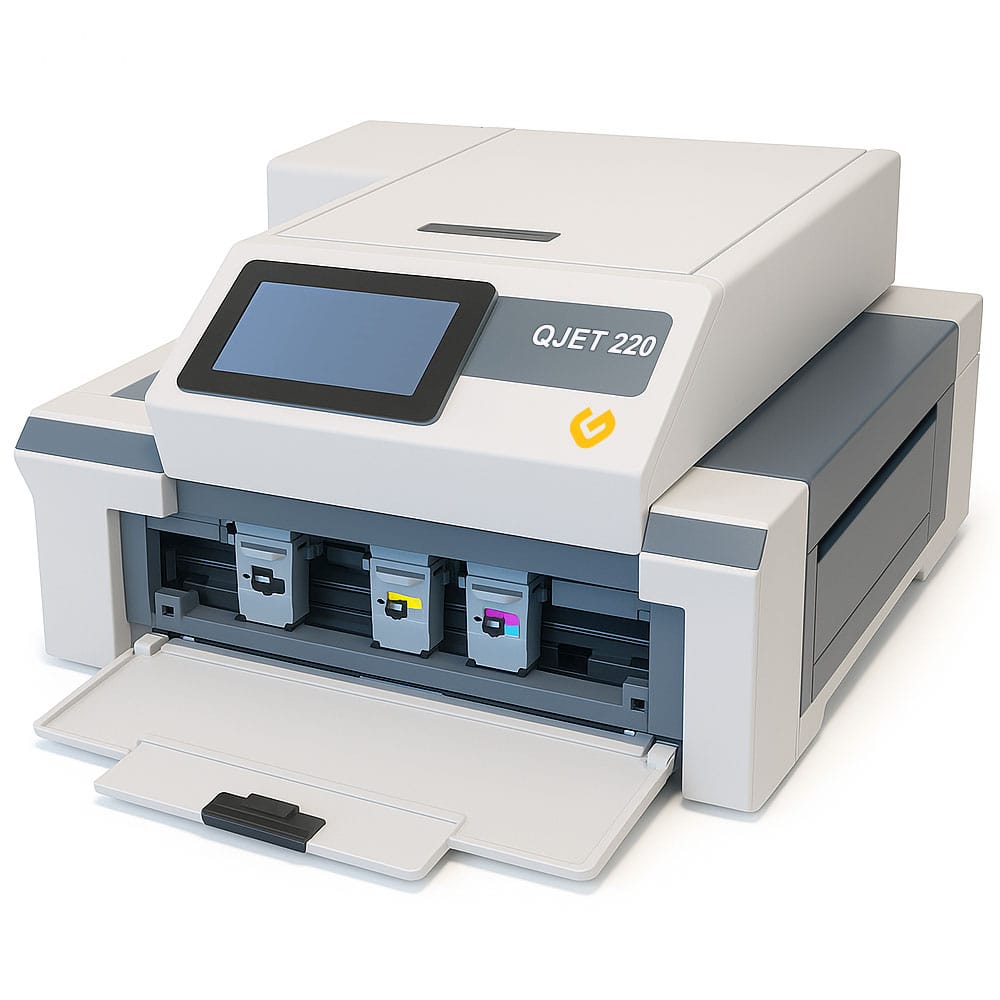
- No minimum quantities, no obsolete stock. Digital label printers produce short runs efficiently — down to a single roll, or a few hundred labels for a trial batch. There is no economic pressure to order six months of label stock and hope the formulation and regulations stay stable long enough to use it. When the next compliance update arrives, you reprint what you need, when you need it, and nothing is wasted.
- Complete version control. When you manage the print process internally, you own the artwork files, the print history, and the roll tracking. Only the current approved version reaches the production floor. Your QA and regulatory teams can sign off on a new label and verify it physically before it enters a production run. That audit trail , which label version was used for which batch, and when it was approved ; is the traceability documentation that makes recall management manageable rather than chaotic.
- Direct integration between compliance and production. The shortest path between a regulatory requirement and its physical expression on a product is a straight line from your regulatory team to your in-house printer. Outsourcing inserts external dependencies , artwork agencies, printer prepress, production scheduling ; at every step. In-house printing removes those intermediaries for compliance-critical changes, while still allowing external suppliers to handle stable, high-volume runs where lead time is not a constraint.
- Flexibility for the commercial complexity of modern food businesses. Retailer-specific SKUs, seasonal variants, trial packaging, reformulation test runs — all of these require label changes that are disproportionately expensive when outsourced. In-house printing handles them as routine. And every one of those variants can be managed with full compliance control, because the artwork approval process is internal.
- For a detailed look at the technology options, the comparison of inkjet vs toner label printers covers the performance and cost trade-offs relevant to food manufacturing environments. The broader question of digital vs traditional label printing is also worth reviewing if your current setup involves flexographic or offset printing for longer runs.
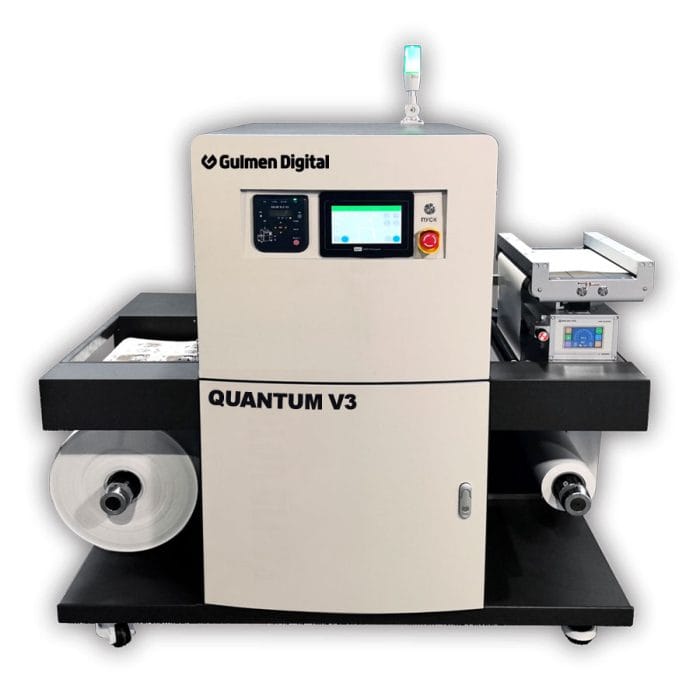
What to Look for in a Food-Grade Label Printer
Not every digital label printer is suited to the demands of Australian food label compliance. These are the specifications that matter.
- Print resolution of at least 1200 dpi. NIPs contain small, dense text , often 6 to 8 point ; and allergen bold formatting must be clearly distinguishable from surrounding text. At lower resolutions, that distinction can blur, and illegible allergen information is not a legal defence. 1200 dpi is the practical minimum for compliance-critical food labels; higher resolutions provide additional confidence for complex layouts.
- Colour accuracy and consistent contrast. PEAL requires allergens to be bold and visually distinct. Country-of-origin graphics must reproduce the kangaroo triangle accurately. If you use HSR front-of-pack graphics, they must render correctly and consistently across runs. A printer with strong colour management and consistent ink density across the roll maintains the formatting integrity that compliance requires.
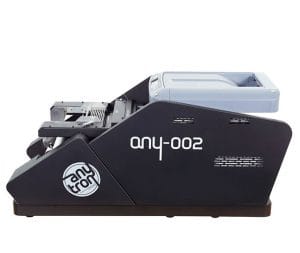
- Substrate compatibility with food environments. Chilled products require moisture-resistant label materials. Frozen products need adhesives that bond reliably at low temperatures and withstand condensation. Oil-prone surfaces (sauces, dressings, processed meats) demand synthetic facestocks that won't degrade and obscure information. Your label printer must be compatible with the materials appropriate to your product's storage and handling conditions.
- Speed and throughput matched to your line. A printer that cannot keep pace with your filling or packing line creates a production constraint. Assess your peak daily label volume and choose a machine whose rated speed and duty cycle provides headroom — particularly if you are running multiple SKUs in a single shift.
- Label design software with template locking. The software layer is as important as the hardware. Compliance-critical fields — the NIP table, allergen "Contains" statement, country-of-origin box, supplier address — should be locked in templates so that only authorised users can modify them. Label design testing changes to brand elements (colours, imagery, marketing copy) should be possible without risk of inadvertent changes to compliance fields. Integration with your ERP or production management system for batch code and date mark automation reduces manual entry errors.
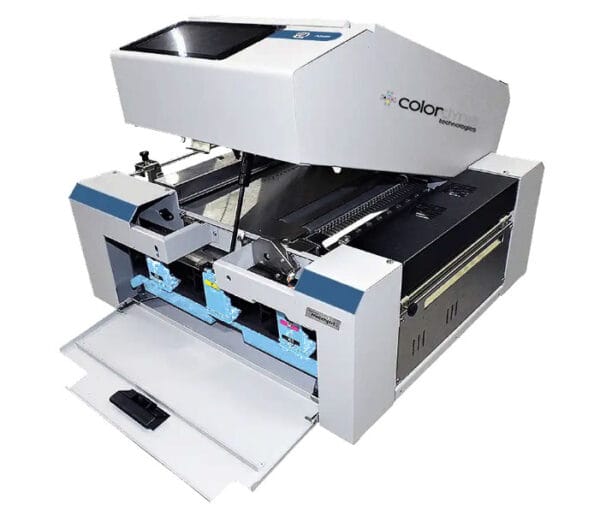
- In-line finishing for professional, durable output. Lamination, die-cutting, and slitting capabilities allow you to produce finished label rolls ready for application without additional processing steps. This is particularly relevant for food environments where labels face heat, moisture, or physical handling that plain-printed stock cannot withstand.
- Gulmen Digital's in-house label printing solutions are configured for exactly these requirements, and the team can help match printer specifications to your compliance and production environment. If you are evaluating the full range of production approaches, alternatives to outsourcing label printing sets out the options across different volume and complexity scenarios.
Take Back Control of Your Food Label Compliance
Every compliance change , a PEAL update, a new ingredient, a country-of-origin adjustment, a revised NIP ; is a risk event when your labels depend on an external supplier. The lead time between identifying the change and having compliant labels in hand is a window of exposure. Minimum order quantities mean you are often holding stock you cannot use. And version control is only as good as your visibility into what is sitting in the warehouse.
In-house digital label printing closes that window. You update the artwork, print what you need, and confirm compliance before the next production run starts. No minimum quantities, no supplier lead times, no guesswork about which label version is current.
Gulmen Digital supplies commercial and industrial digital label printers to Australian food and beverage manufacturers — printers specified for the resolution, substrate flexibility, and software integration that food label compliance demands. To explore the range or discuss your production requirements, contact the Gulmen Digital team directly.

Prefer to talk it through? Call (03) 9318 7177. Gulmen Digital's team is in Ravenhall, VIC.
FAQ — Food Label Compliance Australia
Is it illegal to sell food with non-compliant labels in Australia?
Yes. Under the Food Standards Code, selling food with a non-compliant label is an offence enforced by state and territory food regulators. Consequences can include fines, product seizure, and mandatory recalls — and the legal responsibility rests with the food business, not the printer who produced the labels. Australian Consumer Law adds a parallel obligation not to mislead consumers, which carries its own enforcement regime through the ACCC.
What changed with PEAL on 25 February 2024?
PEAL requires the 12 regulated allergens to be declared on new food labels using plain English names , "milk," "wheat," "soy," "almond" ; rather than the broader category terms previously permitted. Allergens must appear in bold within the ingredient list and in a separate "Contains" summary statement in the same field of view.
Legacy phrasings like "cereals containing gluten" are no longer compliant on new labels. Products already packaged before the transition date can be sold through until 26 February 2026, but any new label printed must comply with PEAL.
Do I need a Nutrition Information Panel on all food products?
Most packaged foods do. The NIP must show energy, protein, fat, saturated fat, carbohydrate, sugars, and sodium per serve and per 100 g or mL. Exemptions apply to some small packages, certain single-ingredient foods, and foods made and packaged at the point of sale — but these are specific and limited.
If you are unsure whether your product qualifies for an exemption, verify directly with FSANZ or your state food authority rather than assuming.
How often do Australian food labelling requirements change?
FSANZ reviews and amends the Food Standards Code on an ongoing basis. The PEAL rollout and the 2018 introduction of mandatory country-of-origin labelling are the most significant changes in recent years, but smaller amendments and enforcement focus shifts occur regularly.
Businesses that outsource label printing are structurally more exposed to compliance lag — every regulatory change depends on a supplier's schedule before it reaches the production floor. In-house printing removes that dependency.
What label printer is suitable for food labels in Australia?
A food-grade digital label printer needs at minimum 1200 dpi resolution for legible NIP and allergen text, substrate compatibility with food-safe label materials appropriate to your products' storage conditions, and reliable colour output for allergen bold formatting and country-of-origin graphics.
Digital printers — including those available through Gulmen Digital's range for Australian manufacturers — allow short runs on demand, which is the right model for managing frequent compliance updates without accumulating obsolete stock.
Can I legally print my own food labels in Australia?
Yes. There is no legal requirement to use an external printer. You may print labels in-house provided the content meets the Food Standards Code and Australian Consumer Law requirements. In-house printing does not change your compliance obligations — it changes how quickly and reliably you can meet them when those obligations require a label update.





Comments ()