
Roll to Roll Label Printers: Print Faster, Waste Less

Meta description: Find the right roll to roll label printer for your volume and budget. Compare top models, costs, and features — and get print-ready faster.
Most buyers shopping for a roll to roll label printer compare sticker prices when the real decision turns on ink cost, media waste, and whether they even need this class of machine at all. A roll to roll label printer feeds blank label stock from an input roll, prints continuously without breaking the web, and rewinds finished labels onto an output roll — and every one of those characteristics has a direct dollar consequence that purchase price alone never reveals.
That is the gap this article fills: a structured buying framework that tells you when roll to roll printing is the right choice, which tier of machine matches your volume, and what the full three-year cost looks like.
 Gulmen Digital
What Is a Roll to Roll Label Printer?
Definition and How Roll to Roll Printing Works
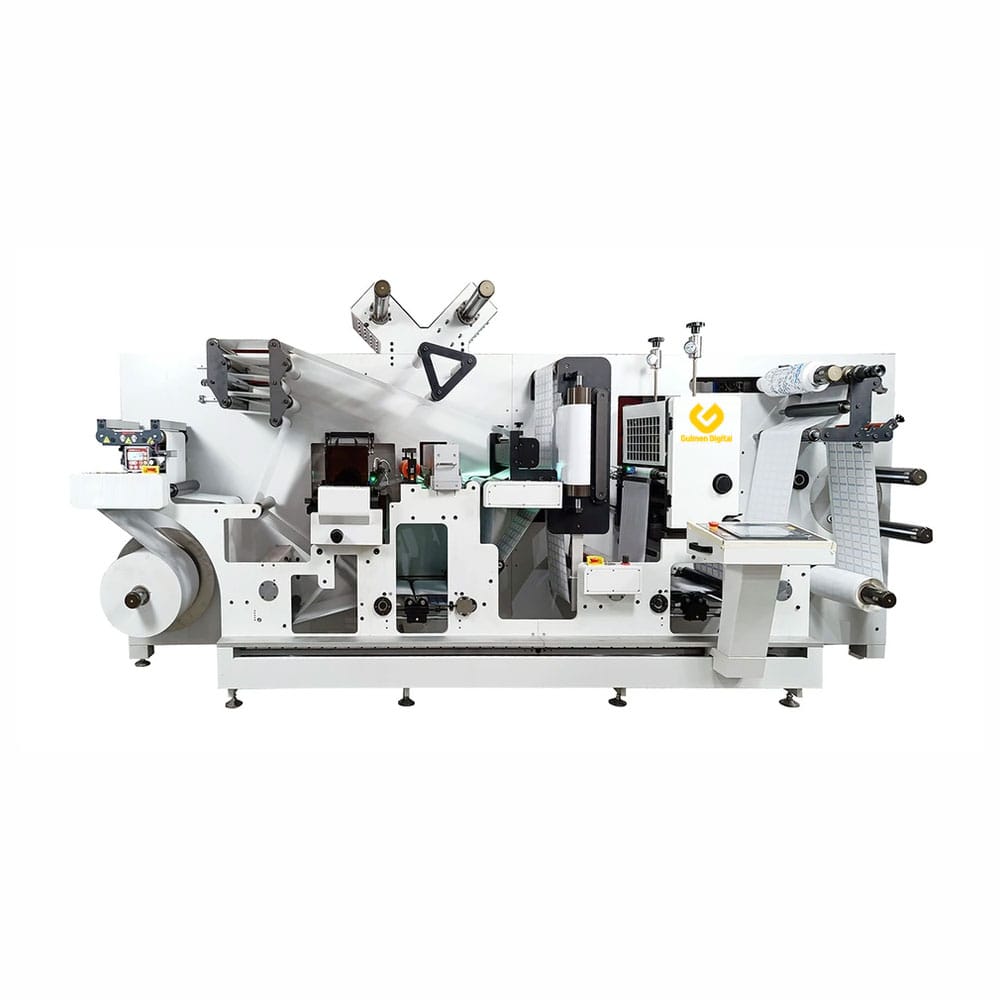
A roll to roll label printer is a production label press built around a continuous web path: label media unwinds from a supply roll, travels through the print engine, cures or dries, and rewinds onto a finished roll. Because the web never breaks into sheets, the machine runs uninterrupted — long jobs, variable data, and frequent SKU changes all happen without the manual stacking and handling that sheet-fed workflows require.
Most digital roll to roll systems use pigment inkjet, dye inkjet, UV inkjet, or dry toner engines, with resolutions typically ranging from 600 to 1,200 dpi. Finished rolls feed directly into die-cutters, slitters, laminators, or automatic label applicators, which is exactly why packaging lines and label converters prefer them.
Roll to Roll vs. Sheet-Fed vs. Desktop Label Printers
The three configurations solve different problems, and choosing the wrong one costs more than the price difference suggests.
| Type | Best for | Key strength | Key trade-off |
|---|---|---|---|
| Roll to roll | High-volume, variable, or colour-rich label runs | Continuous output, low waste, automation-ready | Higher upfront cost, finishing setup required |
| Sheet-fed | Mixed print jobs where labels are one of many products | Familiar workflow, flexible substrates | Slower changeover, more manual handling between steps |
| Desktop label printer | Low-volume shipping, barcodes, office tasks | Low cost, compact, simple | High per-label cost, frequent roll swaps, limited throughput |
Desktop label printers handle die-cut rolls or small fanfold stacks. They are right for shipping labels or the occasional product label, but they are not production equipment. Sheet-fed presses print flat sheets that are later cut, which adds steps and waste between print and finish. Roll to roll systems remove both constraints: the web flows continuously, and the finished output lands directly where it needs to go.
When You Need a Roll to Roll Label Printer
The trigger is usually one of five conditions: monthly volume has climbed into the tens of thousands of labels; SKU count is high and artwork changes often; outsourced suppliers impose minimum order quantities that force you to stockpile more labels than you need; variable data such as lot codes or serialised barcodes must be printed at speed; or packaging lines require labels on rolls for automatic applicators. Any one of those conditions justifies the conversation. Two or more, and the maths almost always favours bringing roll to roll printing in-house.
Key Specs to Compare When Buying a Roll to Roll Label Printer
Print Speed and Resolution
Speed is quoted in inches per minute, metres per minute, or labels per minute at a given size. The practical question is whether a candidate machine can complete your monthly label volume within your available production hours. At higher utilisation, typically above 60–70% of a shift; throughput matters more than small differences in purchase price, because a slower machine forces overtime or outsourcing.
Resolution (600 × 600 dpi vs. 1,200 × 1,200 dpi) affects fine text, barcode readability, and brand colour accuracy. Higher resolution reduces maximum print speed, so calibrate both to your actual jobs rather than chasing headline specs.
Media Width and Roll Capacity
Measure your widest label first, including bleed and liner margins. A printer that cannot accommodate your widest format creates an immediate production bottleneck. Larger roll diameters reduce changeovers and operator time, which matters in sustained production environments. Also confirm supported core sizes — mismatched cores require adapters that introduce tension variability and registration errors.
Ink System and Cost Per Label
This is where most buyers underestimate the real cost. Dye inkjet systems carry a lower hardware price but higher ink cost per label and lower durability. Pigment inkjet handles water and UV exposure better, making it the standard choice for GHS compliance labels, food and beverage, and cold-chain logistics. UV inkjet cures instantly, supports the widest substrate range, and can deliver lower ink laydown — but requires ventilation and carries higher equipment cost.
Ask each vendor to provide an ink cost estimate per 1,000 labels using your actual artwork files, not a generic coverage percentage. Over 36 months, ink and media typically represent the majority of total spend — hardware price is often less than 30% of five-year total cost of ownership.
Cutter, Rewinder, and Finishing Options
A roll to roll label printer is part of a line, not a standalone device. Built-in cutters and rewinders eliminate manual handling between print and finish; integrated laminators and die-cutters reduce touchpoints further. Verify whether these accessories are included in the base price or sold separately, because finishing add-ons frequently add 20–40% to the real system cost. Also confirm roll handling specs: face-in/face-out configuration, supported core sizes, and maximum roll diameter on both unwind and rewind.
Software and Variable Data Integration
Variable data printing, serial numbers, expiry dates, sequential barcodes, QR codes; is one of the core reasons businesses move to roll to roll production. Confirm that the printer's driver or RIP software supports variable data workflows and integrates with your existing ERP or label design tools such as BarTender or NiceLabel. Colour management tools (ICC profiling, spot colour libraries) matter for brand-critical consumer labels. Weak software creates prepress bottlenecks that cancel out hardware speed gains.
Gulmen DigitalRoll to Roll Label Printer Models: A Comparative Overview
Entry-Level Roll Label Printers (Under $10,000)
Entry-level systems, compact colour roll printers such as the Epson ColorWorks range; target small businesses printing short, frequent runs of branded colour labels. Web widths are narrow, duty cycles are moderate, and ink cost per label is higher than industrial alternatives. The business case is not lowest cost per label; it is eliminating the minimum order quantities and lead times that come with outsourced pre-printed stock. For a craft food producer or cosmetics brand managing a dozen SKUs with regular artwork changes, that flexibility is worth more than raw speed.
Mid-Range Colour Roll to Roll Printers ($10,000–$50,000)
Mid-range digital presses occupy the sweet spot for growing brands, regional manufacturers, and in-plant print rooms that have outgrown desktop output. Wider web widths, faster engines, and more durable pigment or UV ink sets deliver better throughput and lower per-label ink cost than entry-level systems. This tier typically includes heavier-duty unwind and rewind systems and supports a broader substrate range — synthetic films, metallics, and specialty stocks that entry-level machines cannot handle reliably. Market data from digital label printing analysts confirm this tier is capturing the largest share of new installations, because it delivers production-grade capability without industrial-scale complexity or capital.
Industrial High-Volume Roll to Roll Presses ($50,000+)
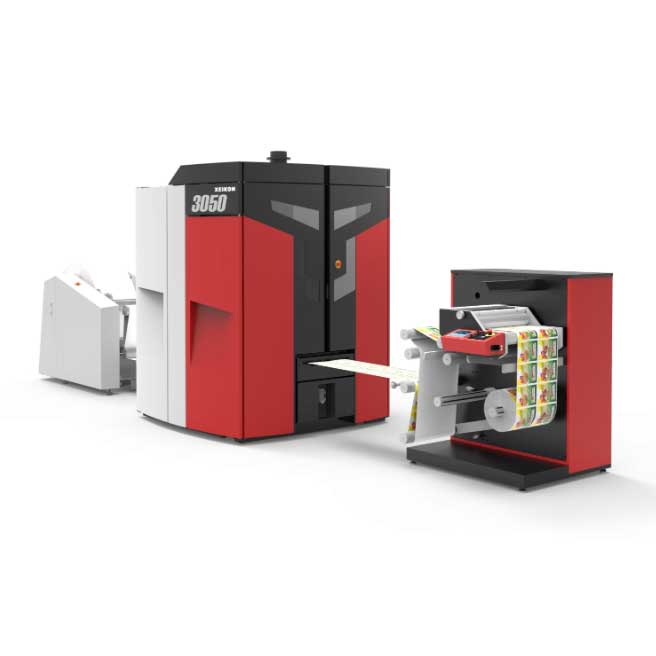
Industrial presses — machines in the class of the Afinia X350 at approximately $79,995 — are built for commercial label converters and large manufacturers running continuous, multi-shift production. Wide webs, high linear speeds, advanced tension control, and inline finishing integration drive per-label ink and media cost to its lowest point. The economic case depends entirely on utilisation: at high volumes, even a 10–15% saving in consumables per label outweighs the additional tens of thousands in hardware cost over five years. These presses demand more floor space, often three-phase power, and skilled operators.
Best Roll to Roll Label Printer for Small Business
For small businesses, "best" means the tightest match between monthly volume, SKU variety, and the cost of replacing pre-printed inventory — not the highest headline speed. An entry-level roll system producing on-demand colour labels eliminates MOQ waste and turns two-week outsourced lead times into same-day output. If monthly volume is approaching the hundreds of thousands, or if you plan to offer label printing as a service, move directly to a mid-range press where ink economics improve substantially.

Total Cost of Ownership: Roll to Roll Label Printing
Purchase Price vs. Running Costs
Hardware is the visible cost. Ink, media, and maintenance are the accumulated cost. Over a five-year production life, consumables and service typically exceed the original purchase price at meaningful volumes. Build a 36-month TCO model that captures hardware (purchase or lease), ink at your actual coverage, media, maintenance contracts, and labour — then compare that total against your current spend on outsourced labels plus the write-off value of any obsolete pre-printed stock.
Label Media Costs and Waste Reduction
Roll to roll printing directly attacks two waste categories: startup and changeover waste (far lower than sheet-fed setups) and obsolete pre-printed inventory. Businesses with seasonal products, short-dated goods, or frequent regulatory updates lose real money every time a label version changes and existing stock becomes unusable. On-demand roll to roll production eliminates that exposure entirely.
Maintenance and Support Considerations
Printhead cleaning cycles, roller inspections, sensor calibration, and consumable replacement are the recurring maintenance reality of any roll to roll press. Evaluate warranty coverage, preventive maintenance schedules, and whether service contracts are fixed-cost or pay-per-call. Downtime on a production-critical label press stops packaging lines — support quality is part of the machine's specification.
Roll Label Printer Australia: Local Sourcing and Support
For buyers sourcing a roll label printer in Australia, geographic distance amplifies every support risk. Confirm Australian voltage compatibility (230–240V, 50Hz) before shortlisting any imported system. Check whether local distributors stock ink, media, and critical spare parts in-country rather than shipping from overseas — an overseas freight delay on a printhead is measured in weeks, not days. Prioritise vendors with Australian-based technicians, clear service SLAs, and on-site response commitments. A marginally cheaper import price evaporates quickly against a single week of production downtime.

How to Choose the Right Roll to Roll Label Printer for Your Needs
Step 1: Audit Your Label Volume and Variety
Quantify monthly label volume per SKU, total labels per month, and how frequently artwork changes. High SKU variety with moderate volumes strongly favours flexible on-demand digital roll to roll. High volume with stable, fewer SKUs may justify a faster press where per-label ink cost matters more than changeover flexibility.
Step 2: Define Your Colour and Durability Requirements
Map each label type to its end environment. Outdoor exposure, chemical contact, refrigerated storage, and regulatory compliance all require specific ink and media combinations. Confirming these requirements before selecting a printer prevents the more expensive mistake of buying a machine whose ink system cannot meet your label's durability specifications.
Step 3: Match Budget to Total Cost of Ownership
Compare three scenarios across 36 months: continue outsourcing, invest in an entry-level roll to roll system, or step up to a mid-range press. Calculate the break-even point in months for each option using your actual label volumes and current outsourced cost per label. The right choice is the scenario that protects cash flow in the short term while delivering the lowest total cost at your expected production levels.
Step 4: Evaluate Vendor Support and Consumables Availability
Treat every shortlisted vendor as a long-term production partner, not a one-time transaction. Confirm in-stock consumables, realistic lead times for spare parts, training resources, and service response SLAs. For Australian buyers, in-country support infrastructure is not a nice-to-have — it is the variable most likely to determine whether the investment performs as modelled.
 Gulmen Digital
FAQ
What is a roll to roll label printer and how does it work?
A roll to roll label printer feeds label stock from an input roll, prints continuously as the web passes through the print engine, and rewinds finished labels onto an output roll. The continuous web path eliminates sheet handling and supports uninterrupted production runs. Finished rolls integrate directly with label finishers and automatic applicators, making this format standard for production-scale label operations.
What is the best roll to roll label printer for small business?
The best roll to roll label printer for a Small Business is the system that matches your monthly label volume and SKU variety without over-investing in unused speed. For most small brands, an entry-level compact colour roll printer eliminates outsourced minimum order quantities and reduces lead times to same-day output. If volume is climbing toward hundreds of thousands of labels per month, a mid-range press delivers better ink economics and longer-term value.
How much does a roll to roll label printer cost?
Entry-level compact roll systems start under $10,000. Mid-range colour presses typically fall between $10,000 and $50,000. Industrial high-volume presses start around $50,000, with commercial-grade machines such as the Afinia X350 priced at approximately $79,995. Hardware is only part of the spend — ink, media, and maintenance contracts often exceed the purchase price over five years at production volumes.
What is the difference between a roll to roll label printer and a regular label printer?
A regular desktop label printer uses small pre-die-cut rolls or sheets and is designed for low-volume, intermittent tasks such as shipping labels or office barcodes. A roll to roll label printer runs continuous large-format rolls at production speeds, integrates with finishing equipment, and supports variable data at scale. Roll to roll systems cost more upfront but deliver lower per-label cost and far greater throughput once monthly volumes justify the investment.
Where can I buy a roll to roll label printer in Australia?
Roll to roll label printers in Australia are available through specialist print and packaging equipment distributors, not general office suppliers. Before purchasing, confirm the vendor provides Australian voltage compliance, in-country technical service, and locally stocked consumables — ink, media, and spare parts. Import lead times for components can run several weeks, so in-country distributor support directly protects production uptime and total cost of ownership.


Comments ()