
Label Finishing Machines: Complete Any Label Fast
Meta description: A label finishing machine laminates, die-cuts, slits & rewinds printed labels. Compare types, speeds & features to find the right finisher for your workflow.
Most buyers shopping for a label finishing machine already have a printer — what they lack is the machine that turns printed rolls into sellable, application-ready product. A label finishing machine closes that gap by running every post-print step, lamination, die-cutting, matrix removal, slitting, and rewinding; in one controlled sequence. The machine you choose determines whether your labels ship on time or sit waiting for outsourced converting.
 Gulmen Digital
What Is a Label Finishing Machine?
The Direct Answer: Definition and Core Function
A label finishing machine is post-print equipment that converts a printed label web into finished, ready-to-apply rolls by running it through lamination, cutting, waste removal, slitting, and rewinding in a single pass. It is not the printer. It is the system that completes the label after the press outputs it, replacing what would otherwise be a chain of manual steps or an outsourcing dependency.
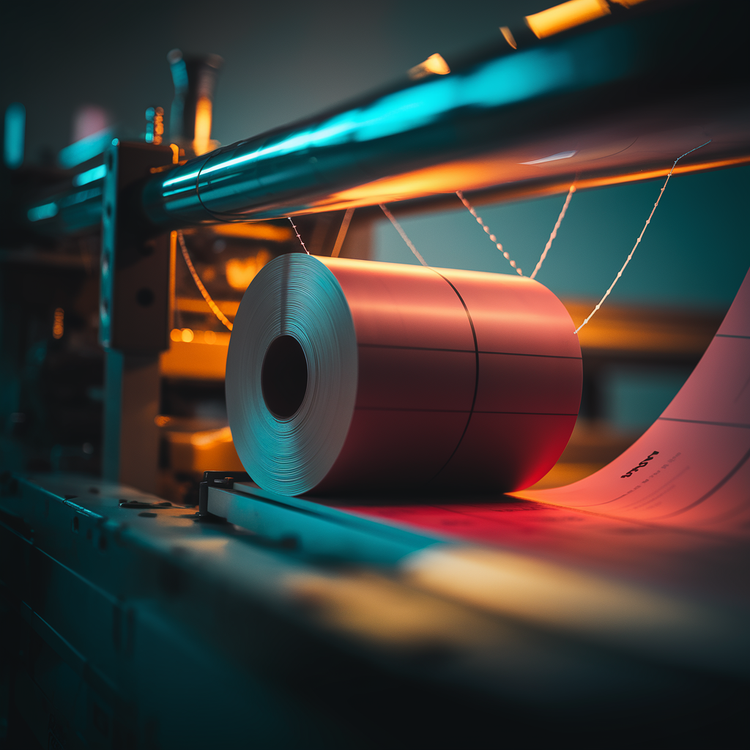
Most commercial finishers operate roll-to-roll: a printed roll feeds in, a finished roll of die-cut, laminated labels comes out. That output feeds directly into automatic applicators, hand-application lines, or customer shipment — no intermediate handling required.
Where Label Finishing Fits in the Production Workflow
The post-print workflow has a fixed logic. Each step depends on the one before it, and skipping any step produces labels that cannot be applied reliably at scale:
- Unwind — The printed roll feeds off the supply spindle under controlled tension.
- Laminate — A protective film bonds over the printed face for durability, scuff resistance, or visual finish.
- Die-cut — The label shape is cut through the face stock while the liner remains intact.
- Matrix removal — The waste web surrounding each label is stripped away and rewound separately.
- Slit — The full-width web is cut into narrower lanes to produce multiple roll widths in one pass.
- Rewind — Each slit lane winds onto a finished core, tensioned and ready for shipment or application.
No incumbent content maps this sequence in full as a buyer's frame of reference. That gap matters because buyers who don't understand where each module sits in the line routinely over-specify or under-specify their finisher — paying for capability they won't use or discovering a missing module after the machine arrives.
Inline vs. Offline Finishing: Key Difference
Inline finishing connects the finisher directly to the press. Printing and finishing run in a single continuous flow, which maximizes throughput when jobs are long, stable, and repeat on one press. The tradeoff is that the finisher's capacity is tied to that press — if one stops, both stop.
Offline finishing runs as a standalone machine that processes printed rolls after the press run ends. It accepts rolls from multiple presses or printers, handles mixed job queues, and allows dedicated finishing operators to run independently of press schedules. For operations with several digital printers or highly variable job mixes, offline finishing usually delivers better overall utilization.
Digital Finishing Machines and Short Runs
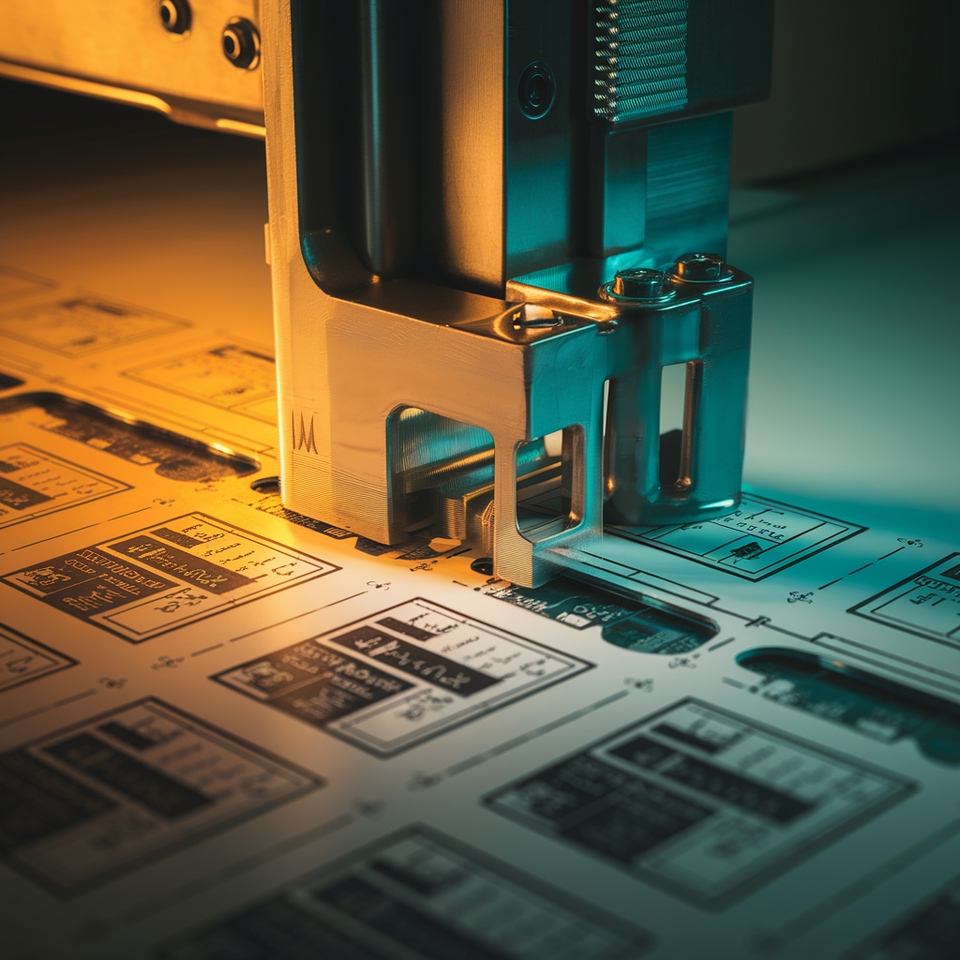
Digital label finishing machines replace physical rotary dies with laser or blade-based cutting driven by artwork files. The practical effect: any label shape becomes cuttable without ordering tooling, waiting for die manufacture, or paying per-shape die costs. That economics shift matters most for short-run producers — a job with 500 labels across three shapes becomes viable where die tooling alone would have made it unprofitable.
Core Functions and Modules Explained
Lamination: Protecting and Enhancing the Label Surface
Lamination applies a clear film over the printed face before cutting. Gloss films maximize color saturation and shine, matte films reduce glare for premium or craft aesthetics, and textured films add tactile quality for cosmetics or specialty food. The module must match your web width and film roll diameter, and the adhesive system must be compatible with your substrates — laminating a UV-ink-printed film with an incompatible adhesive produces delamination in the field.
Die-Cutting: Mechanical vs. Digital Cutting Methods
Rotary die-cutting uses a hardened steel cylinder machined to the label shape. It runs fast — production rotary lines can exceed 100 feet per minute — and delivers consistent edges on long, repetitive runs. The cost is the die itself: each shape requires its own tooling, plus storage and maintenance.
Digital cutting uses a knife plotter or laser controlled by a vector file. Speed is lower — typically up to 30 feet per minute depending on shape complexity — but there is no tooling cost, no lead time for a new die, and no minimum run length to justify the setup. For buyers running many SKUs in small volumes, the absence of per-shape tooling cost changes the entire cost model.
Matrix Removal: Stripping the Waste Web
After die-cutting, the waste web, the material between and around each label; must be stripped from the liner before rewinding. Matrix removal automates this step. On most mid-range and production finishers it is a standard module; on entry-level compact systems it may be optional. Buyers should confirm not just whether the machine removes matrix, but whether it handles full-frame matrix — large labels with a lot of surrounding waste — reliably at speed, since poor matrix handling is a leading cause of web breaks and downtime.
Slitting: Producing Multiple Roll Widths Simultaneously
Slitting uses a bank of knives to divide the full-width web into narrower lanes. A 12-inch web printed with three label columns can exit the finisher as three individual 4-inch rolls in one pass. This matters for efficiency: one finishing run produces multiple sellable outputs, and each roll matches the applicator width the end-user requires. Adjustable slit positions let operators adapt roll width to different jobs without retooling the entire machine.
Rewinding: Finishing to Shipper-Ready Rolls or Sheets
The rewind station gathers each slit lane onto a core at the correct tension and diameter. Three-inch cores are the commercial standard for most automatic label applicators; larger cores suit high-volume runs where a bigger roll diameter reduces applicator changeovers. Motorized rewind with active tension control prevents telescoping, crushed cores, and loose outer wraps — all of which cause application failures downstream.
Some finishers also offer sheeting as an alternative to rewinding, useful for office or craft label supply, but roll-to-roll remains the dominant configuration for commercial label production.
 Gulmen Digital
How to Choose the Right Label Finishing Machine
Production Volume and Speed Requirements
Start with your actual shift output, not the headline speed. A digital finisher rated at 30 feet per minute, running two 8-hour shifts with realistic allowances for setup and changeover, can process roughly 25,000–28,000 feet of web per day. If your volume exceeds that, you need a faster system or a second machine — a spec-sheet speed that sounds adequate can become a production bottleneck under real-world conditions.
Label Shape Complexity and Substrate Compatibility
Complex or frequently changing shapes favor digital cutting; stable, high-volume shapes favor rotary dies. The inflection point is run length: as soon as a single shape runs long enough to amortize tooling cost, mechanical die-cutting becomes cheaper per label. Many operations run both — digital finishing for new SKUs and short-run work, rotary finishing for mature, high-volume products.
Substrate compatibility is non-negotiable. Confirm the machine supports your full material range, paper, film, foil, and synthetics; before purchase. Some materials require specific laser wavelengths, static control, or cooling, and discovering an incompatibility after delivery means either material substitution or a second machine.
Footprint and Space Constraints
Ultra-compact "nano-class" finishers exist specifically for small shops and tight production floors. These machines deliver digital cutting, lamination, slitting, and rewinding in a footprint that fits alongside a desktop label printer. If floor space is limited, the compact tier is worth evaluating — not as a compromise, but as a purpose-built configuration for smaller-volume in-house production.
Digital vs. Mechanical Die-Cutting: Which Suits Your Run Lengths
The decision reduces to a break-even calculation. Rotary dies carry upfront tooling cost per shape; digital cutting carries no per-shape tooling cost but runs at lower speed. For short, varied runs — the profile most common among craft food brands, boutique cosmetics, and compliance label producers — digital cutting eliminates tooling friction entirely and compresses turnaround time. For long runs of a fixed shape, the die cost amortizes quickly and rotary throughput wins on cost per label.
Total Cost of Ownership: Tooling, Consumables, and Maintenance
The purchase price is the starting point, not the full cost. Rotary systems require dies per shape, storage, and periodic regrinding. Digital systems require blade replacement, laser optic servicing (for laser-based cutters), and software licensing. Both consume lamination film, slitting knives, and cores.
Maintenance intervals — how often blades are replaced, when bearings need attention, how frequently the laser source requires service — directly affect uptime and cost per finished label over the machine's life. Ask suppliers for a consumables cost estimate per thousand labels and factor that into the comparison alongside purchase price.
Label Finishing Machines in Australia: What Buyers Need to Know
Local Market Considerations and Supplier Support
Australian label producers typically run shorter regional batches than large-market converters, serve many small brand owners with frequent design changes, and face longer lead times for imported equipment and consumables. These conditions make local supplier support, installation, training, spare parts, and warranty response; more commercially significant than in larger markets. A machine with excellent specifications but remote-only service can cost more in downtime than the purchase savings justify.
Voltage, Standards, and Service Network
Australia operates on 230V/50Hz. Imported finishers must match local electrical standards without external transformers and must comply with Australian workplace safety requirements. Before committing to an offshore purchase, verify voltage configuration, plug standards, and whether the machine has been certified for the Australian market.
Digital Label Finishing for Australian Short-Run and On-Demand Producers
Digital label finishing suits the Australian market particularly well. Craft beverage labels, boutique food products, cosmetics, and industrial compliance labels all involve short runs, variable data, and frequent artwork changes — exactly the profile where digital cutting's absence of tooling costs and fast changeover create the strongest economic case.
Australian producers who previously outsourced finishing to offset tooling costs can bring that work in-house with a compact digital finisher and see payback driven by faster turnaround and lower label cost. Confirm local warranty terms, in-country spare parts availability, and whether the supplier provides on-site commissioning and operator training before purchasing offshore. These factors determine real-world uptime, not just theoretical specifications.
Label Finishing Machine Price Guide and What Affects Cost
Entry-Level Finishers: What You Get at the Low End
Entry-level label finishing machines start around $14,000 and typically deliver basic digital cutting, single-pass lamination, matrix removal, and one rewind station at modest speeds. These suit small print shops, brand owners bringing finishing in-house for the first time, and operations with limited volume and SKU complexity. Trade-offs include lower throughput, fewer automation features, and a narrower substrate range.
Mid-Range and Production-Grade Machines
Mid-range systems add speed, wider web handling, additional modules (dual rewinds, inspection stations, automated slitting), and more sophisticated tension control. Production-grade rotary and semi-rotary finishing lines climb significantly higher in price, reflecting inline integration capability, high-speed throughput, and the automation needed for large converting operations.
The label converting equipment market was valued at around USD 3.4 billion in 2024, reflecting sustained investment at the mid and high tiers as converters automate more of the finishing process.
Factors That Drive Price Up or Down
Cutting method is the biggest driver: laser and digital systems carry a premium over rotary at equivalent web widths, but eliminate tooling costs that accumulate on mechanical systems. Speed rating, web width, number of modules, servo automation, and brand support infrastructure all move price upward. Country of origin affects landed cost in Australia through shipping, duties, and the availability of local service.
Costing the Full System
Budget for the machine plus dies or software licenses, lamination film stock, core supply, installation, and operator training. Leasing and finance structures are widely available from label finishing suppliers and can reduce upfront capital exposure while putting the machine into production immediately. Calculate cost per finished label, in-house versus your current outsourcing spend; using realistic volume and waste assumptions to validate payback period before committing.
 Gulmen Digital
FAQ
What does a label finishing machine do? A label finishing machine takes printed label rolls and converts them into ready-to-apply product by laminating, die-cutting, removing waste matrix, slitting to width, and rewinding onto finished cores. It replaces manual finishing steps and outsourced converting with a single automated pass, producing consistent, application-ready labels at the end of every run.
What is the difference between a label finisher and a label press? A label press prints ink or toner onto the substrate — it creates the image. A label finisher performs every post-print step: lamination, cutting, waste removal, slitting, and rewinding. You need both to produce finished labels; the press creates the artwork, and the finisher makes it a usable product.
How much does a label finishing machine cost? Entry-level systems begin around $14,000 for basic digital finishing capability. Mid-range and production-grade machines with higher speeds, more modules, and greater automation cost significantly more. Total purchase cost should include dies or software licenses, film, installation, and training — not just the machine price.
Which label finishing machine is best for short print runs? A digital label finishing machine, using blade or laser cutting; is the best fit for short runs because it eliminates die tooling costs and allows fast changeover between jobs. There is no minimum run length to justify setup, and any label shape can be cut from an artwork file without ordering physical tooling.
Where can I buy a digital label finishing machine in Australia? Digital label finishing machines are available through Australian print and packaging equipment distributors representing international manufacturers, as well as direct from some OEMs with local partners. Before purchasing, confirm 230V/50Hz compatibility, in-country warranty service, spare parts availability, and whether the supplier provides on-site installation and training in Australia.


Comments ()