
Cosmetic Label Printing Machine: Print Pro Labels
Meta description: Compare cosmetic label printing machines by type, cost & specs. Find the right machine for skincare labels — from desktop printers to production lines.
Most buyers searching "cosmetic label printing machine" are shopping for two completely different products — and confusing them costs money. A cosmetic label printer creates finished labels from blank roll stock; a cosmetic label printing machine in the production sense prints and applies those labels to containers at speed. Nail the distinction first, then choose your machine.
 Gulmen Digital
What Is a Cosmetic Label Printing Machine?
The market uses one phrase to describe two different tools, and conflating them sends buyers down the wrong path entirely.
Category one — cosmetic label printers: Desktop inkjet or thermal devices (Primera LX series, VIPColor VP485/VP495) that print full-colour artwork onto blank BOPP or polypropylene label rolls. Output: finished labels on a roll, ready for manual or mechanical application. These machines produce labels; they do not touch the bottle.
Category two — label applicator or production machines: Semi-automatic units (VEVOR-type round bottle labellers) or inline print-and-apply systems that take pre-printed or freshly printed labels and wrap, tamp, or press them onto containers at speed. These machines place labels; the cheaper ones do not print at all.
Knowing which bottleneck you face determines which category you buy:
- Indie and small-batch skincare brands running hundreds to a few thousand labels per month need a desktop colour cosmetics label printer first. Lead times from trade printers kill product launch speed, and frequent formulation or claims changes make that a printing problem, not an application problem.
- Mid-volume brands with stable SKUs and a growing bottling operation need both: a desktop printer for label production and a semi-automatic applicator for consistent placement on round bottles.
- Contract manufacturers and large brands running continuous filling lines need integrated print-and-apply production systems — capital-intensive, but the only setup that delivers the throughput and traceability they require.
Most desktop search results show Category one machines. VEVOR-type listings are Category two. An indie skincare founder buying a VEVOR unit expecting it to print her labels will be frustrated immediately — it cannot.
Types of Cosmetic Label Printing Machines Compared
Desktop Inkjet Colour Label Printers (Primera LX, VIPColor VP485/VP495)
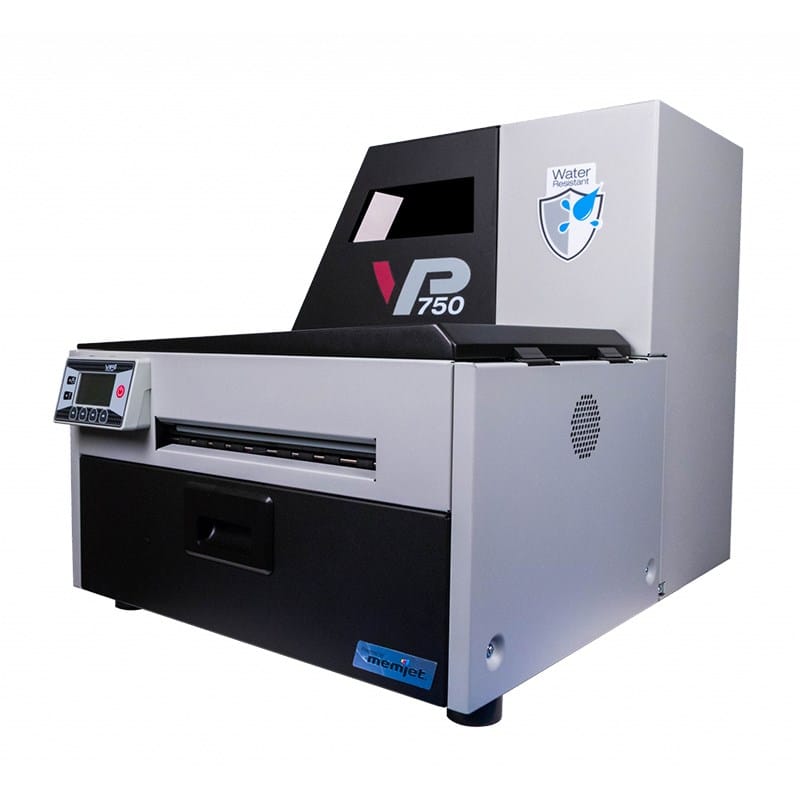
These are the workhorses for in-house cosmetic label production at small to mid scale. Primera's LX series reaches up to 4,800 dpi, delivering photo-realistic skin tones and sharp fine print — critical for ingredient lists that regularly drop to 6-point font. VIPColor's VP495 uses a pigment ink system producing waterproof, fade-resistant labels and prints up to 4 inches per second, while the VP485 handles jobs of up to 5,000 labels per cycle at 1,200 × 1,200 dpi.
Typical effective print speeds across desktop inkjet label printers run 3–6 inches per second in production modes — fast enough for short-run cosmetics work, not fast enough for a continuous filling line. In Australia, expect to pay AUD $2,500–$5,000 for professional models in this class, depending on print width and ink system.
Best suited for: full-colour artwork labels, frequent SKU changes, limited-edition seasonal launches, and any skincare brand that currently relies on a trade printer and wants shorter turnaround times.
Thermal Transfer Label Printers
Thermal transfer printers prioritise variable data over colour graphics. They print monochrome or two-colour text, batch codes, expiry dates, barcodes, INCI ingredient lists on simple labels; using wax-resin or resin ribbons that bond to synthetic substrates with excellent chemical resistance.
Cost per label drops sharply at volume because ribbons and plain synthetic stocks are cheap. Most cosmetics operations pair a thermal transfer unit with a colour inkjet printer: the inkjet produces branded base labels, and the thermal transfer unit overprints lot numbers and dates inline or at packing. Australian pricing for industrial thermal transfer printers typically sits AUD $800–$2,500.
Semi-Automatic Round Label Applicator Machines
VEVOR's semi-automatic round labellers (LT-50S, MT-50) apply pre-printed adhesive labels from a roll to cylindrical containers at 20–50 units per minute. Supported bottle diameters run roughly 20–120 mm, covering most serum vials, oil bottles, and lip balm tubes.
The single most important fact about these machines: they do not print. Load a roll of blank stock and nothing happens except a wasted afternoon. They exist to solve application speed and alignment, not label production. Priced at AUD $800–$3,000 depending on model and build quality, they make commercial sense the moment hand-labelling becomes the bottleneck — but only once you already have printed labels feeding into them.
Full Production Inline Label Printing Machines
At the top of the stack sit integrated print-and-apply systems: these unwind blank label web, print variable or full-colour content, inspect registration, and apply labels to containers on a conveyor — all in one pass. Application accuracy hits ±0.5–1 mm using optical sensors, and throughput scales into tens of thousands of units per shift.
Capital cost starts around AUD $15,000 for entry-level integrated systems and climbs well into six figures for fully configured lines with vision inspection and serialisation. The business case only works at scale — but for contract manufacturers, in-house unit economics beat outsourced labelling decisively.
Comparison Table
| Machine type | Best use case | Typical volume | Approx. Price (AUD) | Substrate compatibility |
|---|---|---|---|---|
| Desktop colour inkjet printer (Primera, VIPColor) | Indie to mid-volume; full-colour branding | Hundreds–tens of thousands/month | $2,500–$5,000 | BOPP, polypropylene, paper, select foils |
| Thermal transfer printer | Variable data; batch codes; expiry dates | Thousands–hundreds of thousands/month | $800–$2,500 | Paper, synthetic stocks with compatible ribbons |
| Semi-auto round applicator (VEVOR) | Applying pre-printed labels to round bottles | 20–50 units/min (application only) | $800–$3,000 | Any roll label matching core/width specs |
| Production print-and-apply line | Contract manufacturing; large brands | Tens of thousands+ per shift | $15,000+ | Wide range; configured per line |
 Gulmen Digital
Key Specs to Check Before Buying a Cosmetic Label Printing Machine
Substrate Compatibility: BOPP, Polypropylene, Foil
BOPP (biaxially oriented polypropylene) and polypropylene face stocks are the cosmetics industry standard. They resist water, oils, and tearing — the three conditions every bathroom product label faces within days of purchase. Before committing to any printer, confirm it supports your target roll width and core size in BOPP or PP, not just coated paper.
If your brand uses metallic foil or clear no-label-look substrates, check ink adhesion compatibility carefully. Some inkjet systems require specific top-coat formulations on specialty stocks, and running incompatible media through a desktop printer produces labels that smear within minutes of contact with a lotion pump.
Print Resolution and Colour Accuracy
The ACCC's mandatory ingredient list requirement forces cosmetic brands to fit a substantial amount of small text onto containers that are often narrow or short. At 6-point font, a minimum of 1,200 dpi effective resolution is necessary to keep ingredient names legible. Desktop inkjet printers at 2,400–4,800 dpi provide comfortable headroom for this — thermal transfer units at standard settings handle plain text adequately, but struggle with fine serif fonts or dense INCI nomenclature.
Colour accuracy matters beyond aesthetics. A brand shade printed out-of-profile on two different label batches creates visible inconsistency across retail shelves. Confirm that your printer supports ICC colour management and that your workflow includes proofing against a consistent substrate.
Water, Oil, and Smear Resistance
Pigment inks outperform dye inks in every cosmetic environment: they resist water, UV exposure, and oil contamination substantially better. The VIPColor VP495's pigment system is a concrete example of this principle applied to desktop label printing. Dye-ink printers can produce richer gamut initially, but labels exposed to bathroom steam or body oil often smear within weeks.
For extreme conditions, massage oils, body scrubs, products stored in showers; add lamination or a clear over-varnish to any label regardless of ink type. Verify that the laminate film bonds correctly to your printed substrate; incompatible combinations delaminate at edges under moisture.
Label Size Range and Container Shape Compatibility
Desktop printers care about label dimensions and roll specs — they do not interact with container geometry. Applicators and production lines must match container diameter, height, and curvature precisely.
Round containers like serum dropper bottles and lip balm tubes require wrap-around application. Not all semi-auto applicators handle very small diameters or tapered tubes; check the manufacturer's minimum bottle diameter spec before ordering. Flat containers — compacts, palette boxes — need tamp-apply or panel applicators, which are different machines from the round bottle labellers that dominate the VEVOR category.
Cosmetic Label Printing Machine Cost: Price Guide & Total Cost of Ownership
Machine Purchase Price Ranges
Clear price anchors for Australian buyers:
- Desktop colour label printers: AUD $2,500–$5,500
- Thermal transfer printers: AUD $800–$2,500
- Semi-automatic round applicators: AUD $800–$3,000
- Production print-and-apply systems: AUD $15,000 to well above $50,000
Cost Per Label at Different Volumes
Total cost per label must include ink or ribbon consumption, substrate cost, and a maintenance allowance. At low volumes — say 200 labels per week — the per-label cost on a desktop inkjet printer runs high because you're spreading capital and ink overhead over small output. At 2,000 labels per week, that same machine reaches a cost structure that competes directly with trade printing.
Compare against a typical label bureau quote for BOPP full-colour labels: Australian trade printers generally charge between AUD $0.15–$0.45 per label depending on quantity, finish, and turnaround. A desktop inkjet machine running at moderate volume with pigment inks on BOPP stock typically lands below $0.20 per label at consistent weekly throughput — but only after the capital cost amortises.
When Buying a Machine Beats Outsourcing
The practical crossover point: if your brand prints more than 500–1,000 labels per week consistently, an in-house desktop cosmetics label printer typically recovers its purchase cost within 12–18 months through avoided outsourcing spend, eliminated rush fees, and eliminated minimum order constraints.
Below that threshold, a label print bureau often wins on pure unit economics — but loses on flexibility. Every time you update a formulation, change a claim, or launch a limited edition, outsourcing adds lead time and minimum quantity risk. For brands in active product development, the agility argument for owning a machine frequently outweighs the cost-per-label comparison even at lower volumes.

Cosmetic Label Printing in Australia: Compliance & Local Considerations
ACCC Requirements and Mandatory Label Information
Australian cosmetics sold to consumers must comply with the Consumer Goods (Cosmetics) Information Standard 2020, which mandates full ingredient disclosure using INCI or English names in descending order, net contents, country of origin, and responsible person details. These requirements translate directly into machine specifications: your cosmetics label printer must render small-font INCI ingredient lists legibly, which means minimum 1,200 dpi effective resolution and consistent colour contrast.
Products that cross into therapeutic goods territory — sunscreens making SPF claims, acne treatments, anti-ageing products with therapeutic representations — face additional TGA labelling requirements including specific warning statements, active ingredient declarations, and mandatory ARTG numbers. For these products, a thermal transfer unit overprinting variable regulatory data onto pre-printed colour labels is often the most practical compliant setup.
Local Suppliers vs. Importing Machines
Australian distributors supply Primera and VIPColor desktop printers with local warranty support, training, and access to compatible BOPP and PP label stocks — advantages that meaningfully reduce setup friction compared to direct import. VEVOR-type semi-automatic applicators are available through Australian industrial and packaging equipment resellers, though warranty and service support vary considerably by supplier.
Early-stage skincare brands navigating skincare label printing Australia options often follow a practical sequence: start with a local label print bureau to test formulations and designs without hardware investment, then graduate to an in-house desktop cosmetics label printer once SKUs stabilise and weekly label volumes make the capital expenditure straightforward. The crossover from bureau to machine typically occurs earlier than founders expect — usually around the 12-month mark for brands with active product development programs.
Gulmen DigitalFAQ
What is the best cosmetic label printing machine for small batches? For small batches, a desktop colour cosmetics label printer, such as the VIPColor VP495 or a mid-range Primera LX model; delivers the best combination of print quality, substrate flexibility, and on-demand production. These machines print full-colour BOPP labels at resolutions sufficient for compliant ingredient lists, without minimum order quantities. Pair one with a simple semi-automatic round applicator once hand-labelling becomes the bottleneck.
How much does a cosmetic label printing machine cost in Australia? Desktop colour label printers cost approximately AUD $2,500–$5,500; thermal transfer printers for variable data run AUD $800–$2,500; semi-automatic round applicators sit around AUD $800–$3,000; and integrated production print-and-apply systems start at AUD $15,000 and rise sharply with speed and feature level. Total cost of ownership includes consumables, ink or ribbons, label stock, and maintenance; which can equal or exceed hardware cost over a machine's lifetime.
What type of printer do I need for waterproof cosmetic labels? Choose a desktop colour label printer with a pigment ink system, the VIPColor VP495 is a clear example; paired with BOPP or polypropylene label stock. Pigment inks resist water, oil, and UV far better than dye-based alternatives. Add lamination or a clear over-varnish if labels face heavy moisture or direct oil contact, such as products stored in showers or used with oily formulations.
Can I print my own cosmetic labels with a desktop label printer? Yes, and many indie and mid-size skincare brands do exactly this. A desktop colour label printer handles full-colour branding, fine-print ingredient lists, and short-run SKUs on-demand, without minimum quantities or trade printer lead times. You will need compatible BOPP or polypropylene roll stock and, depending on your containers, a separate semi-automatic applicator to achieve consistent label placement on bottles and jars.
What is the difference between a cosmetic label printer and a label applicator machine? A cosmetic label printer produces finished labels by printing artwork and text onto blank roll stock — it solves the problem of making labels. A label applicator machine takes pre-printed label rolls and applies them to containers at speed — it solves the problem of getting labels onto packaging consistently and fast. Desktop printers like Primera and VIPColor are printers; VEVOR-type units are applicators. Most growing brands eventually need both, but the right purchase order is printer first, applicator second.

Comments ()