
Label Printer for Small Batch Production
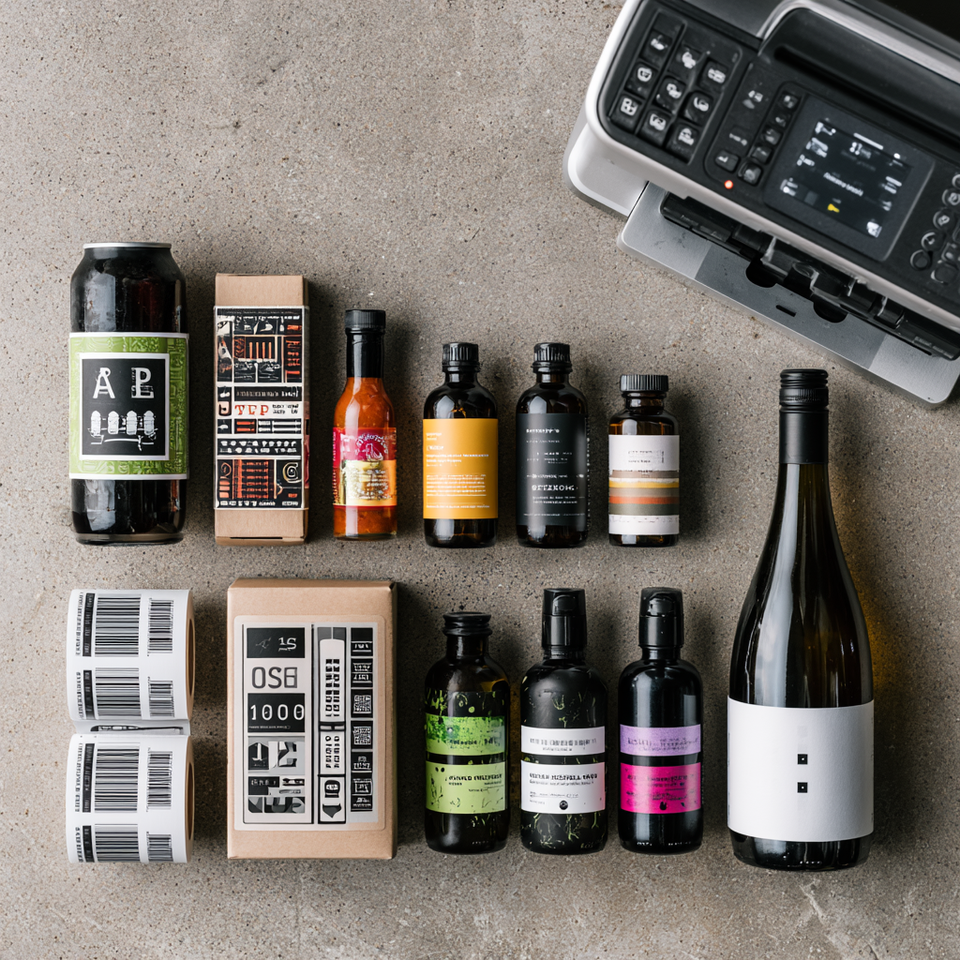
Choosing the Right System for Australian Manufacturers
For most Australian small-batch producers, the best label printer for small batch production is a digital colour roll-to-roll label press with fast job changeover and no minimum run requirement typically an entry-level OKI Pro digital colour system for operations printing 50–2,000 labels per SKU, or a Memjet-based label printer system for businesses growing toward higher daily volumes.
Both eliminate the plate costs, minimum order quantities, and multi-week lead times that make traditional trade printing expensive and inflexible for short runs. If your label volumes are climbing toward production scale and your SKU count is high, the Quantumjet Elite is the system that bridges small-batch agility with industrial throughput.
The wrong answer is a standard office inkjet or laser printer with A4 label sheets. It works for proofing and prototypes, but falls apart as a production tool when you have ten SKUs to re-run by Friday, need colour-accurate labels that survive refrigeration, or want to hand a finished roll directly to your labelling machine.
The decision isn't about cost alone — it's about which system gives you control over your production timeline, your label quality, and your unit economics as your product range grows.

Contact Gulmen Digital at 42 Orbis Drive, Ravenhall VIC 3023 to discuss your label volume, SKU mix, and production requirements—and find out how an on-demand digital label workflow compares to what you are spending today.
What "Small Batch" Means in Australian Label Production
In Australian manufacturing, small batch label production means runs of approximately 50 to 2,000 labels per SKU, per job. That range covers the majority of craft beverage producers, artisan food brands, cosmetics startups, and health supplement companies that operate below the MOQ thresholds set by conventional flexographic trade printers.
The defining characteristics of small batch label work aren't just volume — they're variability and frequency:
- High SKU count: A craft brewery might run 15 different beers simultaneously, each needing a distinct label, with new seasonal releases every four to six weeks.
- Frequent artwork changes: Regulatory updates, ingredient reformulations, limited-edition campaigns, and export variants all force label artwork to change faster than a long-run supplier can accommodate.
- Multiple substrate formats: Small-batch producers often label glass bottles, aluminium cans, HDPE jars, flexible pouches, and cartons within the same production week — sometimes the same day.
- Just-in-time requirements: Labels printed on demand reduce inventory risk. A batch of 300 jars of a seasonal jam does not justify holding 5,000 pre-printed labels for that flavour year-round.
Traditional flexographic printing sets economic minimums of 1,000–5,000 labels per design because plate-making, makeready, and press setup are fixed costs that only amortise at volume.
Digital label printers eliminate those fixed costs entirely with no plates, no cylinders, no makeready waste.
That structural difference is what makes a digital system the correct technology choice for small batches, not merely a cheaper alternative to flexo.
Who Needs a Small Batch Label Printer in Australia
Businesses that benefit most from in-house small batch label printing share a common profile: they launch products frequently, run multiple SKUs in parallel, and can't afford the lead times or minimum orders that come with outsourcing to trade printers.
Craft Breweries and Cideries
A rotating tap list with limited releases, collaboration brews, and venue-exclusive cans can mean 20 or more active label designs in any given month, with run lengths of 200–800 labels per beer. The ability to print, laminate, and die-cut a new label design on the same day as a batch approval isn't a luxury — it's operationally necessary.
Boutique Wineries
Small parcels, vintage-specific designs, cellar-door exclusives, and export variants requiring country-specific compliance text create constant label turnover.
A 300-bottle lot of a trial orange wine doesn't justify a trade print order with a two-week lead time and a 1,000-label minimum.
Artisan Food Producers
Makers of hot sauces, preserves, condiments, and specialty snacks typically sell through multiple channels simultaneously — farmers markets, independent grocers, direct-to-consumer, export — each with slightly different label requirements. Seasonal SKUs add further complexity: a Christmas edition honey or a limited-run summer relish needs labels that exist for eight weeks, not eight months.
Cosmetics and Personal Care Startups
Often operating with dozens of SKUs across different formulations, scents, and packaging formats, these brands need labels carrying fine regulatory text, batch codes, and premium brand graphics on containers ranging from 15 ml dropper bottles to 500 ml pump bottles. Print resolution and colour accuracy matter at a level that desktop thermal printers can't meet.
Health Supplement Brands
These brands carry the highest compliance burden:
- Ingredient declarations
- Nutritional information panels
- Allergen statements
- Batch numbers, and expiry dates must all be legible and accurate.
The ability to update a label file and reprint 400 units the same afternoon is directly tied to their ability to respond to regulatory changes or formulation updates without holding obsolete stock.
Private Label Manufacturers and Contract Packers
Operations serving multiple brand clients need to switch label designs frequently, maintain client colour standards, and keep per-label costs under control across a diverse portfolio. These businesses often have the clearest ROI case for a dedicated small-batch label system.
Unique Requirements of Small Batch Label Printing
Small batch label production puts specific demands on a printing system that differ from both office printing and high-volume industrial printing.
- No minimum order quantity :
- In-house digital printing means you print exactly what you need — 75 labels for a test batch, 400 for a market run, or 1,800 for a supermarket trial.
- There's no economic pressure to over-order and warehouse labels that may become obsolete.
- Fast job changeover :
- Switching from one SKU to another on a digital label press takes minutes, not hours.
- No plates to swap, no inks to flush, no makeready waste. Running 10 different SKUs in a single production shift is routine on a digital system; on a conventional press it's impractical.
- Substrate flexibility :
- Small-batch producers use paper stocks for dry goods, BOPP or PET synthetics for wet or refrigerated products, clear films for premium aesthetics, and textured stocks for craft positioning.
- The label printer needs to handle these materials without requiring a separate device for each substrate category.
- Full colour on demand :
- Four-colour process printing — CMYK plus white for opaque labels on clear or metallic substrates must be available on every job without adding setup time or cost. Digital systems provide this natively.
- Variable data without friction :
- Batch numbers, best-before dates, QR codes, and serialised barcodes must be updated run-to-run or even label-to-label.
- Digital label printers handle variable data through the RIP or label software with no mechanical intervention required.
- Durability matched to end use :
- A label on a craft beer bottle will encounter condensation, ice buckets, and wet hands. A label on a skincare product will be exposed to oils and steam.
- A label on a cleaning product must resist chemical splashes. The printer technology and compatible media must support durability requirements without needing lamination on every single job.
Comparing Label Printing Systems for Small Batch Production
Desktop Printers with Label Sheets
Standard office inkjet and laser printers using A4 label sheets are the starting point for businesses at the earliest stage of in-house label production. They require no capital investment beyond what most offices already own, and they're adequate for proofing artwork and printing small quantities of non-critical labels.
Their limitations become significant once production intent is real. Sheet-fed feeding is slower and less reliable than roll-to-roll handling. Margins and sheet gutters generate waste on every job.
Colour consistency across multiple print runs is difficult to maintain. Most office inkjet inks aren't water-resistant on standard label stocks without additional coating. And running 500 labels per day on a consumer inkjet accelerates wear well beyond what these machines are designed to handle.
Entry-Level OKI Pro Digital Colour Label Printers
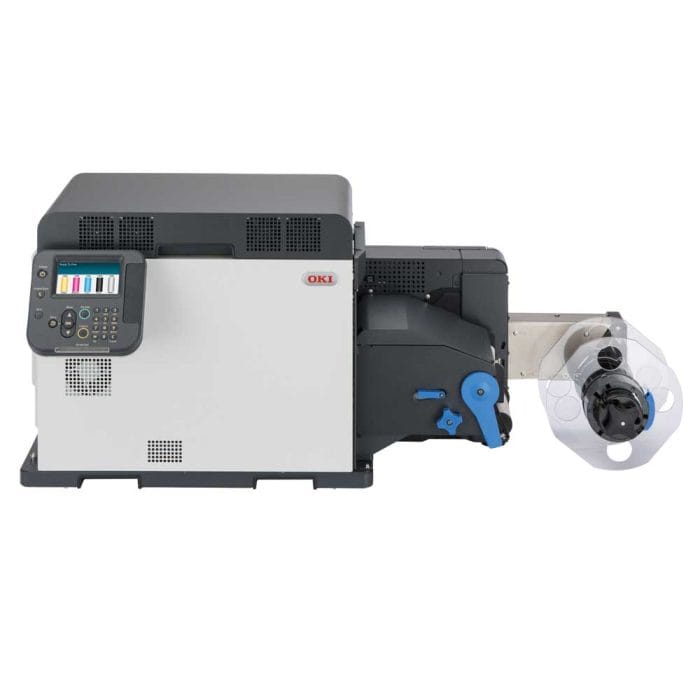
OKI Pro series digital colour label printers are the first step into purpose-built, roll-to-roll label production. They use LED-array toner technology to deliver sharp CMYK output and in some configurations, white or clear toner on label roll stock, with consistent registration and colour accuracy across a run.
For small-batch producers printing runs of 50–2,000 labels per SKU, the OKI Pro tier offers a practical combination of print quality, substrate range, and operational simplicity. Setup between jobs is fast, media loading is straightforward, and the machines are sized for bench or compact production-room use.
Colour quality is sufficient for retail-facing labels on craft food and beverage products, cosmetics, and health supplements.
Memjet-Based Digital Label Systems
Memjet's page-wide inkjet printhead technology enables significantly higher print speeds than toner-based systems at comparable label widths.
Memjet-based label printers designed for roll-to-roll production are the right tool for small-batch operations that have grown into:
- Regular, high-frequency production running multiple jobs per day
- Managing 20 or more active SKUs
- Needing to maintain throughput across a full production shift.
Water-based Memjet inks deliver vivid, photo-quality colour output across a wide range of compatible label stocks, including papers, coated synthetics, and clear films. Variable data and barcode printing are handled in the same pass as the full-colour artwork, with no additional setup.
For craft beverage operations producing hundreds of new labels weekly, or food manufacturers running daily reprints across a large SKU portfolio, a Memjet-based system provides the speed and flexibility to keep pace with production demand.
Memjet systems require more attention to media selection than toner-based devices — not all label stocks are compatible with water-based inkjet, and some applications will need an overlaminate for durability in wet or refrigerated environments. These are manageable operational considerations, not barriers, but worth factoring into the decision.
Quantumjet Elite: When Small Batch Meets Production Scale
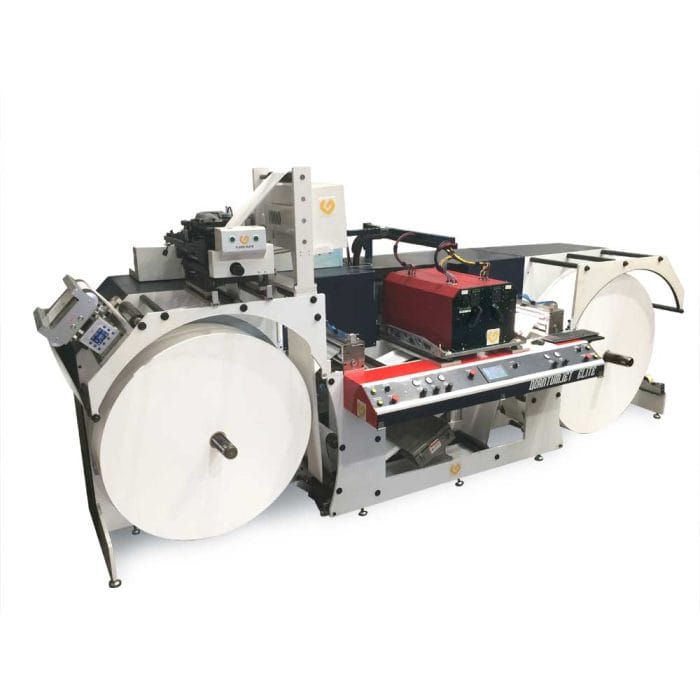
The Quantumjet Elite is built for Australian producers who have moved beyond small-batch-only operations and are running a mix of short-run and medium-volume work at production pace. It's engineered for continuous operation, built to industrial mechanical standards, and capable of throughput that supports genuine production scheduling rather than job-by-job output.
Businesses that belong in the Quantumjet Elite conversation typically carry a large active SKU portfolio, supply customers across multiple distribution channels, or run contract manufacturing operations processing dozens of different label designs in a given week. For a producer projecting a doubling or tripling of volume within 12 to 18 months, specifying a Quantumjet Elite from the outset avoids a premature equipment upgrade and gives the business room to grow into the system's capabilities.
Decision Table: Which Label Printing System Fits Your Batch Size
Most small-batch producers start at the top row and move toward the middle as their distribution grows. Planning the upgrade path before you need it — rather than after your current system becomes a production bottleneck — is the most cost-effective approach.
Finishing for Small Batch Premium Labels: GD QuantumFlex Die-Cutting Finisher
Printing the label is one step. Finishing it into a retail-ready, shaped label on a dispensable roll is another — and for premium small-batch products, finishing quality is as visible to the consumer as print quality.
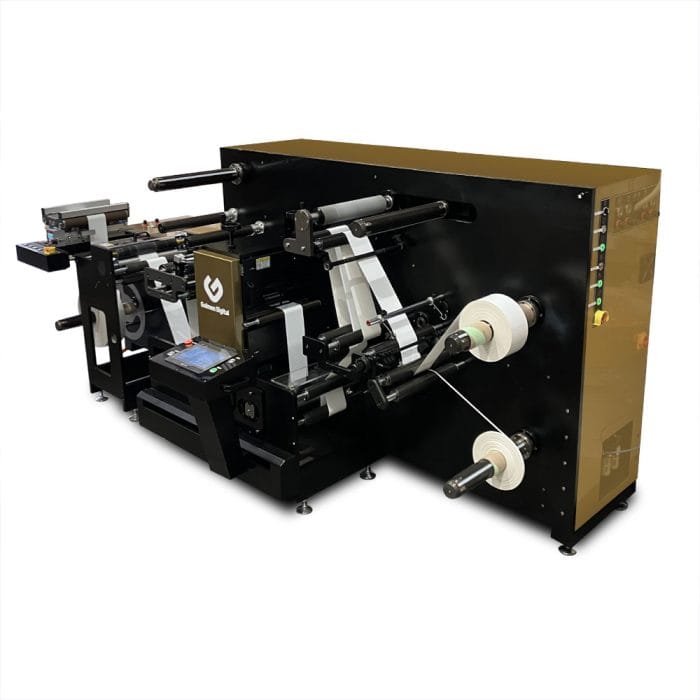
The GD QuantumFlex digital die-cutting finisher is designed to work alongside digital label printers for short runs, frequent shape changes, and premium presentation requirements.
It digitally die-cuts label shapes without requiring physical dies, which means no tooling cost for each new SKU shape, no minimum order to justify a new die, and no lead time waiting for tooling from a supplier.
For a craft brewery adding a custom neck label shape for a new release, or a cosmetics brand switching from rectangular to contour-cut labels for a product relaunch, the GD QuantumFlex handles the shape change digitally, reprogram, load the roll, run the job.
The finisher also handles
- laminating, matrix removal
- slitting, and rewinding
- producing a finished roll ready for direct application on the production line.
The integrated workflow — print on the digital label press, finish on the GD QuantumFlex creates a complete in-house label production capability. Design is signed off in the morning, finished label rolls are ready by the afternoon, and the product is labelled and packed by end of shift.
For small-batch producers who have previously waited two to three weeks for trade-printed labels, that compression of the production cycle changes how quickly they can go to market.
Real-World Small Batch Scenarios
A Craft Brewery Running 12 Rotating Taps
- Each beer gets a distinct label design, with run lengths of 300–600 labels per release. New releases happen every three to five weeks.
- An OKI Pro digital colour system paired with a GD QuantumFlex finisher lets the brewery produce finished label rolls for each new release on the same day artwork is approved — no MOQ, no external supplier dependency.
- Seasonal variations and collaboration brews are handled as standard jobs, not special requests.
An Artisan Condiment Brand Across Ten Retail Stockists
- Eight core SKUs plus four seasonal products, with runs of 150–500 labels per flavour.
- The brand previously outsourced to a trade printer with a 1,000-label minimum per design, resulting in significant label write-off whenever packaging changed.
- Moving to an OKI Pro in-house system reduced obsolescence waste and gave the brand the ability to update allergen information on a label file and reprint within hours of the change being needed.
A Contract Packer Handling Six Boutique Food Brands
- Multiple client brands, each with 5–15 SKUs, running small batches per client per week.
- A Memjet-based system handles throughput across a daily schedule of multiple short jobs, with client colour profiles saved in the RIP for consistent reproduction across runs.
- The GD QuantumFlex finisher handles different label shapes per client without tooling changeover delays.
Contact Gulmen Digital at 42 Orbis Drive, Ravenhall VIC 3023 to discuss your label volume, SKU mix, and production requirements or Call (03) 9318 7177 or fill out the form on the page below.
Frequently Asked Questions
What is the best label printer for small batch production?
For most Australian small-batch producers printing runs of 50–2,000 labels per SKU, the best label printer for small batch production is a digital colour roll-to-roll system — specifically an OKI Pro digital colour label printer for operations at the lower end of that range, or a Memjet-based system for businesses with higher daily volumes and a large active SKU portfolio. The Quantumjet Elite is the recommended platform for producers scaling toward industrial production volumes. All three eliminate the plate costs and minimum order quantities that make trade printing uneconomical for short runs.
Can I print small batches of labels in-house?
Yes. Digital label printers are specifically designed for on-demand, short-run production. Unlike conventional flexographic printing, which requires plates and long makeready times that only amortise at large volumes, digital systems carry no setup cost per job. You load the roll, send the file, and print. In-house digital label printing gives you control over run length, timing, and artwork revisions that no external supplier can match for short-run work.
What is the minimum run for in-house label printing?
There's no practical minimum run on a digital label printer. You can print a single label if required — though most small-batch producers find that runs of 50 or more labels justify the minor setup time of loading media and configuring the job. That contrasts sharply with the 1,000–5,000 label minimums common among trade flexographic printers, where plate and setup costs make very short runs uneconomical.
How many labels can I print per hour with a digital label printer?
Output depends on the system tier and label size. Entry-level OKI Pro digital colour systems produce hundreds to low thousands of labels per hour for typical small-label formats. Memjet-based label presses, running at speeds of 30–150 feet per minute depending on resolution and configuration, can produce thousands to tens of thousands of labels per hour for common label sizes. Quantumjet Elite-class systems are engineered for sustained high throughput across multi-shift production schedules. Gulmen Digital can provide throughput estimates specific to your label dimensions and monthly volume requirements.
Is a digital label printer suitable for craft food and beverage producers?
Digital label printers are among the most widely used tools in craft food and beverage production for exactly this reason: they combine high-resolution full-colour printing with no minimum run requirements and fast job changeovers — the three characteristics that matter most to producers launching frequent new SKUs and limited-edition releases. Compatible media includes water-resistant synthetics for refrigerated and wet-surface applications, making them appropriate for beer, cider, wine, juice, sauce, and condiment labels.
What label sizes can small batch printers handle?
Most roll-to-roll digital label printers support a broad range of web widths and label lengths, covering small-format labels for 15 ml vials and 30 ml dropper bottles through to full wrap-around labels for 750 ml wine bottles and large-format labels for 5 L containers. The specific maximum and minimum dimensions depend on the machine model. When paired with a GD QuantumFlex digital finisher, shaped labels — contour-cut around logos, neck labels, die-cut flag labels — are also achievable without physical tooling for each new shape.

Comments ()