
MemJet Label Printer Australia: Technology, Performance, and Where to Buy
MemJet-based label printing systems are available in Australia through Gulmen Digital — a specialist digital label printing machinery supplier based in Victoria that provides hardware, consumables, installation, operator training, and ongoing technical support for production label operations across the country.
For Australian businesses evaluating high-speed, full-colour digital label printing, Gulmen Digital’s MemJet-based systems represent the most direct local pathway to this technology — with the added advantage of onshore service and parts supply rather than dependence on international distribution.
This matters because MemJet is not a single retail product sold off a shelf. It is a printhead technology platform, licensed to OEM manufacturers and integrated by specialist suppliers into complete label printing solutions.
What you buy in Australia is a MemJet-powered system configured for label and tag production — and who you buy it from determines how quickly you can run, troubleshoot, and scale that investment.

Prefer to talk it through? Call (03) 9318 7177. Gulmen Digital's team is in Ravenhall, VIC.
What MemJet Label Printing Technology Is
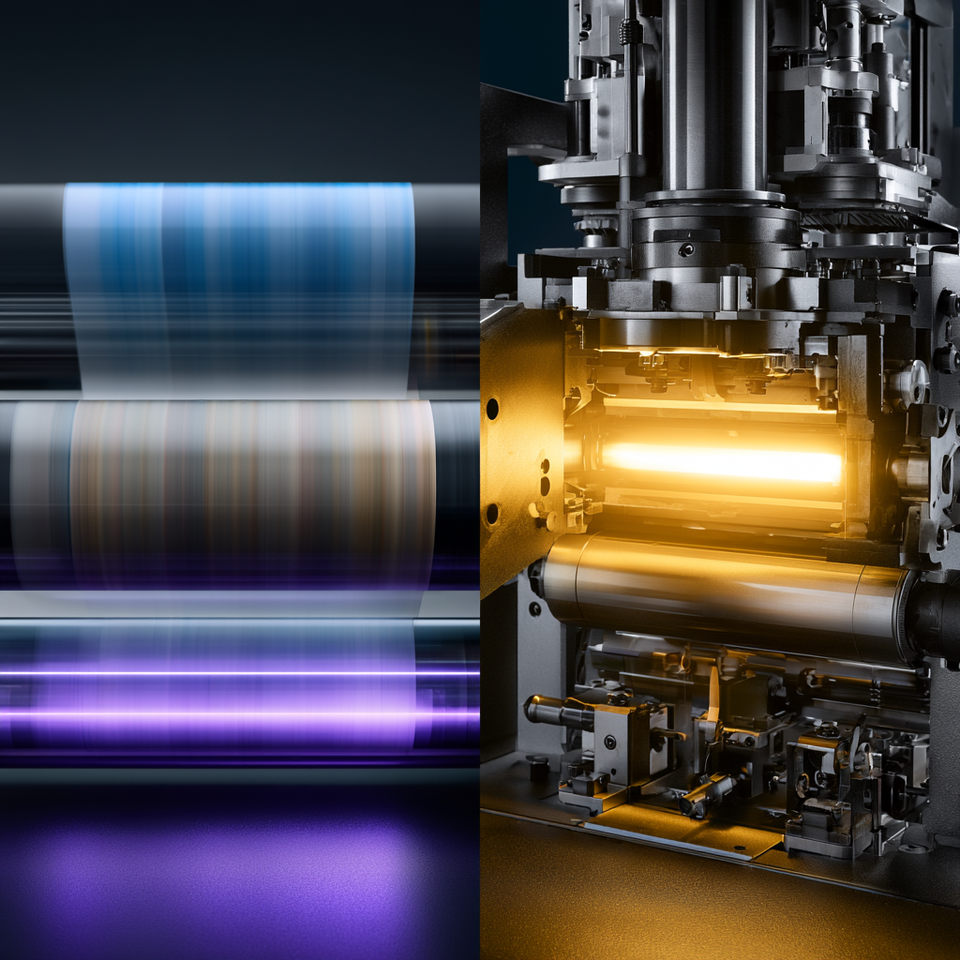
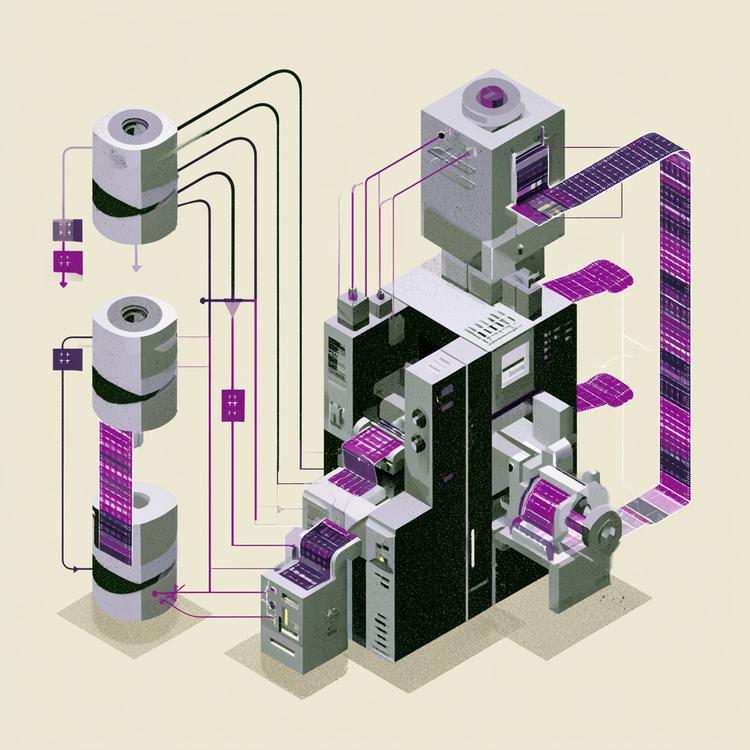
MemJet is a high-speed, full-colour inkjet printhead technology with Australian origins, and later commercialised globally through licensing to OEM manufacturers. Its defining architectural feature is a stationary, page-wide print bar: the printhead does not move. Instead, the label substrate — typically a roll of label stock — advances continuously underneath the fixed head at production speed.
That single design decision is why MemJet prints so fast.
Conventional inkjet systems use a carriage that shuttles back and forth across the substrate, adding print data line by line. Each pass takes time. MemJet eliminates the carriage entirely: its fixed head spans the full print width, and every point across the label receives ink in a single continuous pass as the web moves through. The result is throughput that approaches or matches narrow-web analogue presses — without plates, without setup waste, and without minimum order quantities.
The ink system is aqueous, dye-based CMYK, which delivers vivid, saturated colour reproduction and fine detail at up to 1600 × 1600 dpi. Because there is no UV lamp to cure and no fuser to heat, MemJet systems reach operating temperature almost instantly — warm-up time is typically measured in seconds, not minutes.
The Performance Case for MemJet
For Australian label operations running high volumes of full-colour jobs, MemJet’s performance profile is difficult to match at comparable price points. The key advantages are worth examining individually rather than listing them, because each one resolves a specific operational problem.
Speed at production scale
MemJet-based label systems can operate at up to 60 metres per minute in high-end configurations, depending on resolution settings and integration. Even at standard production resolutions of 1600 dpi, these systems comfortably outrun most desktop inkjet label printers and many entry-level toner devices. For a food manufacturer printing thousands of SKU variants per week, that speed translates directly into reduced labour and faster job turnaround.
Cost per label at volume
The fixed-head architecture reduces the mechanical overhead per print cycle. Combined with MemJet’s relatively economical ink consumption, the cost per label at sustained high volume is among the lowest available in full-colour digital label printing. This is not a marginal difference — it is the primary reason high-volume label converters and brand owners evaluate MemJet seriously when their monthly label count climbs into six figures.
Full colour from label one
Unlike analogue processes that require plates, makeready, and a run-in before colour stabilises, MemJet prints identically from the first label. There is no waste run, no colour warm-up, and no minimum quantity before the job is viable. This enables genuine short-run and variable-data production: a cosmetics brand can print 50 labels of one variant, immediately followed by 200 of another, with no transition penalty.
No warm-up time
This is a practical advantage that gets undervalued in spec comparisons. In a busy production environment with multiple jobs queued across a shift, the ability to start printing within seconds of a job being called up — and to pause, stop, and restart without waiting for fusing or curing cycles — materially affects throughput and operator workflow.
Compact form factor
Because the printhead is stationary and the drive mechanism only needs to move the web, MemJet engines are compact relative to their output capability. This translates into smaller machine footprints, which matters in Australian manufacturing facilities where floor space is often allocated against competing production equipment.
Where MemJet Has Limits
MemJet’s speed and economics come with a durability trade-off that every buyer needs to understand before specifying a system.
This is not a flaw unique to MemJet; it is a characteristic of all dye-based aqueous inkjet systems. But it shapes which applications MemJet suits well and which it does not.
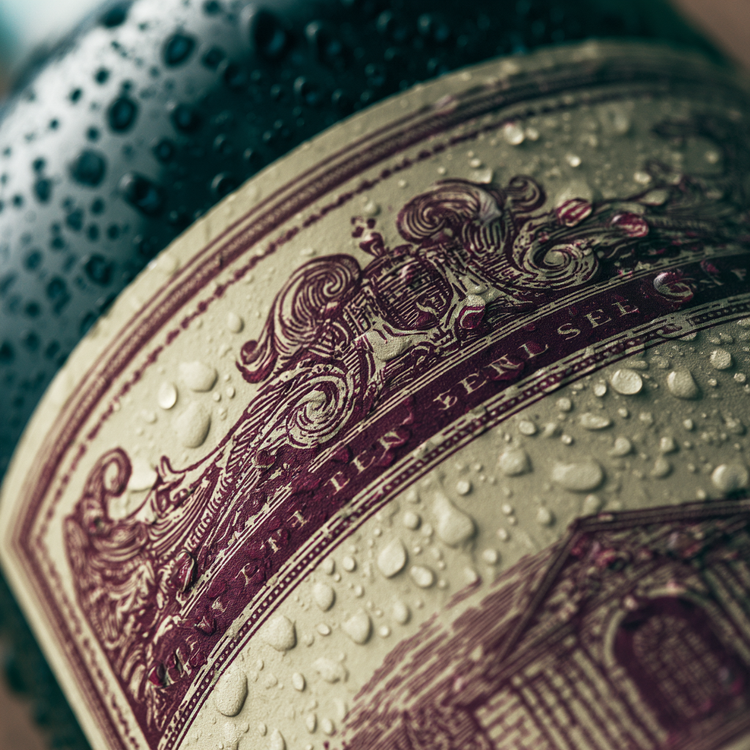
A MemJet-printed label exposed to condensation on a chilled beverage bottle, cleaning chemicals in an industrial environment, or sustained direct sunlight will degrade faster than the equivalent label produced on a UV inkjet or toner platform — unless it is laminated or varnished after printing.
For most food and beverage labels, the durability limitation is manageable because lamination is already standard practice — breweries, food manufacturers, and personal care brands routinely laminate labels for scuff resistance and premium shelf presentation. When lamination is in the workflow, MemJet’s ink durability is no longer a constraint. The laminate provides the water and abrasion protection; MemJet provides the speed, colour quality, and economics.
The limitation becomes more significant for industrial, outdoor, or chemical-exposure labels where lamination is impractical or where the label must survive demanding conditions as-printed. In those cases, UV inkjet — which cures inks with ultraviolet light to create a durable, chemically bonded surface — is the more appropriate technology.
A secondary consideration is substrate range. MemJet inks are optimised for inkjet-receptive papers and select coated synthetics. UV inkjet systems can print effectively onto a much wider range of plastics, films, foils, and speciality stocks. Businesses with diverse substrate requirements across their label portfolio may find UV inkjet more flexible.
MemJet vs Quantumjet Elite: The Practical Comparison
Gulmen Digital supplies both MemJet-based label systems and UV inkjet equipment including the Quantumjet Elite, which allows direct comparison between the two technology approaches. The decision between them is not about which technology is better in absolute terms — it is about which is better suited to a specific production context.
The practical decision rule:
When to choose MemJet: When speed and cost per label at scale are the primary criteria and your labels will be laminated or used in standard indoor conditions.
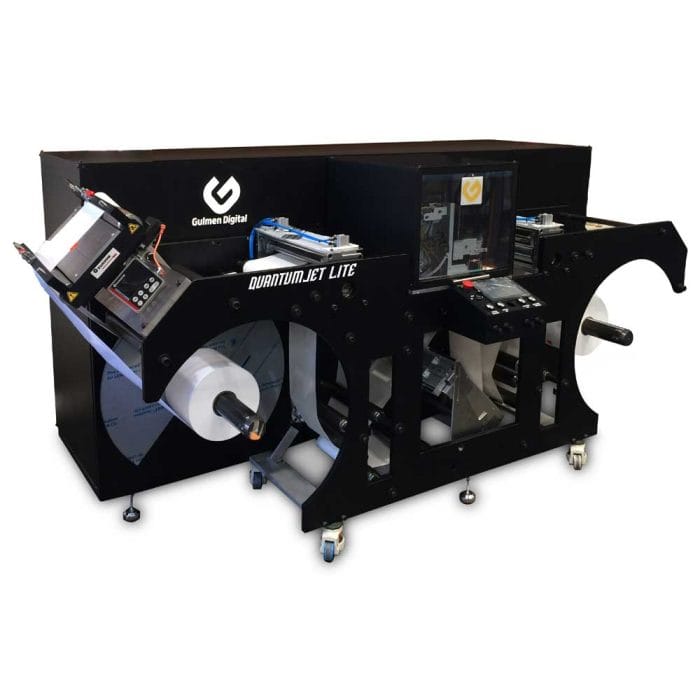
Choose Quantumjet Elite: When the application demands durability without lamination, broader substrate compatibility, or the premium effects : white ink, spot varnish, speciality finishes — that UV inkjet enables.
Who MemJet-Based Systems Suit in the Australian Market
Food and beverage manufacturers
The natural fit for MemJet in breweries, distilleries, condiment and sauce producers, coffee roasters, and refrigerated food brands particularly that already laminate their labels as standard. For these operations, MemJet’s speed and economics align directly with the production reality: high volumes, frequent SKU changes, seasonal labels, and the need for vibrant colour that renders brand identity accurately on shelf.
Private-label producers and co-packers
Benefit from MemJet’s ability to switch between customer jobs rapidly without makeready waste. A co-packer running dozens of clients’ products through a single facility can recoup the system cost quickly when the alternative is paying trade label printers for short-run premiums on every job.
Label converters and trade printers
Adding digital label capacity to a flexo or offset operation can use MemJet to address the short-run, on-demand segment of the market without competing on the long runs where analogue remains cost-effective.
Nutraceutical, cosmetic, and personal care brands
With complex label information — ingredient panels, barcodes, regulatory text — benefit from MemJet’s resolution and digital flexibility, particularly when launching new products or updating compliance information across multiple SKUs.
Businesses whose labels must survive harsh chemical exposure, outdoor UV, or extreme handling as-printed — without lamination — are better served by UV inkjet or toner.
Gulmen Digital can run through specific application requirements with any buyer uncertain about which technology applies.

Contact Gulmen Digital at 42 Orbis Drive, Ravenhall VIC 3023 to book a demonstration or request a formal quotation by calling (03) 9318 7177.
Gulmen Digital: Australian MemJet System Supplier
Based in Victoria and serving label operations across Australia, Gulmen Digital’s role as a MemJet-based system supplier extends well beyond the machine transaction.
Local support means installation and commissioning by technicians who understand both the equipment and Australian production environments, operator training that covers colour management, media selection, and maintenance procedures, and ongoing supply of compatible inks, label stocks, and service parts without the lead times that come with importing consumables from overseas.
For a production label operation, that ongoing local relationship is as important as the initial capital investment.
A MemJet-based system running at 60 metres per minute generates significant output and dependency on the supply chain keeping it running. Gulmen Digital’s local presence reduces the risk in that dependency.
Frequently Asked Questions
What is MemJet printing technology?
MemJet is a high-speed, full-colour inkjet printhead technology originally developed in Australia. It uses a stationary, page-wide print bar that spans the full print width while the label substrate moves continuously underneath — a single-pass architecture that delivers very high throughput at resolutions up to 1600 × 1600 dpi using aqueous, dye-based CMYK inks.
Is MemJet good for label printing?
Yes, particularly for high-volume, full-colour label applications where speed and cost per label at scale are the primary criteria. MemJet is especially effective for food and beverage, nutraceutical, cosmetic, and retail labels that are laminated as part of the standard workflow. For labels requiring strong water or chemical resistance without lamination, UV inkjet or toner systems are generally more appropriate.
How fast is a MemJet label printer?
MemJet-based label systems can operate at up to 60 metres per minute in high-end industrial configurations, depending on resolution and integration. Standard production-class systems typically run at speeds that significantly outperform desktop inkjet and most toner label printers, making MemJet one of the fastest digital colour label printing platforms available at its price point.
Where can I buy a MemJet label printer in Australia?
MemJet-based label printing systems are available in Australia through Gulmen Digital, a specialist digital label printing machinery supplier based in Victoria. Gulmen Digital provides local sales consultation, installation, operator training, consumables supply, and technical support for MemJet-based label printing operations across Australia.
What is the difference between MemJet and inkjet label printers?
Conventional inkjet label printers use a moving printhead carriage that scans back and forth across the label web, limiting throughput speed. MemJet uses a fixed, page-wide print bar with the substrate moving underneath — a stationary-head, single-pass architecture that achieves much higher production speeds at comparable resolution. MemJet also uses aqueous dye-based CMYK inks, while other inkjet label systems may use pigment-based or UV-curable inks with different durability and substrate characteristics.
Does MemJet produce waterproof labels?
Standard MemJet output is not inherently waterproof. MemJet uses aqueous, dye-based inks that are not resistant to water, chemicals, or sustained UV exposure without additional protection. Lamination or overvarnishing is recommended for applications where moisture, condensation, handling, or chemical contact is expected. With appropriate finishing, MemJet-printed labels perform well across food and beverage, refrigerated, and standard retail environments. For labels requiring durable performance without lamination, UV inkjet is generally the better-suited technology.


Comments ()