
GHS Chemical Label Printing: Get Compliant Fast
Meta description: Print GHS-compliant chemical labels in-house or on demand. Compare printers, software, costs & Australian dangerous goods requirements. Find your best option.
Most chemical operations waste money because they buy a printer before they understand the three viable paths to GHS-compliant labels — and most vendor content exists precisely to prevent them from comparing those paths honestly. GHS chemical label printing is the process of producing labels that meet the Globally Harmonized System of Classification and Labelling of Chemicals, and the right method, in-house printer, outsourced print service, or browser-based label generation; depends on your label volume, chemical inventory complexity, and whether you operate under Australian dangerous goods transport rules as well as workplace regulations.
 Gulmen Digital
What Is GHS Chemical Label Printing?
A GHS label is not a warning sticker. It is a legally structured communication object that encodes the full hazard classification from a Safety Data Sheet (SDS) into a standardized format that must remain readable for the working life of the container. Every compliant GHS label carries six mandatory elements:
- Product identifier — the chemical name, trade name, or unique code that matches the SDS exactly.
- Supplier information — manufacturer or importer name, address, and emergency contact.
- Hazard pictograms — black GHS symbols on a white background inside a red-bordered diamond, one per applicable hazard class.
- Signal word — either Danger or Warning, determined by the severity of the hazard classification.
- Hazard statements — standardized phrases describing the nature and degree of the hazard (e.g., "Causes severe skin burns and eye damage").
- Precautionary statements — standardized phrases covering prevention, response, storage, and disposal.
Miss any of these — even on a secondary, decanted container filled from a bulk drum — and the label fails compliance under GHS-based Work Health and Safety regulations.
Three paths to printing GHS labels
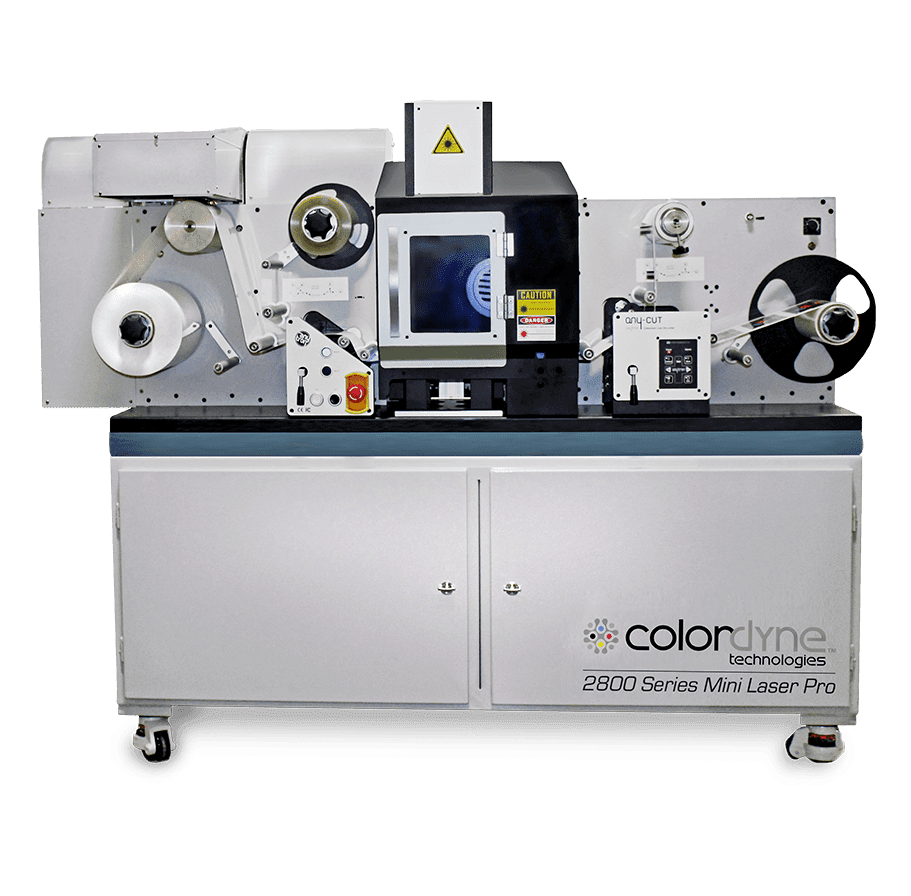
In-house printing with a dedicated GHS label printer gives you on-demand production, full control over substrates, and the lowest cost per label at volume. You own the hardware, you stock the media, and you integrate directly with your chemical management or SDS software.
Print-on-demand and outsourced label services let you submit label data, or a finished artwork file; to a specialist printer who produces finished rolls or sheets and ships them to you. You pay more per label, but you avoid hardware costs entirely and can access specialty substrates you cannot run on a desktop machine.
Browser-based GHS label software sits between the two. You generate compliant labels online from your SDS data, then either download a print-ready PDF for your own printer or route the job to a fulfilment partner. This path works particularly well when your chemical inventory changes frequently and you need software to enforce GHS rules rather than a designer doing it manually.
Matching method to operation
High-volume facilities, chemical manufacturers, large distributors, industrial formulators; almost always benefit from in-house printing. Once the printer and software are amortised, per-label costs drop sharply and reprinting when an SDS changes costs minutes, not days. Low-volume or variable-SKU operations — laboratories, small custom blenders, pilot plants — often spend less overall by outsourcing, because they avoid capital expenditure and avoid stocking media for infrequent runs. The crossover point is rarely a specific label count; it is the combination of volume, SKU variability, and how often your SDSs change.
GHS Label Printing Methods Compared
In-house GHS label printers: what to look for
A GHS label printer must handle two demands simultaneously: graphic fidelity and environmental durability. On the graphics side, pictograms require a red border printed cleanly enough to be recognisable at minimum label sizes — that demands full colour output and a minimum of 300 dpi resolution. Monochrome-only printers cannot produce a compliant label from scratch; they require pre-printed colour label stock with blank diamond frames, which introduces a separate inventory management problem.
On the durability side, the printer must run synthetic media. Standard office inkjet and laser printers are built for paper. Industrial GHS label printers, whether pigment inkjet or thermal transfer; accept polyester and polypropylene stocks that survive chemical splash, abrasion, and outdoor UV. Thermal transfer printing using resin or wax-resin ribbons is the most widely used technology for chemical label environments because the printed layer bonds into the substrate surface rather than sitting on top of it, dramatically improving resistance to solvents and cleaning cycles.
Print speed and duty cycle matter if you operate a production line. A desktop printer jamming during a batch run does not just slow production — it creates pressure on operators to skip labelling, which is where compliance failures originate.
Online and on-demand GHS chemical label printing
Online GHS label printing suits operations with low or irregular label needs, or those requiring substrates too specialised for in-house hardware — marine-grade materials rated to BS5609, for instance, or extreme-temperature adhesives for cold-storage drums. Evaluate services on three criteria: turnaround time from data submission to delivery, available substrate options (confirm chemical-resistant synthetics, not just paper), and whether their templates support your full SDS data structure, including all six mandatory elements sized correctly for your container dimensions.
The hidden risk with outsourced printing is template accuracy. A vendor who generates labels from a generic chemical database may not capture your specific mixture's classification or the latest precautionary statement revisions. Always verify the first production run against your current SDS before scaling an order.
GHS label printing software and SDS integration
This is the gap incumbents consistently ignore. The compliance risk in GHS label printing is not the printer — it is manual data entry from the SDS to the label. Operators who hand-type hazard statements introduce transcription errors. Operators who copy and paste from an old label version miss updated classifications. Software that pulls data directly from a curated SDS repository eliminates both failure modes.
Look for label software that integrates with your existing chemical management system or SDS platform, enforces the correct GHS revision for your jurisdiction (GHS 7 in Australia from January 2023 ), and generates labels through a rules engine rather than a blank template a user fills out manually. Version control matters too: when an SDS is revised, the software should flag which printed labels are now outdated and trigger reprinting, rather than leaving legacy labels on containers until an auditor finds them.
Cost per label breakdown: in-house vs. Outsourced
Typical ranges, accounting for hardware amortisation, media, and consumables:
- In-house GHS label printing: approximately $0.10–$0.80 per label at moderate to high volume, depending on label size, substrate type, and ink or ribbon coverage.
- Outsourced or print-on-demand: approximately $0.50–$3.00 per label, with the upper range driven by small quantities, specialty substrates, or large-format drum labels.
The economics flip depending on volume. A facility printing 5,000 labels per month across 200 SKUs recovers printer and software costs within 12–18 months and then operates at a fraction of outsourced rates. A laboratory printing 30 labels per month across 30 unique chemicals will spend years recovering hardware costs and is almost certainly better served by an online service or a specialist supplier.
 Gulmen Digital
GHS Chemical Label Compliance Requirements
Global GHS requirements
GHS is a framework, not a single regulation. Countries adopt specific revisions and adapt them into national law. The underlying principle across all implementations is consistent: all six label elements must appear on every hazardous chemical container, labels must be in the jurisdiction's required language, and they must remain legible and firmly attached for the container's working life.
Australian dangerous goods label printing requirements
Australia introduces a layer most international vendor content ignores entirely. Workplace hazardous chemical labels must comply with GHS 7 under the model Work Health and Safety Regulations, mandatory from 1 January 2023. But if a chemical is also classified as a dangerous good for road or rail transport, the same container must additionally comply with the Australian Code for the Transport of Dangerous Goods by Road and Rail (ADG Code).
These two frameworks overlap but are not identical. Safe Work Australia's guidance explicitly addresses the collision: you may substitute a GHS pictogram with an ADG class label when both represent the same hazard, or combine them on one label when they represent separate hazards — but you must not apply both a GHS pictogram and an ADG class label for the same hazard on the same surface. ADG class labels also carry minimum size requirements tied to container capacity that may exceed the sizes you would otherwise choose for workplace labels. A single label designed for both workplace and transport use must satisfy the stricter of the two size requirements, which your printing solution must support.
Label substrate and durability
GHS regulations do not prescribe polyester over polypropylene over paper. They require that the label remain legible for the working life of the container under the conditions it faces. In a chemical handling environment, that practical requirement eliminates paper almost entirely. Solvent splash, cleaning cycles, UV exposure, and abrasion all degrade paper labels faster than the containers they identify. Polyester and polypropylene stocks, combined with pigment inkjet or thermal transfer printing, deliver the chemical resistance, UV stability, and adhesion performance that real chemical environments demand.
Common mistakes to avoid
The three most frequent GHS label printing failures seen during regulatory audits:
Undersized pictograms. Minimum pictogram size scales with container volume. A 50 mL bottle and a 200 L drum do not use the same label layout. Templates that do not enforce size rules produce labels that pass a visual check but fail an inspection.
Non-colour-fast inks. Dye-based inkjet output fades under UV and dissolves on contact with many solvents. Chemical labels require pigment-based or thermally transferred output on synthetic media — not office inkjet on standard label stock.
Stale labels after SDS revision. When a chemical is reclassified, the label must change. Without SDS-integrated software triggering a reprint flag, outdated labels persist on containers indefinitely — which is both a compliance failure and a genuine safety risk.
Choosing the Right GHS Label Printer or Printing Solution
Questions to ask before investing
Four operational variables determine your optimal path:
- Monthly label volume — how many labels you print across all SKUs, at both average and peak demand.
- Number of unique chemical SKUs — more SKUs require flexible variable-data printing and tight SDS integration.
- Container surface — round drums, flat cans, textured IBCs, and small vials each impose different label geometry and adhesive requirements.
- Storage and use environment — wet processing areas, outdoor storage, cold rooms, and solvent-heavy production each demand specific substrate and ink performance.
These four variables narrow your hardware and service choices more reliably than any product comparison chart.
Label media for chemical environments
Polyester and polypropylene label stocks outperform paper in every chemical environment metric: moisture resistance, chemical splash resistance, dimensional stability under heat, and UV stability. Between the two print technologies, thermal transfer with resin ribbons on synthetic stock produces the most durable chemical labels available on in-house equipment — the printed layer becomes part of the substrate surface rather than an ink film sitting on top of it. Direct thermal printing, which requires no ribbon, produces labels that darken and degrade with heat and chemical contact; it is not appropriate for chemical label applications where durability is a compliance requirement.
Scaling from batch to volume
Small operations printing occasional labels can manage with browser-based label generation and outsourced printing, using standardized templates tied to their SDS library. As volume grows and SKU counts increase, the economic case for an in-house industrial GHS label printer strengthens — particularly when combined with software that supports batch printing for large runs of the same label and variable-data printing for runs where batch numbers, concentrations, or formulation details change label-by-label. Facilities with large chemical inventories and frequent SDS updates need both capabilities: batch printing for efficiency and variable-data support for accuracy. Neither is optional at scale.
Gulmen DigitalFAQ
What do I need to print GHS-compliant chemical labels myself?
You need a colour-capable label printer that runs chemical-resistant synthetic media at ≥300 dpi, appropriate label stock (polyester or polypropylene for most chemical environments), and label software that generates GHS-compliant templates from your SDS data. The software is not optional — manually typing hazard statements from the SDS introduces transcription errors that create compliance failures and safety risk.
Can I print GHS labels online without buying a printer?
Yes. Browser-based GHS label platforms let you enter or upload SDS data, generate compliant labels, and download print-ready files or order finished labels shipped to you. This works well for low-volume or irregular needs, but verify that the platform supports your jurisdiction's GHS revision (GHS 7 in Australia) and produces labels at the correct size for your container type.
What are the GHS label printing requirements in Australia?
Australian workplace hazardous chemical labels must comply with GHS 7 under the model WHS Regulations, mandatory since 1 January 2023. If the chemical also qualifies as a dangerous good for road or rail transport, the label must additionally meet ADG Code requirements, including minimum class label sizes; which means one label often has to satisfy both frameworks simultaneously, and the stricter size or format rule applies.
How much does it cost to print GHS chemical labels in-house vs. Outsourcing?
In-house GHS label printing typically costs $0.10–$0.80 per label at volume once printer hardware and software are amortised. Outsourced or print-on-demand labels generally run $0.50–$3.00 per label depending on quantity, substrate type, and label size. High-volume operations with stable SKUs almost always reach lower total cost in-house; low-volume or specialty-substrate needs often save money outsourcing despite the higher per-label rate.
What label printer is best for GHS chemical labels?
The best GHS label printer for most industrial users is a colour-capable thermal transfer or industrial pigment inkjet model that runs synthetic media (polyester or polypropylene) at ≥300 dpi and integrates with your SDS or chemical management software. For harsh chemical environments, solvent splash, outdoor UV, abrasion; thermal transfer with resin ribbons on polyester delivers the most durable output available from in-house equipment. If you also need to meet Australian ADG Code size requirements for transport labels, confirm the printer supports the label widths those sizes demand.




Comments ()