
Digital Label Printing vs Flexo: Pick the Right Method

Meta description: Digital or flexo for your labels? Get the exact run-length crossover, cost breakdown, and a side-by-side comparison — so you choose right the first time.
Digital label printing is the better default below roughly 5,000 labels per design version — and for any project where artwork changes frequently, multiple SKUs share a run, or variable data matters. Flexo becomes the cost-efficient choice above that threshold for stable, single-version, high-volume work. That crossover number is what most converters refuse to name — so here it is, with the math to back it up.
 Gulmen Digital
Digital vs. Flexo Labels: The Direct Answer
The Run-Length Crossover — and the Number Incumbents Won't Give You
Most vendor guides say "it depends" and leave you there. The practical crossover for a standard 4-color pressure-sensitive label sits between 5,000 and 10,000 labels per design, with 5,000 as the working threshold for buyers who want a self-qualifying number.
Below that point, flexo's plate and tooling charges dominate the total invoice — often before a single production label prints. Above roughly 20,000–25,000 labels per stable design, flexo's low running cost overtakes digital's flat per-label rate, and the gap widens with every additional thousand labels.
What shifts that crossover up or down:
- Number of colors and finishes — more colors mean more plates, which raises flexo's setup cost and extends digital's competitive range
- Artwork change frequency — brands that update packaging seasonally or regionally stay in digital territory even at higher volumes
- Specialty finishes — foils, heavy coatings, and backprinting can pull mid-volume jobs toward flexo or hybrid regardless of quantity
When Digital Wins Outright
Digital is the clear default when:
- Per-SKU run lengths are below ~5,000 labels — no plate cost means total project cost is lower even if the per-label rate looks higher on the quote
- Multiple SKUs share a run — 8 flavors × 3,000 labels each means 8 plate sets on flexo; digital just runs new files
- Variable data is required — unique QR codes, serialized track-and-trace numbers, and personalized text are native to digital and either impossible or cost-prohibitive on flexo
- Timelines are tight — launches, promotions, and regulatory changes can move from art approval to finished labels in 24–72 hours with digital, vs. 3–7 business days minimum for plate production on flexo
- ESG commitments matter — zero plate waste and near-zero make-ready substrate waste make digital the lower-environmental-footprint option for short and mid runs
When Flexo Wins Outright
Flexo earns its place when:
- Single-version volumes exceed 20,000–25,000 labels — plate costs amortize into negligibility and running cost per label drops sharply
- Artwork is stable — established SKUs with infrequent design changes let you spread plate investment across multiple reorders
- Specialty finishes are non-negotiable — deep foiling, heavy tactile varnishes, backprinting, and high-opacity flood whites at speed remain flexo's domain
- Commodity label economics apply — beverages, FMCG staples, and industrial labels at scale are where flexo's unit economics are decisive
Hybrid Presses: The Third Option Nobody Covers
Modern hybrid presses combine a digital inkjet engine with inline flexo units for coatings, spot colors, and specialty effects. For runs in the 5,000–50,000 label band that need both versioned content and premium finishing, hybrid is increasingly the real-world answer — digital for the variable layer, flexo for the embellishments, and a single production pass for both. Ask your converter if they run hybrid lines before defaulting to one method or the other.
Quick-Reference Decision Table
| Scenario | Run Length / SKUs | Recommended Method | Key Reason |
|---|---|---|---|
| New product launch, uncertain demand | 1,000–4,000 / multiple SKUs | Digital | No plate cost; reorder flexibility |
| Seasonal campaign, tight deadline | 5,000–10,000 / 1–2 versions | Digital or Hybrid | Turnaround speed; minimal tooling |
| Evergreen SKU, stable artwork | 50,000+ / 1 version | Flexo | Lowest unit cost at volume |
| Multi-regional variants + foil | 10,000–40,000 / 6+ versions | Hybrid | Variable content + specialty finishes |
| Regulatory-heavy label, frequent updates | Any volume under 15,000 | Digital | No plate remake cost per change |

True Cost Comparison: Plates, Make-Ready, and Per-Label Math
Flexo's Hidden Upfront Costs: Plate Fees Broken Down
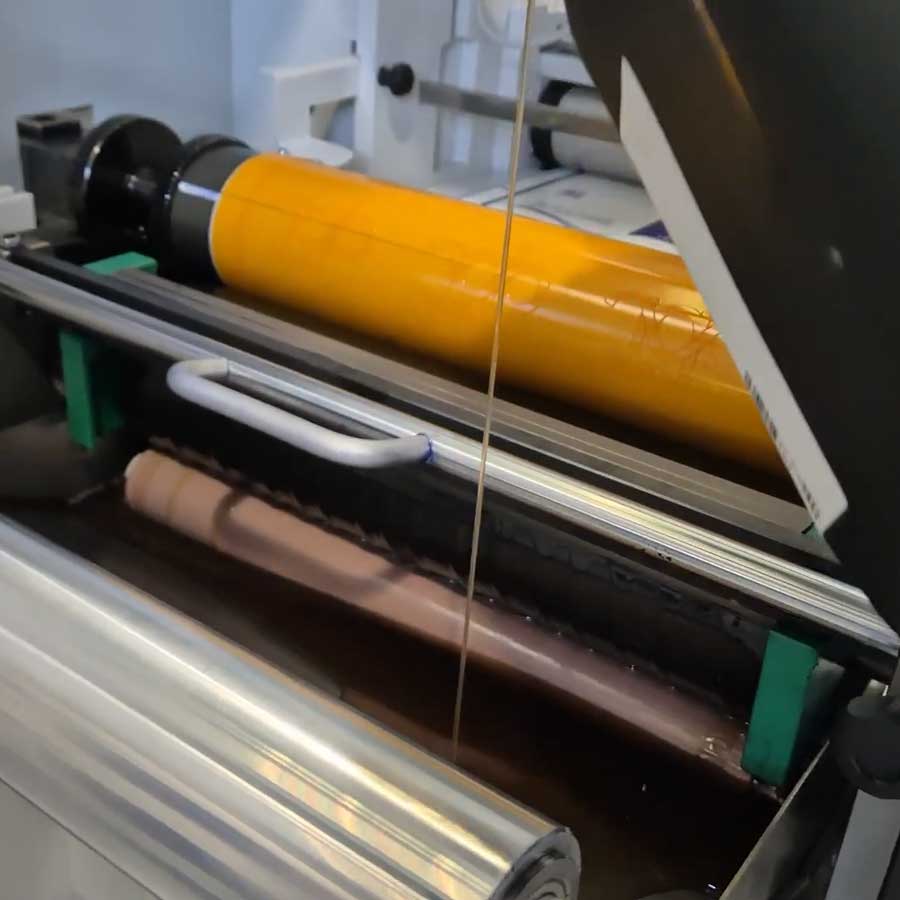
Flexo requires a separate photopolymer plate for each color. Published converter pricing and cost analyses put plate costs at $150–$500+ per color for standard label work, with complex or large-format plates running higher. A typical 4-color job therefore carries $600–$2,000 in plate and tooling cost before a single production label prints.
One UK converter case study illustrated this precisely: a 4-color flexo job at 500 labels showed tooling accounting for 88% of the total invoice. That ratio flips at scale — but only once plate cost is genuinely amortized across a large run.
Digital's Cost Curve: Where Per-Label Price Stops Falling
Digital has zero plate cost. Pricing is driven by click charges (ink or toner usage), substrate, and press time — a cost structure that stays relatively flat whether you order 1,000 or 15,000 labels. That flat curve is digital's defining economic property: it protects short-run buyers from front-loaded setup charges and makes multi-SKU projects far more predictable.
The curve does eventually work against digital at very high volumes, where flexo's lower running cost compounds across hundreds of thousands of labels. That is the crossover — and it depends on your specific plate cost and the per-unit price difference your converter offers.
Total Cost of Ownership: Waste, Storage, and Reorders
Per-label price misses several real costs:
- Make-ready waste — flexo presses consume substrate dialing in registration and color before the first acceptable label; for short runs this waste can represent a meaningful share of total material cost
- Inventory risk — large flexo runs lock cash into stock that becomes obsolete when regulations, branding, or content change
- Reorder dynamics — digital reorders cost the same per label every time; flexo reorders reuse existing plates and improve per-label cost across repeat runs, making flexo more attractive for brands that know they will reorder the same design repeatedly
Cost-Per-Label Illustration (Indicative)
Based on typical converter pricing ranges:
| Quantity | Digital Total | Flexo Total (incl. Plates) | Lower Cost |
|---|---|---|---|
| 1,000 | Low (no tooling) | High (plates dominate) | Digital |
| 5,000 | Moderate | Breakeven territory | Job-specific |
| 25,000 | Higher | Plate amortized; unit cost drops | Flexo |
| 100,000 | Significantly higher | Very low unit cost | Flexo |
Quality, Capabilities, and Limitations Side by Side
Color Accuracy and Consistency
Flexo excels at Pantone spot color matching — dedicated spot inks achieve opacity and accuracy that CMYK process simulation struggles to replicate on certain brand colors. Digital excels at photo-realistic imagery, smooth gradients, and fine text, where CMYK process printing at high resolution outperforms flexo's dot-gain characteristics on complex artwork.
Neither method is universally superior. The honest rule: spot-color-heavy, solid-heavy designs lean flexo; photography-heavy and detail-rich designs lean digital.
Special Finishes: What Flexo Can Do That Digital Cannot Yet
Foiling (hot and cold), heavy tactile varnishes, backprinting, and high-speed flood coatings remain flexo's domain at volume. Some digital presses now offer inline varnish and limited foiling, but the range and running speeds are narrower than mature flexo finishing systems. If your shelf presence depends on embellishment, treat flexo or hybrid as the baseline, not digital.
Variable Data and Versioning: Digital's Exclusive Territory
Variable data — unique QR codes, serialized numbers, personalized copy — is native to digital and economically unavailable on flexo without secondary processes. A concrete workflow example: a food brand managing 10 regional variants at 4,000 labels each runs a single 40,000-label digital campaign. Every region gets its own regulatory text, and every label carries a unique track-and-trace code — one run, one setup, zero plate changes. On flexo, each region requires its own plate set, and variable per-label codes require an overprint system bolted onto the line.
Substrate Compatibility and Hard Limits
Flexo handles almost any substrate at speed due to mature ink chemistry and process flexibility. Some digital presses have ink-adhesion limits on low-surface-energy films or specialty stocks and may require primers or pre-treated media. If your label spec includes an unusual substrate, confirm compatibility with your converter's specific digital press before assuming it's viable.
The Disadvantages — Both Methods, Honestly
Digital disadvantages: Higher per-label cost at large volumes; constrained specialty finishing options; potential spot-color matching limitations vs. Dedicated flexo inks; substrate restrictions on some presses.
Flexo disadvantages: $600–$2,000+ upfront plate cost per job; 3–7 days plate lead time before press; significant make-ready substrate waste; plate remake cost for every artwork change; no economical path to per-label variable data.
 Gulmen Digital
Speed, Lead Time, and Operational Flexibility
Digital compresses setup to a file RIP, a color profile, and a brief registration check — 24 to 72 hours from final art approval to shipping labels is standard at most converters. That speed means digital absorbs last-minute regulatory changes, surprise promotional launches, and pilot-market runs without a schedule penalty.
Flexo inserts plate manufacture between art approval and press time. Plate production, chemical processing, and mounting typically add 3–7 business days before the press starts, longer at busy converters or for complex designs. For predictable, high-volume campaigns planned weeks in advance, that lead time is manageable. For anything with a fixed launch date inside two weeks, digital's structural advantage is significant.
Hybrid presses close that gap for mid-volume work needing both speed and embellishment — digital handles the variable, versioned content; inline flexo units apply coatings and effects. One pass, one converter, and no compromise between agility and shelf presence.

Sustainability and Waste: An Underreported Difference
Flexo plates are photopolymer materials processed through chemical wash cycles — a solvent or aqueous waste stream that digital entirely avoids. Plate disposal adds solid waste at end of job life. Neither is catastrophic at individual scale, but for brands tracking Scope 3 emissions or reporting supplier sustainability data, these inputs count.
Make-ready substrate waste compounds the issue on short runs. Flexo presses consume material reaching correct register and color before production labels are acceptable — on complex jobs, dozens to hundreds of feet of substrate become scrap before the counter starts. Digital generates near-zero make-ready waste: the press validates in a short internal sequence and produces sellable labels within the first feet of the run.
For ESG-sensitive brands comparing methods at similar volumes, digital carries a structurally lower waste footprint on short and mid-length runs — a genuine differentiation point that most comparison guides ignore entirely.
How to Choose: A Practical Decision Framework
Five Questions Before You Commit
- What is my per-SKU run length and annual volume? Under 5,000 per SKU, assume digital. Above 25,000 stable labels, assume flexo.
- Do I have variable data or multiple artwork versions? Yes to either: digital or hybrid.
- How tight is my launch timeline? Under two weeks: digital removes the plate lead-time risk.
- Do I need specialty finishes — foil, tactile varnish, backprint? Yes: flexo or hybrid.
- How often will I reorder, and how stable is the artwork? Frequent stable reorders improve flexo's TCO over time; frequent changes favor digital.
Digital Clear Winners
Startups and new product launches where demand is uncertain; limited editions and seasonal campaigns; regulatory-heavy labels with frequent content updates across regions; any serialization, QR, or personalization program; pilot markets and test runs where inventory risk is high.
Flexo Clear Winners
High-volume commodity labels, beverages, household products, industrial; with stable, infrequently changing artwork; single large-run jobs where unit cost is the primary metric; labels requiring complex foil or flood-coat embellishment at scale; established products with predictable reorder cycles and unchanged design files.
When to Ask About Hybrid
Mid-volume runs in the 5,000–50,000 label range that need both variable or regional content and specialty finishes. Ask your converter explicitly — most will not volunteer this option.
One final step most guides skip entirely: request quotes for both digital and flexo at your actual volumes, with your actual SKU count and finish spec. The crossover exists on a curve, and your curve is specific to your job. Asking for both quotes takes five minutes and can save thousands.
Gulmen DigitalFAQ
At what print quantity does flexo become cheaper than digital for labels? For a standard 4-color label, most cost analyses place the crossover between 5,000 and 10,000 labels per design, with 5,000 as the practical working threshold. Above 20,000–25,000 labels on a stable design, flexo's unit cost advantage becomes decisive. Frequent artwork changes push the digital-competitive range higher regardless of volume.
What are the disadvantages of digital label printing compared to flexo? Digital's per-label cost is higher at large volumes, making very long single-version runs more expensive than flexo. Some presses carry substrate and ink-adhesion limitations on specialty films. Specialty finishes, foils, heavy tactile coatings, backprinting; are either unavailable or slower on most digital lines. Pantone spot colors can be harder to match precisely compared to dedicated flexo spot inks.
What are the disadvantages of flexographic printing compared to digital? Flexo requires $600–$2,000+ in plate and tooling costs before printing begins, making short runs and frequent design changes expensive. Plate production adds 3–7 business days minimum to lead time. Make-ready substrate waste is significant on short runs. Flexo cannot economically handle per-label variable data without secondary processes, and every artwork change typically requires new plates.
Can digital label printing match flexo quality for retail shelf products? For most retail applications, yes — modern digital presses deliver photo-realistic imagery, fine gradients, and sharp text that meet retail shelf standards. For spot-color-heavy designs requiring precise Pantone matching or high-opacity solids, flexo retains an edge. The most reliable way to confirm is to request press proofs from both methods on your actual substrate before committing.
Is digital or flexo better for labels with variable data, QR codes, or multiple SKU versions? Digital is the clear choice for any label requiring per-label variable data, unique QR codes, serialization, or multiple artwork versions. It handles these natively in a single pass with no additional setup cost. Flexo requires either separate plate sets per version or a secondary overprint system for variable codes — both options add cost and complexity that digital avoids entirely.

Comments ()