
Second Hand Label Printing Equipment Australia
Meta description: Find second hand label printing equipment across Australia — flexo, digital & semi-rotary. Real prices, buyer checklist & trusted sources. Shop smarter today.
Australia's second-hand label press market is active, specific, and significantly underserved by the generic "used printing machinery" sites that dominate search results — buyers who know what to look for can save 40–70% on capital cost while sourcing production-ready equipment. This guide covers only label printing equipment: narrow-web flexo presses, digital label printers, semi-rotary die-cutters, and finishing lines — not offset presses, not wide-format inkjets, not the broad-spectrum machinery listings that bury what you need.
 Gulmen Digital
Second Hand Label Printing Equipment in Australia: Quick Answer
What types of used label presses are available in Australia
The Australian second-hand market trades five distinct categories of label printing equipment:
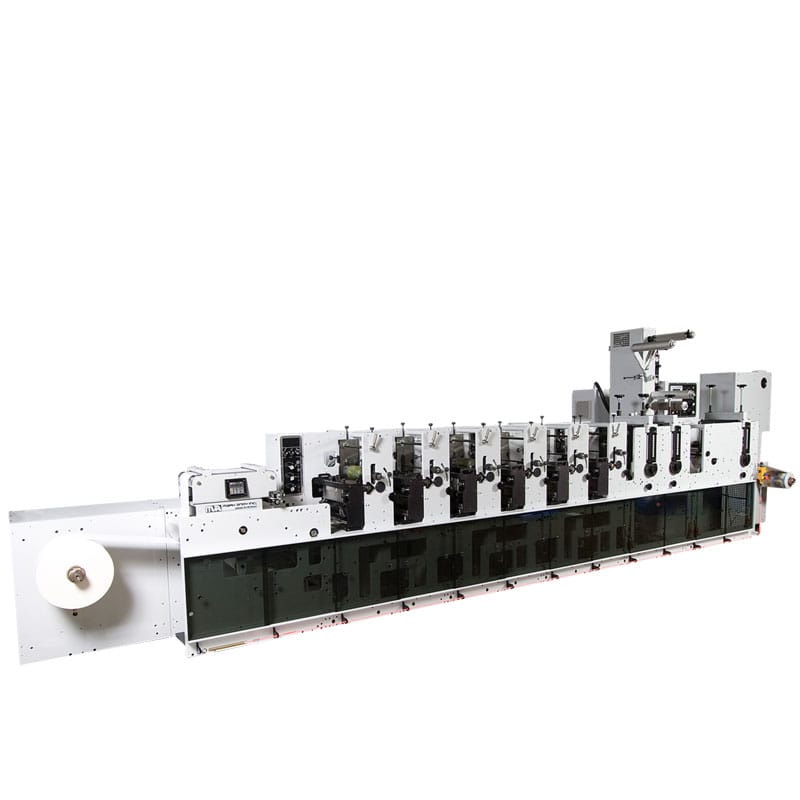
Narrow-web flexographic presses form the backbone of the market. These roll-to-roll production lines — typically 250–430 mm web width, 4–10 colour stations, with inline varnish, UV curing, and die-cutting — suit food, beverage, and industrial label production at volume. Brands such as Mark Andy, Gallus, Nilpeter, and Edale appear regularly through specialist dealers and international brokers.
Digital label printers and presses cover two sub-segments: benchtop or tabletop units suited to short runs and variable data, and mid-to-high production platforms like the Epson SurePress, HP Indigo WS series, and Domino N610i. Used digital presses enter the secondary market as converters upgrade to newer generations — a cycle accelerating as the global digital label press segment grows at roughly 9.80% CAGR through 2034.
Semi-rotary and letterpress label presses serve niche converters and craft printers needing intermittent die-cutting, foiling, or specialist varnish work. These machines often pair with digital print engines to provide complete roll-to-roll output.
Label finishing and inspection lines — slitter-rewinders, die-cutters, varnish applicators, and camera inspection systems from brands like ABG (AB Graphic International), Grafisk Maskinfabrik (GM), and Rotoflex — are sold standalone or bundled with presses. Buying a used finishing line to complement an existing digital press often delivers better ROI than purchasing an entirely new production system.
Industrial labellers and applicators round out the category. These are packaging-line machines that apply pre-printed labels rather than producing them, but they frequently appear alongside press listings on platforms like Machines4u and ProcessPlant.
Typical price ranges for pre-owned label printing machines
No incumbent page in this category publishes a structured price guide for Australian buyers. These ranges reflect current dealer listings, marketplace data, and used-machinery benchmarks:
| Equipment category | Typical AUD price range (used) |
|---|---|
| Benchtop / entry digital label printer | $5,000 – $20,000 |
| Production digital label press (SurePress, HP Indigo WS) | $80,000 – $250,000+ |
| Narrow-web flexo press — older mechanical (pre-2010) | $10,000 – $60,000 |
| Narrow-web flexo press — servo-driven (post-2010) | $60,000 – $120,000+ |
| Semi-rotary letterpress / die-cutter | $25,000 – $90,000 |
| Label finishing / inspection line | $15,000 – $80,000 |
Buying used saves 40–70% versus equivalent new capacity. A servo-driven narrow-web flexo press that costs $300,000–$500,000 new regularly trades at $100,000–$200,000 once it's 8–12 years old and its original owner upgrades. That delta funds months of production, consumables, or additional equipment.

Where to Source Used Label Printing Equipment in Australia
Specialist used printing machinery dealers
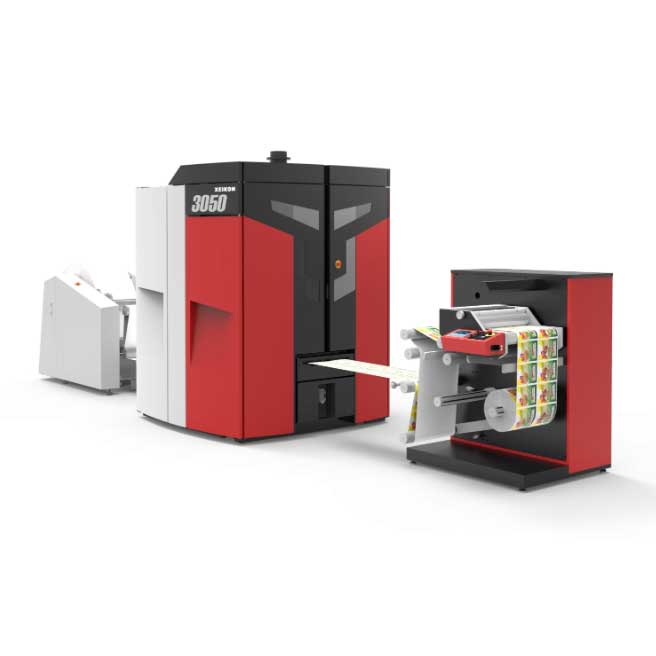
Specialist dealers — firms dedicated to pre-owned printing and converting equipment — are the safest starting point for production-grade purchases. They inspect and often refurbish presses before sale, handle installation and commissioning, and in some cases offer a limited warranty on mechanical components. Dealers like Gulmen Digital maintain dedicated pre-owned sections listing specific models such as the Primera CX1200 and Xeikon 3050. Others broker narrow-web flexo lines sourced from European and North American converters, managing freight, compliance, and setup.
The trade-off is price: dealer inventory costs more than an auction find. The premium buys reduced risk, particularly for buyers without in-house press technicians.
Specialist dealers can also source specific models on request. If you need a 430 mm, 8-colour servo flexo line with UV and cold foil, and nothing in current stock matches; a dealer with international networks can locate and import it, handling duty and compliance on your behalf.
Online marketplaces and auction platforms
Machines4u lists Australian label equipment from $2,500 for industrial labellers up to nearly $200,000 for full production lines. Machinio aggregates local dealer inventory alongside international listings, showing machines like Hikari 6-colour label presses with flatbed and rotary die-cutting. These platforms suit buyers who want to benchmark prices quickly and cast a wide net.
For buyers searching eBay: it works for desktop label printers and small industrial units in the $300–$5,000 range, but rarely hosts production narrow-web or digital presses. Before bidding on eBay or any general marketplace, verify working condition with a video, confirm the machine's last production date, and get written clarity on who handles removal, loading, and freight — on used equipment sold as-is, those costs fall entirely on the buyer.
Direct from Australian print businesses
Label converters and packaging printers that upgrade to new presses frequently sell their outgoing lines directly. Buying direct means no dealer margin, potential access to the full tooling set and consumable inventory, and the opportunity to see the press running live before you commit.
The practical challenge: you assume full responsibility for deinstallation, transport, electrical compliance checks, and any post-purchase repairs. Direct deals suit experienced operators who can assess equipment on-site and have their own installation resources.
Importing refurbished equipment from overseas
Many quality label presses in the Australian market arrive refurbished from Europe or the United States. Standard import costs include up to 5% customs duty (often reduced to 0% under Australia's free trade agreements), 10% GST on the landed value, marine insurance, ocean freight, and compliance work. Together, these add roughly 10–25% to the equipment price.
Used machinery also faces strict biosecurity requirements: the Department of Agriculture mandates that imported equipment arrives free of soil, plant material, and biological contamination. Professional cleaning before shipment is standard and can cost $1,000 or more per consignment. Factor these numbers into your landed-cost calculation before comparing an imported press with a locally sourced alternative.
 Gulmen Digital
Buyer's Checklist: What to Inspect Before You Buy a Used Label Press
This section exists because no top-ranking page addresses label-press-specific due diligence. Generic "buying used printing equipment" guides treat flexo label presses the same as sheet-fed offset machines. They are not the same.
Key mechanical specs
Confirm web width against your current and planned label formats — a 250 mm press cannot produce 300 mm labels regardless of print quality. Verify the print repeat range (minimum and maximum cylinder circumference), which determines the label lengths you can run efficiently. Count working colour stations and test each; a non-functional station is not a minor issue on a label line.
Die-cutting station and tooling condition
The die-cutting station absorbs more stress than any other part of a label press. Inspect bearers, anvils, and magnetic cylinders for wear and alignment. Ask whether existing dies and tooling are included in the sale — a complete tooling set has real monetary value, and replacing it is expensive. Check registration accuracy between print and die-cut during a test run; poor registration at this stage signals deeper mechanical issues.
Unwind and rewind tension systems
Label presses run thin paper and film substrates sensitive to tension variation. Test unwind and rewind under your typical substrates and speed range. Confirm tension control consistency, web guide alignment, and roll-handling capacity. Tension faults that don't surface during a brief inspection reveal themselves within days of production.
Software, RIP, and ink compatibility (digital label printers)
OEM software licences frequently do not transfer automatically when a used digital press changes hands. Several buyers have discovered this after purchase, then faced five- or six-figure relicensing costs. Confirm licence transferability with the OEM directly before signing anything. Check RIP software version, operating system support, and DFE compatibility with your existing workflow. Verify that inks or toners for the specific platform are available in Australia at commercially viable prices.
Service history, spare parts, and unique wear points
Request full service logs: repairs, replaced components, any chronic faults. Label presses have wear points that generic inspection checklists miss:
- Anilox rollers — inspect for plugging, scoring, and cell wear
- Doctor blades and blade chambers — check holders, seals, and consistency of engagement
- Servo drives and registration systems on modern presses — listen for noise, test stability across speed changes
Confirm that spare parts for the specific brand and model are stocked or available in Australia. European brands — Gallus, Nilpeter — require established local agents for fast response. In a country this size, a technician flying in from overseas to repair a press is genuinely expensive; a local agent who stocks common parts isn't optional.
Always request a live press run or detailed video demonstration before committing. Colour stability, registration accuracy, die-cut quality, and realistic maximum speed are all invisible in photographs.
Popular Second Hand Label Press Brands and Models in Australia
Narrow-web flexo: Mark Andy (2200, 4150, Performance Series), Edale, Nilpeter, and Gallus are the brands most frequently traded. Mark Andy has the broadest global secondary market presence; Gallus and Nilpeter offer strong engineering but require confirmed local agent coverage before purchase. Pre-2010 mechanical flexo presses from any of these brands lack servo control — they are cheaper but demand experienced operators and add makeready time.
Digital label presses: The Epson SurePress, HP Indigo WS series, and Domino N610i dominate the used digital segment. Each platform has different ink system, climate, and workflow requirements. HP Indigo in particular carries ongoing click-charge or service-model obligations — confirm how these transfer with a used machine before you commit.
Semi-rotary and finishing: ABG, Grafisk Maskinfabrik (GM), and Rotoflex slitter-rewinders, die-cutters, and inspection systems appear regularly as standalone purchases. A used finishing line paired with an existing digital press or outsourced print supply can build a complete production capability without the cost of a full press.
Selling Your Used Label Printing Equipment in Australia
Value your press by benchmarking against current dealer and marketplace listings for comparable age, brand, web width, and configuration. Condition and service history move prices significantly — a well-documented press with clean service logs commands a material premium over an identical machine sold without paperwork.
Dealer consignment reaches buyers faster, handles logistics and inspection, and manages the transaction professionally. The dealer takes a commission, reducing your net return. Private listing on Machines4u, Machinio, or industry networks maximises your price but demands more time, more negotiation, and direct management of inspections and contracts.
To attract serious buyers and reduce time-wasting enquiries:
- Compile complete service history
- List all included tooling and anilox inventories
- Document current press speed and typical job types
- Photograph every station professionally
- Record a short video of the press running
Equipment sold with a live demonstration video moves faster and negotiates less — buyers who can see the press perform have fewer objections and lower perceived risk.
Gulmen DigitalFAQ
What is the average price of second hand label printing equipment in Australia? Production-grade used label presses range from approximately $10,000–$60,000 for older mechanical narrow-web flexo lines, $60,000–$120,000+ for servo-driven flexo, and $80,000–$250,000 for production digital label presses. Entry digital label printers start around $5,000. Prices vary with age, brand, configuration, and condition, but used equipment consistently runs 40–70% below equivalent new prices.
Where can I buy a used label press in Australia with a warranty? Specialist used printing machinery dealers are your best source of any warranty coverage. Dealers who refurbish presses before sale, such as those maintaining dedicated pre-owned sections; may offer limited mechanical warranties and include installation and commissioning. Marketplaces, auctions, and direct private sales are almost always as-is, with no warranty. Ask dealers explicitly what the warranty covers, for how long, and what their response time is for service calls.
Is it worth buying second hand label printing equipment or should I buy new? For most small-to-mid-sized Australian label converters, used equipment is the financially rational choice — it cuts capital cost by 40–70% and delivers competitive production economics on proven platforms. New presses make sense when you need the latest automation, a full OEM warranty, or financing packages that reduce upfront cash requirements. The strategy many converters land on is buying used mechanical or flexo capacity while spending new dollars on digital workflow and inspection automation.
What should I check before buying a used flexo label press in Australia? Verify web width, print repeat, and colour station count against your product mix. Inspect die-cutting station condition, anilox roller health, doctor blade systems, servo drives, and unwind/rewind tension control. Request full service history and confirm that spare parts and qualified technicians are available in Australia for the specific brand. Always see the press run — live or on detailed video — before committing.
Can I import used label printing equipment into Australia and what are the costs? Yes, importing refurbished label presses from Europe or the US is common and commercially viable. Budget for customs duty (0–5% depending on origin and applicable FTAs), 10% GST on the landed value, ocean freight, marine insurance, customs brokerage, biosecurity cleaning (often $1,000+), and local installation and commissioning. Total landed costs typically add 10–25% to the equipment purchase price. Confirm local service agent availability for the brand before committing to any imported press.

Comments ()