
Food Label Printers for Australian Manufacturers: A Practical Buyer's Guide

Every food manufacturer in Australia faces the same uncomfortable arithmetic: your labels must be legally precise, updated constantly, and durable enough to survive refrigeration, freezing, and the rough handling of distribution — yet they also need to be produced fast enough to keep your packing line moving. One reformulation, one new allergen disclosure requirement from FSANZ, one retailer demanding a different SKU variant, and suddenly your pre-printed label stock is obsolete before it leaves the shelf.
This guide is written for operations managers and food brand owners evaluating a food label printer in Australia for in-house production. It covers the four main print technologies used in Australian food facilities, the buying criteria that actually matter in a production environment, FSANZ compliance requirements your printer must reliably support, and a practical framework for matching a system to your production volume. If you are deciding whether to bring label printing in-house or scale up from a desktop unit to a commercial press, this guide gives you the decision framework to do it properly.

Prefer to talk it through? Call (03) 9318 7177. Gulmen Digital's team is in Ravenhall, VIC.
Why Food Label Printing Is Different From General Label Printing
Printing a shipping label or a warehouse bin tag is a low-stakes task. Printing a food label is not. The difference is not just technical — it is regulatory, operational, and reputational.
FSANZ Mandatory Content Requirements
Under the Australia New Zealand Food Standards Code, most packaged foods sold in Australia must display a specific set of information, and that information must be legible, prominent, and in English. The mandatory elements include the name or description of the food, full ingredient list in descending order by weight, allergen declarations using prescribed terms, a Nutrition Information Panel in standardised tabular format, lot identification for traceability, the supplier's
Australian or New Zealand street address, a date mark (either Best Before or Use By depending on the product), a country of origin statement (and the CoOL kangaroo mark for eligible Australian products), and any mandatory warning or advisory statements for specific ingredients or additives.
Each of these elements places a demand on your printer. NIP tables require sharp, fine text at small sizes. Allergen declarations need bold or otherwise emphasised formatting to stand out. Lot codes and date marks must be variable, accurate, and printed without error on every unit.
The Food Standards Australia New Zealand labelling framework is periodically updated — allergen declaration rules have changed, country of origin requirements have evolved — and when they do, manufacturers need to update label artwork quickly and systematically across all SKUs. A digital printing workflow handles those changes in hours. A static pre-printed stock cannot.
Variable Data Demands
A food label is rarely a fixed document. The print content changes with every production run: batch numbers, production timestamps, use-by and best-before dates, variable weights for catch-weight products, and occasionally mid-run ingredient adjustments when a supplier changes a formulation. For manufacturers running multiple SKUs, the permutations multiply quickly.
Your label printer must natively handle variable data fields — pulling lot codes and dates from your ERP or production management system, rendering them accurately on every label, and doing so without requiring manual intervention on the line. This is not a feature you can retrofit around; it needs to be built into how you specify and purchase the system from the outset.
Durability for Real Food Environments
Food labels are applied in production environments and then exposed to conditions that destroy ordinary print. Chilled and frozen storage causes condensation. Commercial kitchens involve oils, steam, and cleaning chemicals. Distribution handling creates abrasion. Retail chillers combine moisture and cold for weeks or months at a time.
Labels that fade, smear, lift, or lose barcode readability under these conditions are not just an aesthetic problem — they are a traceability failure. Choosing the right combination of print technology, label stock, and adhesive is not optional in food manufacturing. It is a core part of the specification.
The Main Print Technologies for Food Labels in Australia
Four technologies are commonly used for food label printing in Australian manufacturing operations, each with a distinct profile of strengths, limitations, and best-fit applications.
Digital Inkjet
Digital inkjet presses print full-colour labels directly from digital files onto roll-fed label stock, with no plates, cylinders, or setup waste. Print resolution typically reaches 600 to 1200 dpi, which handles NIP text, complex ingredient lists, and fine brand artwork reliably.
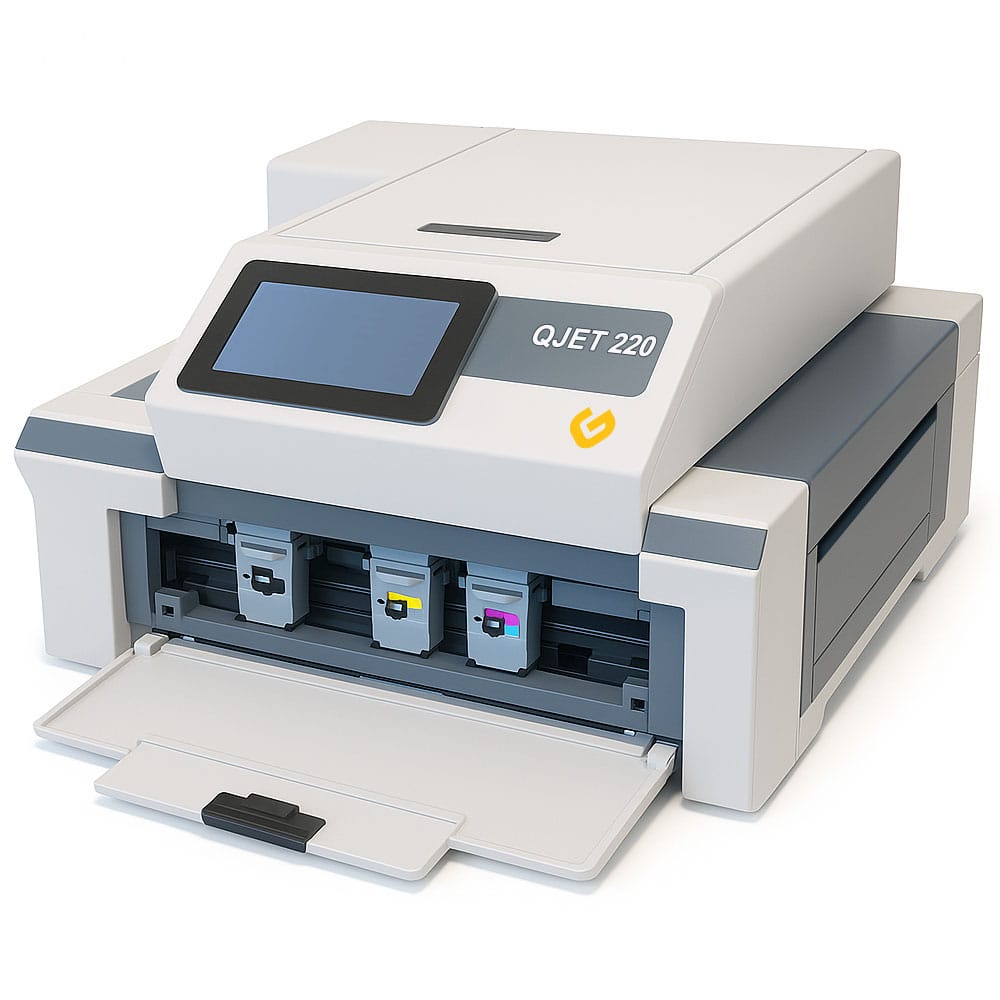
The commercial advantage is flexibility. You can print 50 labels for a new product test run at the same cost per label as 5,000, with no minimum order. Artwork changes are made in software and implemented immediately. For food manufacturers running a large SKU count, frequent promotions, or private-label variants for different retailers, digital inkjet is the most agile option available.
The trade-off is ink cost per label at very high volumes, and substrate dependency — labels destined for freezer environments or heavy moisture exposure need properly specified synthetic stocks and compatible ink sets to maintain durability. Entry-level desktop inkjet units are not adequate for production environments; you need commercial-grade roll-to-roll systems with appropriate duty cycles.
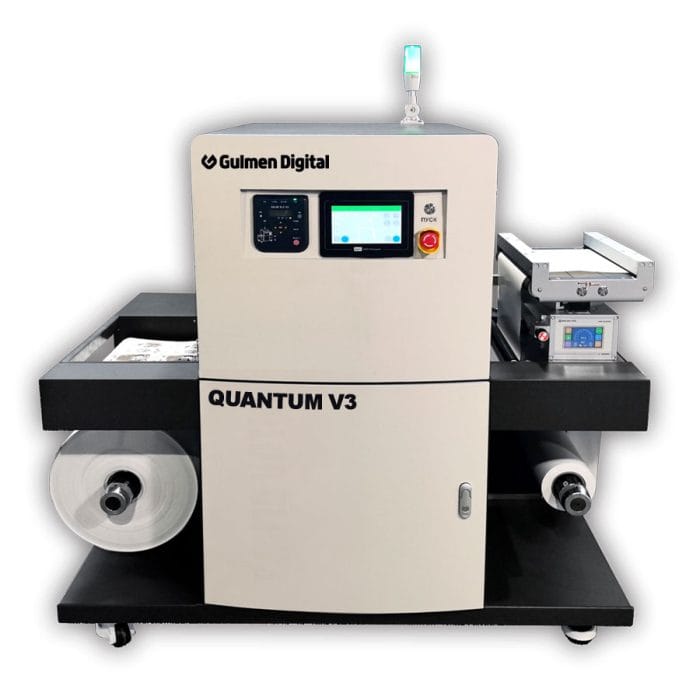
Best fit: Artisan and small-batch producers needing professional colour labels, mid-size manufacturers with high SKU counts and frequent artwork changes, and any operation prioritising fast response to regulatory or recipe updates.
Thermal Transfer
Thermal transfer printers use a heated printhead to transfer ink from a ribbon onto the label surface. With resin ribbons on synthetic substrates, the result is an extremely durable print that resists moisture, freezing, oils, and abrasion — the conditions that destroy other print technologies.
This durability makes thermal transfer the dominant technology for date coding, lot code printing, and barcode generation on food packaging lines. Australia's label printing market is part of a global pattern: thermal transfer barcode systems are growing at nearly 6% per year, specifically driven by demand in food packaging and pharmaceuticals where durable, compliant, variable labels are now standard practice.
The limitation is colour. Most thermal transfer systems print in monochrome or limited spot colours. For operations where the branding is handled by pre-printed label stock and the thermal system overprints variable data — dates, batch numbers, traceability codes — this is entirely adequate. For operations needing full-colour product labels, thermal transfer needs to be paired with a digital inkjet system.
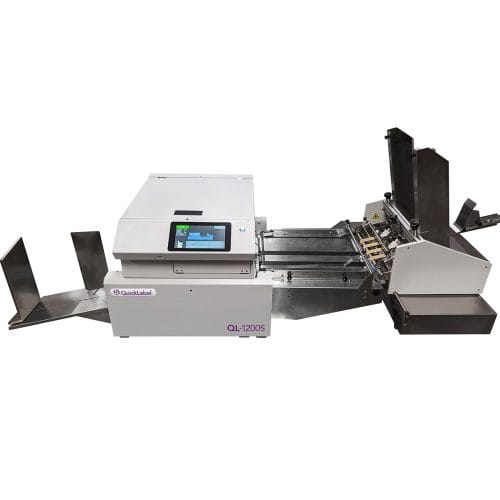
Best fit: Production-line date and lot coding, high-volume chilled and frozen products, any application where durability and barcode readability are critical.
Laser/Toner
Laser printers adapted for label media can produce good-quality colour output at modest volumes, typically on A4 label sheets or light-commercial roll systems. For small operations starting out with in-house label printing, or for dry ambient products with low SKU volumes, laser fills the gap between an office printer and a dedicated label press.
The constraints become apparent at scale and in challenging environments. Toner can crack on very flexible substrates, performs poorly in high-humidity conditions, and sheet-fed systems are inefficient for roll-to-roll production. Laser is a viable entry point, not a long-term production solution for food manufacturers with growing volumes or cold-chain products.
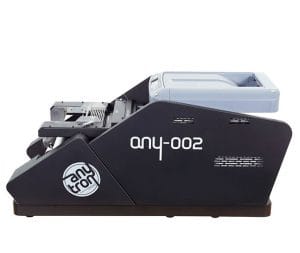
Best fit: Micro producers, test batches, ambient products with very low volumes, operations bridging to a dedicated digital system.
Flexographic Pre-Print With Digital Overprint
High-volume manufacturers often split the label workflow into two stages: a flexographic press handles the static colour branding, background artwork, and design elements in long runs, then a thermal transfer or digital system overprints variable data on the line. This hybrid approach achieves the lowest possible unit cost at very high volumes while maintaining flexibility for date and lot code changes.
The risk is inventory obsolescence. When a regulatory update changes allergen wording or a recipe reformulation alters the ingredient list, pre-printed stock becomes unusable. For manufacturers with highly stable SKUs and predictable volumes, the economics are compelling. For those facing frequent changes, the waste from obsolete stock erodes the unit-cost advantage quickly.

Best fit: Large food manufacturers with stable product lines, label converters supplying food brands at high volumes.
Key Buying Criteria for Australian Food Manufacturers
The following seven criteria determine whether a printer is genuinely suited to food production in Australia, or whether it is an office product being stretched beyond its design intent.
1. Print resolution. A minimum of 300 dpi is required for legible NIPs, allergen text, and barcodes at production label sizes. 600 dpi provides a meaningful safety margin for small containers, dense ingredient lists, and GS1-compliant barcode quality. Request printed samples of your actual NIP and ingredient list at final label size before committing to any system.
2. Substrate and adhesive compatibility. Confirm the printer is compatible with food-safe, moisture-resistant label stocks appropriate to your cold-chain requirements. Match adhesives to your packaging substrates — plastics, glass, and flexible films behave differently at low temperatures. A printer that performs well on paper stock in a dry warehouse may be entirely unsuitable for a frozen product line.
3. Variable data capability. Lot codes, use-by dates, and NIP content must be dynamically generated, not manually typed. Look for integration with your ERP, WMS, or recipe management system, and confirm the print controller can handle database-driven variable fields without operator error risk.
4. Throughput and roll size. Match print speed to your packing line cycle. A printer that falls behind the line creates a bottleneck; one sized far above your needs carries unnecessary cost. Maximum roll diameter and core size affect changeover frequency and labour — in a multi-shift environment, these details matter.
5. Integration with label management and ERP systems. Production-grade label management software (BarTender and NiceLabel are widely used in Australian food manufacturing) adds version control, user permissions, audit trails, and template management. These are not optional in a FSANZ-regulated environment — they are the mechanism by which you control what gets printed and ensure that approved artwork, not an outdated version, reaches the line.
6. Australian support and service. For production-critical equipment, local service matters more than almost any other factor. A printer that takes three weeks to get a replacement part from overseas is a liability. Evaluate service response times, local spare parts availability, and whether your supplier has technicians with experience in commercial food manufacturing environments specifically — not just general IT equipment.
7. Total cost of ownership. Compare printers on cost per label at your actual volumes, not headline purchase price. Factor consumables (labels, ribbons, ink, maintenance kits), service contracts, and the cost of downtime. For manufacturers evaluating the shift from outsourced labels, include the cost of obsolete pre-printed stock in the current-state calculation — this is often where in-house digital printing pays back fastest.
FSANZ Compliance Checklist: What Your Printer Must Reliably Produce
Your food label printer and production workflow must reliably output labels containing the following mandatory elements for most packaged foods sold in Australia. Use this checklist to verify that your printer, label design software, and variable data system can handle each field before committing to a system.
- Name or description of the food — prominently displayed, clearly identifying the product
- Lot identification — batch or lot code enabling traceability back to the production run
- Name and Australian or New Zealand street address of the manufacturer, packer, vendor, or importer
- Full ingredient list — all ingredients and additives in descending order by weight
- Allergen declarations — using prescribed terms, with prominent formatting (typically bold) to ensure visibility
- Date mark — "Best Before" or "Use By" in the correct format for the product type
- Nutrition Information Panel (NIP) — in the standardised tabular format specified by FSANZ, with correct headings, units, and per-serve/per-100g columns
- Country of origin statement — and the CoOL kangaroo mark for eligible Australian-grown or -made products
- Mandatory warning and advisory statements — for specific ingredients, additives, or product types (e.g. royal jelly, certain sweeteners, high-caffeine foods)
Beyond content, your printer must maintain legibility throughout shelf life — sharp contrast, stable print on appropriate substrates, and barcodes that meet GS1 readability standards for retail scanning. The NSW Food Authority's labelling requirements provide practical guidance on how these standards apply to specific product categories in Australia.
In-House vs Outsourced Label Printing: When to Bring It In-House
Most Australian food manufacturers begin with outsourced label printing and move in-house as SKU complexity and change frequency make external production increasingly unworkable. The decision to invest in a commercial food label printer typically becomes clear when three conditions converge.
- Cost inflection point. External label printing is cost-effective when volumes are low and designs are stable. As SKU count grows and reformulations increase, minimum order quantities from external converters force you to hold label inventory that regularly becomes obsolete. Once your annual spend on outsourced labels — including waste from version changes — approaches the amortised cost of an in-house system over three years, the economics of in-house production are straightforward. Australia's label printing market is valued at USD 1.44 billion in 2025 and growing at 3.16% annually through to 2034, driven substantially by food and beverage demand — reflecting that manufacturers across the country are actively investing in label production infrastructure.
- Change frequency. If your ingredient declarations, allergen statements, or NIP values change more than a few times a year — due to reformulation, supplier changes, or regulatory updates — outsourced pre-printed labels impose a structural disadvantage. Each change requires a new print run, a minimum order, and a lead time measured in days or weeks. In-house digital printing turns those changes into a software update that takes effect on the next production job.
- Product range and launch pace. Seasonal SKUs, retailer-specific variants, private-label contracts, and active new-product development pipelines all increase the volume of unique label designs your business needs. When the overhead of managing multiple external print orders and proofing rounds across many SKUs becomes unmanageable, in-house printing restores control and speed.
- The iLabeling system used in Australian food service environments demonstrates the direction of travel: automated date and nutrition label generation, integrated with HACCP food safety plans, to reduce human error in exactly the variable-data fields that FSANZ mandates.
Choosing the Right System for Your Volume
The right food label printer for a craft brewery producing 30 SKUs in small batches is not the right system for a mid-size food manufacturer running six production shifts per week. Volume, SKU complexity, and environmental requirements all shape the specification.
- Small batches and artisan food producers. Operations producing hundreds to low thousands of labels per run, with strong branding requirements and modest budgets, are well served by entry-level commercial digital inkjet label printers — systems like the OKI range and comparable compact roll-fed units that produce professional full-colour output without the footprint or cost of a production press. These systems print ingredient lists, NIPs, allergens, and full-colour branding on demand. Changeovers between SKUs take seconds. For chilled products, pair with appropriate synthetic label stock.
- Mid-volume food manufacturers. Manufacturers running continuous production, multiple SKUs, and tens to hundreds of thousands of labels per month need production-class digital label presses — roll-to-roll inkjet or toner systems with proper duty cycles, optional inline finishing (lamination, die-cutting), and tight integration with ERP and label management platforms. Often the right configuration combines a digital press for full-colour brand labels with thermal transfer units installed inline for date and lot coding directly on the packaging line.
- High-volume producers and label converters. At industrial scale — millions of labels per year, complex multi-channel distribution, and strict retailer barcode and print quality requirements — the specification shifts toward industrial roll-to-roll digital presses, potentially integrated with flexographic lines for the highest-volume stable designs. These installations require specialist specification, installation, and ongoing technical support.
Why Australian Food Manufacturers Choose Gulmen Digital
Most label printer suppliers in Australia are general office equipment resellers who also happen to carry a thermal label printer in their catalogue. Gulmen Digital is different: the company focuses specifically on commercial and industrial label printing machinery, with experience serving label converters, packaging producers, and food manufacturers across Australia from its base in Maidstone, Victoria.
That specialisation matters when you are specifying equipment for a food production environment. A generalist supplier can sell you a printer. A specialist can tell you which substrate performs in your freezer tunnel, which ribbon chemistry survives your cleaning regime, how to configure your label management software to enforce version control across your SKUs, and what finishing equipment integrates with your press to give you a complete production workflow.
Gulmen Digital's range spans from entry-level digital label printers for artisan producers through to industrial-class systems and finishing equipment — which means the advice you receive is calibrated to your actual production requirements rather than steered toward whatever sits in a single product category. Local Australian support means service response is measured in hours, not weeks, and the team understands the specific demands of FSANZ-regulated food manufacturing rather than treating label printing as a generic IT purchase.
For operations that need an integrated solution — press, finishing, consumables, and service from a single specialist supplier — that combination of range, expertise, and local support is the practical reason most Australian food manufacturers working at commercial and industrial scale engage Gulmen Digital rather than sourcing piecemeal.
Conclusion
Food label printing in Australia is a compliance-critical, operationally demanding function that most generic label printer guidance does not adequately address. The right system depends on your production volume, SKU complexity, cold-chain requirements, variable data workflow, and the frequency with which your labels need to change.
Digital inkjet delivers flexibility and full-colour quality for short to mid runs. Thermal transfer delivers durability and low cost per label for high-volume variable data. Laser fills a low-volume entry niche. Hybrid flexo-plus-digital workflows suit high-volume stable SKUs. None of these is universally correct — the answer for your operation comes from a proper specification process that starts with your FSANZ obligations and your production reality, not with a printer brochure.
To identify the right commercial food label printer for your Australian operation — and to ensure the system you invest in is properly configured, integrated, and supported from day one — contact the Gulmen Digital team. Discuss your current labelling workflow, your volume and SKU profile, and your compliance requirements, and work with specialists who understand what food manufacturing in Australia actually demands from a label printing system.

Prefer to talk it through? Call (03) 9318 7177. Gulmen Digital's team is in Ravenhall, VIC.
Frequently asked questions:
Q1. What makes food label printing different from general label printing in Australia?
Food label printing is a compliance-critical function, not a simple output task. Under the Australia New Zealand Food Standards Code, most packaged foods must carry a mandatory set of information — ingredient lists, allergen declarations, a Nutrition Information Panel, date marks, lot codes, and country of origin statements — all in a legible, legally precise format.
Beyond compliance, food labels must survive conditions that destroy general-purpose labels: refrigeration, freezing, condensation, oils, cleaning chemicals, and the physical abrasion of distribution. A printer that performs adequately in an office or warehouse environment may be entirely unsuitable for a food production facility.
Q2. Which label printing technologies are most widely used in Australian food manufacturing?
Four technologies are commonly used: digital inkjet for full-colour short runs and frequent artwork changes; thermal transfer for durable monochrome variable data printing such as lot codes, date marks, and barcodes on chilled and frozen products; laser/toner as a low-volume entry point for ambient dry goods; and flexographic pre-print combined with digital overprint, which suits high-volume producers with stable SKUs who split brand artwork from variable data in two production stages.
Q3. How do FSANZ labelling requirements affect the choice of food label printer?
FSANZ mandates specific content on most packaged food labels — including bold allergen declarations, a standardised NIP table, correct date mark formats, and lot identification — and updates those requirements periodically. Your printer must reliably reproduce fine NIP text (typically requiring 300–600 dpi minimum), support prominent allergen formatting, and handle variable data fields like batch numbers and use-by dates without manual intervention.
Critically, when regulatory changes occur, a digital printing workflow lets you update artwork in hours; pre-printed label stock cannot adapt without waste and reorder lead times.
Q4. What is variable data printing and why is it essential for food label compliance?
Variable data refers to information that changes with every production run — lot codes, production timestamps, use-by and best-before dates, variable weights for catch-weight products, and sometimes mid-run ingredient adjustments. FSANZ requires lot identification and accurate date marks on every unit, and those fields must be generated dynamically from your ERP or production management system, not typed manually by an operator.
A food label printer that cannot natively handle database-driven variable fields introduces both compliance risk and human error risk at the production line level.
Q5. Which print technology is best for chilled and frozen food products?
Thermal transfer printing with resin ribbons on synthetic label stocks is the standard choice for cold-chain applications. Resin ribbon chemistry bonds deeply with synthetic substrates and resists moisture, freezing temperatures, oils, abrasion, and cleaning chemicals — the exact conditions that cause other print technologies to fade, smear, or lose barcode readability.
For operations that also need full-colour brand presentation on frozen products, the typical configuration pairs pre-printed colour labels (digital inkjet or flexo) with thermal transfer overprinting for variable data fields applied inline on the packaging line.
Q6. When does it make financial sense to bring food label printing in-house?
The economics of in-house printing typically become clear when three conditions converge: external label spend (including waste from obsolete pre-printed stock after reformulations or regulatory changes) approaches the amortised three-year cost of a commercial in-house system; label changes happen frequently enough that external lead times are causing operational disruption; and SKU complexity — seasonal variants, retailer-specific labels, private-label contracts — makes managing multiple external print orders unworkable. For most Australian food manufacturers, the tipping point arrives well before they expect it, because the cost of obsolete stock rarely appears as a visible line item until someone adds it up.
Q7. What are the key buying criteria for a food label printer in an Australian facility?
The seven criteria that determine fit for a food production environment are: print resolution (300 dpi minimum, 600 dpi preferred for small containers and dense NIP text); substrate and adhesive compatibility with your cold-chain requirements; native variable data capability with ERP or recipe system integration; throughput and roll size matched to your line speed; integration with label management software such as BarTender or NiceLabel for version control and audit trails; local Australian service with fast response times and spare parts availability; and total cost of ownership at your actual label volumes, including consumables, service, and downtime risk.
Q8. Why do Australian food manufacturers work with a specialist label printing supplier like Gulmen Digital rather than a general office equipment reseller?
A generalist supplier can sell you a printer. A specialist in commercial and industrial label systems can tell you which substrate survives your specific cold-chain conditions, which ribbon chemistry holds up against your cleaning regime, how to configure label management software to enforce FSANZ-compliant version control across all your SKUs, and which finishing equipment integrates with your press to complete the production workflow.
For production-critical equipment in a regulated food environment, local expertise — with service response measured in hours — is not a nice-to-have. It is the difference between a system that works on day one and a liability that sits idle waiting for overseas parts.




Comments ()